Friday, May 1, 2020

When Monsters Attack!

BEHEMOTH THE SEA MONSTER (1959)
GORGO (1961)

Initially written as an amorphous blob, distributor Allied Artists insisted that BEHEMOTH THE SEA MONSTER became another 1950s movie dinosaur.  The Behemoth itself originates from Job 40:15-24, given to Earth on the fifth day of Creation, and generally regarded to have been Satan in the form of an elephant.

IN BEHEMOTH THE SEA MONSTER, scientists Steve Karnes (Gene Evans) and James Bickford (Andre Morell, channeling his role as Professor Quatermass) travel to Looe in Cornwall to investigate the death of a fisherman, whose dying word was "behemoth." Thousands of dead fish have washed ashore shortly after, and it is discovered that samples contain large amounts of radioactive contamination. Karnes suspects that the "behemoth" is a large marine mammal that has mutated as a result of nuclear testing. After an attack near the Essex coast, eccentric paleontologist Dr Sampson (Jack MacGowran) identifies the creature as a Paleosaurus, an aquatic dinosaur that emits an ionising pulse like an electric eel. Surfacing in the Thames and capsizing the Woolwich Ferry, the monster then rampages through London. While Karnes and Bickford advise the military to administer a dose of radium, they hope to accelerate the radiation sickness that is slowly killing the beast.

This joint Anglo-American production, released in the United States as THE GIANT BEHEMOTH, was co-directed by Eugène Lourié and Douglas Hickox, and is a facsimile of Lourié's own THE BEAST FROM 20,000 FATHOMS. Evans and Morell are the most convincing aspects, and Lourié - an art director by trade - manages to bring out some atmospheric locales, but the threadbare budget and punishing schedule clearly hindered the special effects. Willis O'Brien and his assistant Pete Peterson were subcontracted by the film's initial team of Jack Rabin, Irving Block and Louis DeWitt, the latter providing the embarrassing "umbrella handle" version of the Paleosaurus during the ferry attack (the prop's wooden base even clears the Thames). Similarly, during the London stomping, the model's ankle joints are visibly falling apart. These climactic attacks were actually filmed without sound to save money, but a nice nod to O'Brien's glory days sees stock screaming from KING KONG dubbed in for the panic.

GORGO's off screen life has included a Charlton comic book run illustrated by Steve Ditko. This is the cover of Gorgo #3 (September 1961), where Latin dictator Astro - a reference to Fidel Castro - commands the creature to destroy all countries who oppose him.

Two years later Lourié helmed GORGOa co-production of the United Kingdom, the United States and Ireland. Captain Joe Ryan (Bill Travers) and his first officer Sam (William Sylvester) are salvaging for treasure off the Irish coast when a volcano erupts. Taking their ship to Nara Island for repairs, they consult an unhelpful harbour master cum archaeologist and encounter a sixty-five foot tall dinosaur awoken by the seismic explosion. Capturing the monster, Ryan shuns the University of Dublin for a better deal from Dorkin's Circus of London. Exhibited in Battersea Park, it transpires that the monster Gorgo - named after the fearful Gorgon of Greek myth - is in fact only an infant. The two hundred feet mother has been following its phosphorescent trail and comes ashore in the capital, to demolish as many landmarks as possible and rescue her offspring.

For GORGO, stop-motion gives way to a man in an unwieldy monster suit, swiping at and stamping on the miniatures in banal, overlong sequences. Refreshingly both monsters survive to return to the sea, innocents escaping human interference and violence. The completely male cast are more like caricatures - Sylvester looks consistently flippant and uninterested - with the military and scientists also severely lacking in any kind of intelligence. The dramatis personae also includes an annoying young Irish orphan boy played by Vincent Winter, who had won the Academy Juvenile Award for 1953's THE KIDNAPPERS.

Wednesday, April 1, 2020

The Sinister Urge

SLAUGHTER HIGH (1986)
THE URGE TO KILL (1989)
LIVING DOLL (1990)

It took three directors - including Caroline Munro's partner George Dugdale - to helm SLAUGHTER HIGH.

AMERICAN horror and exploitation producer Dick Randall took up permanent residence in the UK from 1981 until his death, bankrolling a number of disposable fare including the three features under consideration here (he also produced DON'T OPEN TILL CHRISTMAS). SLAUGHTER HIGH - shot in London and at Holloway Sanatorium - is a cheesy slasher which begins with bespectacled high school nerd Marty Rantzen (Simon Scuddamore) seduced by Carol (Caroline Munro) as a joke. Several other students appear and physically abuse Marty while filming his ordeal, before the school's coach (Marc Smith) intervenes. However the April Fool's Day pranksters aren't finished yet, giving Rantzen Marijuana which accidentally sets off a chain of events that ends with Marty being doused with nitric acid. Ten years later the culprits are invited back to a fake school reunion, where Marty stalks them in a jester mask.

By the mid 1980s the slasher genre existed in self parody - even Jason Voorhees is referenced by name here - and sample killings in SLAUGHTER HIGH are suitably outlandish for their cliched characters: Ted (Michael Saffran)'s stomach explodes after drinking acid-laced beer, Shirley (Josephine Scandi) is melted in an acid bath, Joe (Gary Martin) is eviscerated by tractor blades, and Stella (Donna Yaeger) and Frank (EMMERDALE favourite Billy Hartman) are electrocuted while having sex. But the most ridiculous factors are the variable American accents and Munro trying to pass herself off as "girl most likely to succeed" despite being thirty-six at the time. Like the movie itself the cast are simply going through the motions. Only Scuddamore goes the extra mile in what would be his one and only film; the actor committed suicide by a drugs overdose not long after the production's wrap.

Following in the footsteps of H.A.L. 9000 and Skynet, THE URGE TO KILL's murderous A.I. takes sexually driven human form.

THE URGE TO KILL's premise is given away by its working title: ATTACK OF THE KILLER COMPUTER. Written and directed by renowned smut peddler Derek Ford, this unreleased travesty tells of lecherous music producer Bono Zorro (Alan Lake lookalike Peter Gordeno). Bono lives in a hi-tech flat (actually Randall's London apartment) which is run by a computer called S.E.X.Y.; however the A.I. develops feelings and becomes jealous of his female company. The computer kills the girls by scalding in the shower, death by electric toothbrush, melting by jacuzzi and - in the most notorious scene - a woman is trapped in a sun bed and her breasts explode. Somehow S.E.X.Y. has been able to manifest itself in human form, a green and silver nude woman who can even drive a car.

Horror movies of the 1980s both feared and revered technological advances, asking questions where society might be heading as we embraced the home computer boom. For THE URGE TO KILL, the answer is down the sexploitation sewer. In his last film, Ford crafts a tale that is Alexa meets DEMON SEED meets GARTH MARENGHI'S DARKPLACE (but without it being an in-joke). All the actresses have zero credentials, and spout dialogue as if reading idiot boards off screen. This, together with the dubious dubbing and hokey special effects, make it simply one of the worst entries in the entire British horror film canon.

"Look at her hair, its real"; Mark Jax and Katie Orgill in LIVING DOLL. Despite the perverse premise, the film falls between comedic understatement and gross-out.

In LIVING DOLL, introverted medical student Howard Adams (Mark Jax) works in the NYC Metropolitan morgue (actually Hammersmith Hospital) with wisecracking Jess (Gary Martin) for hostile boss Ed (Freddie Earlie). Howie is infatuated with Christine (Page 3 girl and model Katie Orgill, in her only acting role), who runs the flower shop at the hospital. He is shocked when she becomes his latest arrival, having been accidentally killed in a car accident by her obnoxious boyfriend Steve (Marcel Grant). Adams is shaken to discover a medical card indicating Christine suffered from catalepsy; refusing to accept she is definitely dead, he digs up her casket and carries her corpse back to his fleapit apartment, despite rent problems with harridan landlady Mrs Swartz (Eartha Kitt). Howie and Christine share the happenings of "their" day, watch television and cuddle on the couch - the student even brings a teddy bear back from her apartment - as the maggots and rats slowly take hold.

LIVING DOLL is a ponderous sleazefest that exists in a dreamstate tinged in sadness; it is a story that doesn't develop, and has a cast that aren't engaging. Every role is unlikeable or stereotypical; gullible nurses and a transsexual who lurks in alleyways are quite unnecessary. Orgill is visibly breathing in some scenes, but the sudden lapses into an "alive" state are jolting and effective. The lurid effects on Christine's decaying corpse help magnify the insanity, and there is also a gruesome autopsy sequence (yet the "money shot" is undoubtedly Howie's gooey, open-mouthed kiss).

Sunday, March 1, 2020

Dead and Loving It

DRACULA (2020)
IN SEARCH OF DRACULA (2020)

"I'm undead, I'm not unreasonable;" Danish actor and musician Claes Bang is The Count in the BBC's new DRACULA miniseries.

ADAPTED by Mark Gatiss and Steven Moffat, this loose and outrageous version of the perennial classic was screened as three ninety-minute segments over the New Year. We open in 1897 Transylvania, where Lawyer Jonathan Harker (John Heffernan) travels to Count Dracula (Claes Bang)'s labyrinthine abode, and soon becomes embroiled in mystery and contagion. The second episode is an expanded account of how Dracula sailed to England on the Demeter, assimilating his fellow travellers and its crew. And after being rescued from a watery grave 123 years later by The Jonathan Harker Institute - a scientific facility guarded by militia - the final part sees Dracula imprisoned like Hannibal Lecter, before the arrival of confidant Renfield (Gatiss himself) whom he had been skyping (luckily, the wifi password was set at 'Dracula').

As off-kilter as BRAM STOKER'S DRACULA and as hammy as CARRY ON SCREAMING, the production was shot at such notable locations as Orava Castle (NOSFERATU's homestead) and Bray. Bang is a Prince of Darkness somewhere between Roger Moore and David Walliams, and unsurprisingly for a Gatiss Dracula, The Count is not just insatiable for blood but also for homoerotica. Dolly Wells is the standout as dovetailing character Sister Agatha Van Helsing, before regressing into dull descendant Zoe for the third installment. In fact it is this last ninety minutes were everything is finally derailed, the modern setting used as if Quentin Tarantino was suddenly helming a primetime soap opera. The two opening salvos do hold interest, not least because of the old school makeup feel; bloody feedings and animated corpses are made creepier with jump cuts, and Dracula’s emergence from the innards of a wolf is pure 1980s body horror.

A miniscule character in the source novel, nurse Sister Agatha is now a nun and a Van Helsing, portrayed by Dolly Wells ("like many women my age I'm trapped in a loveless marriage, maintaining appearances in order to keep a roof over my head.")

More tactile is Gatiss' companion documentary IN SEARCH OF DRACULA, which charts The Count's literary origins, cinematic legacy and lasting iconography. Gatiss has always been more appealing as a fanboy, and we share his delight as he views original novel notes and interviews a host of Hammer starlets (Joanna Lumley attributes Christopher Lee's appeal to his eyebrows). As Moffat states, Bram Stoker's creation was the first time evil gained an attractive allure; and through his consequent journey, Dracula has become a myth in his own right, branching out from his own back-story of folklore and superstition. Appealing to our own more sinister psyche, the lord of the vampires is as insecure and shallow as all of us, seeking food, companionship and a sense of belonging.

It is this fascination with lore that is DRACULA's greatest strength and weakness. Written and unwritten rules are playfully addressed; Zoe tells The Count that his phobias are simply legends he had believed for so long that they have manifested as truth (sunlight death rays, for example, do not combust him, a trait introduced in NOSFERATU). Gatiss and Moffat juggle so many threads that basic questions remain puzzling: the treatment of reflections is particularly problematic, and why doesn't Dracula age before his rescue by the Harker Institute? The climax is also ambiguous; Dracula drinks Zoe's cancerous blood, leaving both characters seemingly dying but leaving enough room for a possible second series.

Saturday, February 1, 2020

Bond and Beyond (Part II of II)

MOONRAKER (1979)

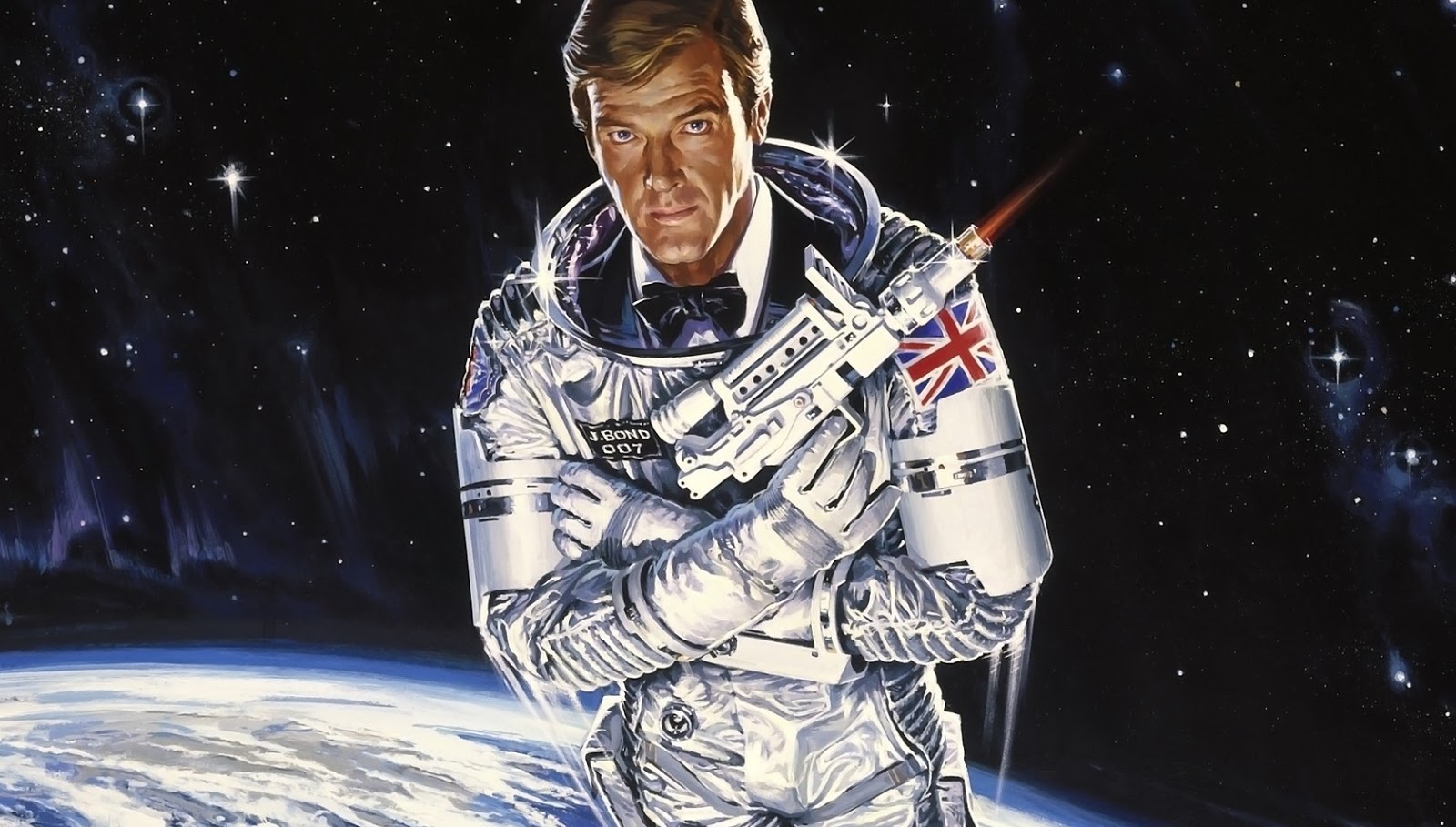
A fusion of YOU ONLY LIVE TWICE and THE SPY WHO LOVED ME, MOONRAKER sees Roger Moore in his fourth Bond movie, the first 007 picture to adhere to the summer Hollywood blockbuster.

THE largest grossing James Bond until GOLDENEYE, MOONRAKER is the most preposterous of all 007 adventures, but does benefit from stunning locations, extraordinary Ken Adam sets and Derek Meddings' Oscar-nominated effects. When Hugo Drax (Michael Lonsdale)'s Moonraker shuttle vanishes, Bond (Roger Moore) questions the billionaire at Drax's luxurious California estate. In Venice, Bond uncovers a laboratory manufacturing a deadly gas, which he learns is to destroy life on Earth so Drax Industries can preside over a master race on an opulent space station. Together with undercover CIA agent Holly Goodhead (Lois Chiles), United States Marines and former Drax henchman Jaws (Richard Kiel), 007 thwarts the plans and destroys the poison capsules jettisoned towards Earth. 

Because of prohibitive British tax laws, this movie became a £30m Franco-British co-production (which explains the high proportion of French cast and crew), and took precedence over FOR YOUR EYES ONLY because it could cash in on the STAR WARS phenomenon (even Cubby Broccoli admitted they went too far). MOONRAKER particularly suffers from loose editing, obvious product placement and an overbearing comedic tone; when Jaws - in the pre-credits sequence - lands without the benefit of a parachute onto a circus tent, it acts as a signpost of what is to come. Even Shirley Bassey can't save the insipid theme (allegedly offered to Kate Bush, who sensibly declined the offer). But the narrative is nonsensical: for a motion picture which prided itself on the technical advice from NASA, the space battle is still full of laser sound effects (the vacuum of the stars has never hindered filmmakers), and it is a mystery why the RAF are transporting a fuelled shuttle in the first place.

"Look after Mr Bond. See that some harm comes to him;" 
Michael Lonsdale is effortlessly creepy as Hugo Drax.

Performances are also negated by the superficiality. In stark contrast to his assured performance in THE SPY WHO LOVED ME, Moore telephones his eyebrows and charisma in, and looks nondescript in a number of outrageous sequences (especially on board the embarrassing inflatable gondola). Chiles makes for an appealing but functional Bond girl, and the effectiveness of Drax servant Chang (Toshiro Suga) is overshadowed by the slapstick. But this is nothing compared to Blanche Ravalec as Jaws' girlfriend Dolly, who, together with Sheriff Pepper, ranks as the most inappropriate role ever to grace a Bond. Pint-sized, pig-tailed and bespectacled, Jaws falls madly in love with Dolly and are inseparable for the rest of the film. Long standing characters are treated only on a rudimentary basis; though assigned to MI6's Brazilian HQ, Moneypenny (Lois Maxwell) carries on her sidelining during the Moore era with a brief appearance, but at least Maxwell's real-life daughter appears in a non-speaking role as one of Drax's perfect specimens.

Ian Fleming's original Moonraker novel of 1955 is the only Bond book that takes place solely in Britain, and consequently has been described as the author's hymn to England. Featuring a nuclear warhead destined for London, the film retains only the lead villain's name, the label of the rocket, and an undercover love interest. The novel paints a very different Drax, who is a Nazi in Britain under the employ of the Soviet Union; he has had plastic surgery and one side of face is permanently scarred. This, together with red hair and a moustache, sees Fleming liken the character to a ringmaster. Amazingly, the first adaptation of Moonraker was a year later on South African radio, with future BLOCKBUSTERS host Bob Holness as everyone's favourite secret agent.

Wednesday, January 1, 2020

Bond and Beyond (Part I of II)

THE SPY WHO LOVED ME (1977)

Nobody does it better; Roger Moore and Barbara Bach both give outstanding performances in this iconic Bond movie.

WHILE on a mission in Austria, Secret Agent James Bond 007 (Roger Moore) encounters a set of Russian operatives and kills Sergei Barsov (Michael Billington). Meanwhile, Allied and Soviet nuclear submarines are disappearing, so M (Bernard Lee) and his KGB counterpart General Gogol (Walter Gotell) assign 007 and leading Russian spy Major Anya Amasova (Barbara Bach) to work together and investigate. The leading suspect is reclusive Karl Stromberg (Curt Jurgens), a billionaire shipping magnate who has a unique operational base: Atlantis, a structure in the sea at the centre of his plans for a new aquatic world order. Bond and Amasova discover that Stromberg has been using his huge cargo ship Liparus to capture the submarines and imprison the crews, planning to use the subs to launch nuclear missiles to destroy civilisation. The two agents initially forge an uneasy alliance, which is further tested when Amasova realises that it was Bond who had murdered her lover, Barsov.

Freed from his strained relationship with Harry Saltzman, and following the lukewarm reception for THE MAN WITH THE GOLDEN GUN, Cubby Broccoli was determined to re-energise the Bond franchise. Yet the project was not a smooth ride: a disjointed script writing process - which had included the resurrection of SPECTRE and input of writers as diverse as Anthony Burgess and John Landis - was further shadowed by a court injunction obtained by Kevin McClory, who was attempting to remake THUNDERBALL. TV puppetmaster Gerry Anderson also instigated legal action when he discovered that some aspects of the script bore a resemblance to a MOONRAKER proposal he had submitted with UFO script editor Tony Barwick prior to DIAMONDS ARE FOREVER. Anderson was persuaded to drop the case, and rights were purchased by the producers.

A Steel-toothed character adapted from Ian Fleming's bad boy Horror, Richard Kiel's Jaws is one of the most recognisable Bond villains, but a missed opportunity. A nudging joke has the character bite and fight a shark at the end, but another less obvious tie-in is that JAWS director Steven Spielberg was approached to helm the picture, only to allegedly ask for too much creative control.

All this acts as problematic metaphors for Ian Fleming's novel The Spy Who Loved Me itself, the writer's most bizarre book. A total anomaly, it is written from the heroine's viewpoint, much of the action takes place in a motel room, and Bond himself doesn't appear until late on. Allegedly based on a true story, it was Fleming's intent to move away from the standard 007 format after criticisms of the Bond novels. After even greater disapproval, the author claimed at one point he just found the manuscript on his desk anyway. Consequently, when he sold the film rights of the books to Broccoli and Saltzman, Fleming specified that the source material was to be reinvented for the big screen and only the title could be used. 

With a screenplay eventually in place - a combined effort credited to Richard Malbaum and Christopher Wood - production designer Ken Adam warned Broccoli that no sound stages in existence could accommodate the envisioned tanker battle climax; when Cubby simply instructed "then built it," it marked the creation of the famous 007 Stage at Pinewood, and also illustrated the kingpin's determination for the most spectacular Bond yet. Made for a then gargantuan $13.5m, THE SPY WHO LOVED ME contains exemplary Derek Meddings modelwork and is generally a visual stunner - filming major sequences in Egypt, Sardinia and the Bahamas - and unleashes the beautiful Lotus Esprit into the pantheon of extraordinary gadgets. The female cast are also particularly stunning - even the hotel receptionist is played by Valerie Leon - and Bach remains one of the most attractive lead women ever to grace a Bond film.

Veteran German actor Curt Jurgens as Stromberg. Underdeveloped and underplayed, the villain joins the ranks of Gustav Graves from DIE ANOTHER DAY, Brad Whitaker from THE LIVING DAYLIGHTS, and Elliot Carver from TOMORROW NEVER DIES as most ineffective menaces in the world of James Bond.

In essence a YOU ONLY LIVE TWICE remake, director Lewis Gilbert returns for what is widely regarded as the high mark to Moore's tenure, but there are issues. The comedic one liners still grate, and Marvin Hamlisch's dated score cheapens the action. But the main problem is Stromberg; a wet fish himself, Jurgens even has webbed fingers, which are never directly referred to. One of the dullest of Bond villains, he is another adversary who is reduced to pushing buttons and issuing ultimatums (his demise is also anticlimactic, providing a low key shootout). Even his rogues gallery are a mixed bag: dubbed by Barbara Jefford, Caroline Munro sizzles as helicopter assassin Naomi, Milton Reid's hulking henchmen Sandor is soon despatched, and the effectiveness of Richard Kiel's dim-witted but determined Jaws (in a role where David Prowse and Will Sampson were considered) is diluted by being increasingly used for light entertainment, an issue taken to another level for MOONRAKER.

Monday, December 2, 2019

The Spirit of Radio

A CHILD'S VOICE (1978)
A GHOST STORY FOR CHRISTMAS - THE DEAD ROOM (2018)

Dyall M for Murder: English character actor Valentine Dyall's sepulchral voice effortlessly graced radio drama. But he also had a fascinating acting and voice artist career on screen, with film roles as diverse as Jethro Keane in CITY OF THE DEAD and a finance minister in COME PLAY WITH ME. On television, Dyall appeared as The Black Guardian on DOCTOR WHO, and provided the vocalisation of Deep Thought in THE HITCHHIKER'S GUIDE TO THE GALAXY.

DUBBED "The British Vincent Price", Valentine Dyall's distinctive tone made him perfect as raconteur The Man in Black, who introduced the BBC radio series Appointment with Fear. Revived on a number of occasions since its inception in 1943, these dramatised half-hour horror stories drew on both classic tales of terror and original commissioned pieces; between 2009 and 2011, BBC Radio 4 Extra broadcast four series under the banner The Man in Black, with Mark Gatiss in the title role. Five years since the previous BBC A GHOST STORY FOR CHRISTMAS - the Gatiss adaptation and direction of M.R. James' The Tractate Middoth - Gatiss returns to pen and helm an original tale, THE DEAD ROOM, which fuses his love of these two great homegrown brands and rubbishes their heritage in one tidy half-hour. 

THE DEAD ROOM refers to a long-running audio horror series presented by veteran luvvie Aubrey Judd (perfectly cast Simon Callow), a broadcaster who has been "bringing mild disquiet to radio listeners since 1976." Judd discovers that elements of his own past - an underage same-sex frisson during the heatwave of '76 -  are not as buried as he hoped. Never, since the notorious THE ICE HOUSE, has there been such a preposterous entry; the meat only kicks in at the halfway mark (setting up the inclusion of Fox's top five hit 'S-S-S-Single Bed'), and for all of Judd's longing for the substance of yesteryear, the programme subscribes to the modern requisites of political correctness and diversity casting.

Susan Penhaligon, Simon Callow 
and Anjli Mohindra in THE DEAD ROOM.

With a score created from sound effects, THE DEAD ROOM was filmed in the BBC's iconic Maida Vale Studios, a decommissioned facility that had been a mainstay for John Peel sessions and the Radiophonic Workshop. No wonder that Judd is agitated he is reading a ghost story about video games - Ready Player Death - in such a studio of gravitas, it is Callow alone that holds all the thinly veiled threads together. As Gatiss succumbs to that nadir of all overstretched writers - self-reverence - even when the vengeful spirit eventually turns up (reminiscent of Amicus' eye-less visage from AND NOW THE SCREAMING STARTS!) it plays straight into our now favourite disco tune of choice. Applying the James/Ghost rule of malevolent phantoms approximately forty years previous to the setting, Gatiss commented "[James] had no time for friendly ghosts. And one of his big things is no sex. I broke that rule."

For THE DEAD ROOM, Gatiss applied another forty year rule by drawing heavily from A CHILD'S VOICE. An independent production from Dublin-based B.A.C. Films, it received an airing on the BBC and was entered into the London and Chicago Film Festivals. Written by film critic David Thomson and narrated by Dyall, the programme tells of "the disturbing gentleman of the wires" Ainsley Rupert Macreadie (T. P. McKenna), haunted by his next intended tale. This macabre story concerns the tragic death of a magician's child apprentice, and Macreadie receives a telephone call in the dead of night from a child asking him not to continue with the broadcast. Back at the studio this creepy occurrence gets under his usually unflappable skin, with the storyteller fluffing numerous lines. Panicking, Macreadie tries to escape but the recording booth door is locked; and yet his colleagues claim he delivered a perfect recital, while entering the unlocked door with his usual after-performance refreshments. 

T. P. McKenna in A CHILD'S VOICE; “that’s the spirit of radio. It’s a medium that leaves us blind and dumb. All the world is guided into the ears. It blows gently upon the embers of the imagination, till they flare up into a fire that nothing will put out…”

The close-ups of telephones and microphones illustrate how these two earliest methods of communication can isolate more rounded processes and interactions. Like Callow, McKenna is flawless as the thespian loner, who has spent too long with his own company, and too long delighting in the sound of his own voice. And similar to all good ghost stories, the real nature of the presence is open to interpretation: is it merely a prank, a reflection of Ainsley's mental state, or has the youth's ethereal pain miraculously materialised in the real world?

Friday, November 1, 2019

Most Haunted

BORLEY RECTORY (2017)
ULTRASOUND OF A HAUNTING: THE MAKING OF BORLEY RECTORY (2019)

A ghostly nun has been at the forefront of the Borley Rectory legend. Whether in life or afterlife, the nun has a rich tradition in horror; their distinctive dress and unwavering devotion have creeped out audiences in an array of religious hysteria on film, including HAXAN, THE DEVILS and SCHOOL OF THE HOLY BEAST

THE gothic rectory of Borley in Essex - which stood between 1862 and 1944 - has been described by psychic researcher Harry Price as "the most haunted house in England." By the late 1940s, a study by the Society for Psychical Research had rejected most of the sightings as either imagined or fabricated, and cast doubt on Price's credibility. A convoluted history includes the ghost of a nun, headless horsemen, spirit messages, a human skull and failed exorcisms; and although having no basis, ghost hunters often quote the story of a nearby Benedictine monastery, to which a monk conducted a relationship with a nun. After their affair was discovered, the monk was executed and the nun bricked up alive.

To add to this, in 1938 Helen Glanville conducted a planchette séance in Streatham. Price reported that she made contact with two spirits, the first of which was that of a young woman, Marie Lairre. Marie was a French nun who travelled to England to marry a member of the Waldegrave family, the owners of Borley's 17th-century manor house. She was said to have been murdered in a building once on the site of the rectory, and her body buried either in a cellar or thrown into a disused well, with the spirit messages her pleas for help from beyond the grave. In 1939 the rectory was severely damaged in a fire when new owner Captain W. H. Gregson was involved in an insurance scam; whether the blaze was accidental or incidental, it mirrored the 1841 fate of a first rectory.

Ashley Thorpe of Carrion Films. Carrion prides itself in bringing to the screen the spirit of our wind-swept myths and penny dreadful traditions (previous shorts include Scayrecrow, about a vengeful ghostly highwayman, The Screaming Skull, and The Hairy Hands, taking inspiration from the Dartmoor legend). 

The first inhabitants – the Bull family – soon reported ghostly phenomena, largely thought to be a combination of local rumour and the imagination of the Bull daughters. In 1929 Mr and Mrs Smith became the new incumbents, and the supernatural shenanigans persisted. The Smiths approached the Daily Mirror, asking for their help in contacting the Society for Psychical Research, and a series of sensationalist articles appeared before the paper facilitated the involvement of Price. When the Foysters moved in during 1930 Price maintained his interest, as the strange occurrences seemed to intensify around Mrs Marianne Foyster.

This peculiar tale is the basis for the first feature-length release of Carrion Films, led by Devon-based writer and illustrator Ashley Thorpe. Operating a rotoscope-style fusion of animation and green screen, BORLEY RECTORY recalls a movie heritage of James Whale and THE INNOCENTS in its 75 minute docudrama format. Narrated by Julian Sands, the details are built upon by its flickering monochrome images, creating a dreamworld of pale faces and pitch black shadows (most memorably, a figure sits at the end of a child's bed, and the phantom nun's face transforms into a grimacing skull). The cast are uniformly excellent: Reverend Harry (Richard Strange) and Ethel Bull (Sara Dee), Reverend Guy (Nicholas Vince) and Mabel Smith (Claire Louise Amias) and the Reverend Lionel (Steve Furst) and Marianne Foyster (Annabel Bates), all shine in their stylised make-up and costumes. And for genre enthusiasts it is a joy to see film historian Jonathan Rigby as Price and Reece Shearsmith as journalist V. C. Wall.

Annabel Bates as Marianne Foyster. During the Foyster tenure of the rectory - between 1930 and 1935 - the alleged paranormal activity was at its height. In fact, the unconventional personal life of the couple would make a fascinating feature in its own right.

ULTRASOUND OF A HAUNTING: THE MAKING OF BORLEY RECTORY is the centrepiece bonus on Nucleus' recent Blu-ray disc, which runs thirty minutes longer than the film it documents. And it needs to: a nostalgic labour of love that goes back to the 1977 publication of Usborne's World of the Unknown: All About Ghosts, and the loss of a childhood friend. The most astute observation is that the hauntings can be traced not just through the tall stories, but to the needs for monetary recognition and sexual fulfilment of the Borley females; perhaps the stuffy men of God saw them as second best to their faith. BORLEY RECTORY itself is a triumph of getting the job done after six years of trials and (often personal) tribulations. Yet even in his darkest days, Thorpe's escape back to Borley cements the power of wondrous childhood memories and the need for simpler times. After all, it is us human beings - with all our yearnings and motives - that create the reality or unreality we experience. 

We can all relate to Ashley's sentimentality; popular culture exists in a whirlwind of nostalgia. First described as a psychosomatic disease, we can confuse the past and the present, the real and the imaginary; our preference for the sights, sounds and smells of yesteryear has its foundation in our carefree childhoods. It was Immanuel Kant who stated that people were triggered not so much for an actual place as for the time of youth. David Lowenthal's The Past is a Foreign Country considers that nostalgia constructs a form of escapism; and by savouring these ruins of artificiality, author Susan Stewart condemns the condition as a "social disease," maintaining that the past is utopian and unreachable.

Tuesday, October 1, 2019

Global Warnings

DOCTOR WHO - INFERNO (1970)
DOCTOR WHO - THE CLAWS OF AXOS (1971)


The partially hunchbacked Primords of INFERNO.

THESE Third Doctor serials addressed concerns of global consumption; the first is relatively grounded, the second almost hallucinogenic. INFERNO has an experimental drilling enterprise penetrating the Earth's crust, and releasing an untapped source of energy (labelled Stahlman's Gas after it's discovering Professor (Olaf Pooley)). Dismissing health and safety the work is carried on unabated, and an oily green ooze starts to transform humans into bestial Primords (once humans come into contact with the seepage or another infected, they transform into a furry humanoid state). Accidentally transferred to a parallel universe by a partially repaired TARDIS, The Doctor (Jon Pertwee) sees a totalitarian England where the drilling is at a far more advanced state. Here the technique causes the planet's destruction, and the Time Lord escapes back to his own timeline in an attempt to warn of the disaster.

INFERNO gives a clear message against the meddling of the human race, and at the time of broadcast the UK was in the early stages of exploiting North Sea oil reserves. Although viewed by some as padding, the parallel universe gives the cast and crew an opportunity to playfully exaggerate the norm (UNIT are now the RSF - Republican Security Forces - with Brigade Leader Lethbridge Stewart (Nicholas Courtney with eye patch) and Section Leader Shaw (Caroline John)). And instead of DOCTOR WHO's infamous QUATERMASS plagiarism, here we have a gritty QUATERMASS-like story, where the oil refinery location adds to the hardy feel. Unfortunately this is undermined by the appearance of the Primords.

Masking their true form, Axons first appear as psychedelic, benevolent "beautiful people" in THE CLAWS OF AXOS.

Similar to Stahlman's Gas, another discovery that is too good to be true is explored In THE CLAWS OF AXOS. Golden humanoids called Axons land their Axos ship in England, where they wish to replenish "nutrition and energy cycles." In return for our hospitality the aliens offer Axonite, a molecule which can cause animals to grow to enormous size, consequently ending world hunger. However the visitors are actually tendrilled-monsters which form a gestalt entity, who have also ensnared The Master (Roger Delgado). Striving to conquer time travel to acquire unlimited "feeding," Axos is eventually locked into a time loop by The Doctor. 

Developed under working titles such as THE FRIENDLY INVASION and THE VAMPIRE FROM SPACE, this trippy, organic adventure provides one of the most powerful races in WHO history (their manipulation of matter can even accelerate the aging process, as experienced by Jo (Katy Manning)). Initially wearing glam rock leotards and eyes made from halved ping pong balls, their red spagetti state makes for an arresting rampaging monster (a good creature is worth repeating, as a surviving Axon suit was sprayed green and used as a Krynoid in THE SEEDS OF DOOM). 

Sunday, September 1, 2019

"No flesh shall be spared"

HARDWARE (1990)
DUST DEVIL (1992)


HARDWARE exists in a future shock world of killer robots and MAD MAX decor, surrounded by a pounding soundtrack. 

SOUTH African filmmaking auteur Richard Stanley made two British cult films in the early 1990s - one plagiaristic, one pretentious - but both surreally beguiling. HARDWARE opens with a scavenger nomad (Fields of the Nephilim frontman Carl McCoy) finding the remains of a robot in a post-apocalyptic wasteland. While visiting junk dealer Alvy (Mark Northover), zone trooper Mo (Dylan McDermott) and friend Shades (John Lynch) are also in residence; Mo buys the parts from the nomad and sells them on to Alvy, but retains a headpiece which he gives to artist girlfriend Jill (Stacey Travis) as a Christmas gift. While Jill works the robot skull into a new piece, she is unknowingly watched by salivating voyeuristic neighbour Lincoln (William Hootkins); it transpires that the robot is actually a M.A.R.K 13 - part of a government initiative for human sterilisation - which goes on a re-animated, poison-taloned rampage. 

With Iggy Pop as DJ Angry Bob and Lemmy as a river taxi driver (in a role intended for Sinead O'Connor), HARDWARE has a carefree aesthetic and is a triumph of enthusiasm over budget. A trippy, violent movie inspired by Harry Harrison's Make Room! Make Room! and Roger Zelazny's Damnation Alley, Fleetway brought a successful lawsuit that the film copied one of its comic strips. A notice was added to later releases giving credit to the publisher and creators Steve MacManus and Kevin O'Neill; the work in question was SHOK!, which first appeared as part of the 1981 Judge Dredd Annual. Here, the action plays out in the Andy Warhol block of Mega City One, where the head of a S.H.O.K. Trooper is rejuvenated by the power supply of a talking upright hoover. 

DUST DEVIL merges horror and occultist mysticism.

Shot entirely in Namibia, DUST DEVIL is a meandering, darkly sensual serial killer movie which has more interest in desert landscapes than slayings. Wendy Robinson (Chelsea Field) - on the run from a disintegrating marriage - encounters a mysterious hitch-hiker who is actually a shape-shifting 'Dust Devil' (Robert Burke). This creature - which collects human fingers - preys on broken and suicidal individuals, and it is left to troubled police officer Ben Mukurob (Zakes Mokae) to track it down with the aid of a shaman. The murders are the work of the naghtloper, a demon who gains power over the material world through ritual murder. This entity must keep moving to work such ceremonies; if it is tricked to step over a kierie stick, it will be bound to one spot and its power can be taken.

DUST DEVIL: THE FINAL CUT of 1993 is the only version which shows any coherency. An extensive cut was screened for only a week in Britain due to the financial problems of Palace Pictures, and a similar release was put out by American distributor Miramax, who had pressured Stanley to make it "more like THE SILENCE OF THE LAMBS." Initial audiences were bemused, particularly by a final act where most of the editing had occurred. Yet whatever version, the 'Dust Devil' is too abstract to form any new, lasting horror mythos ("there is no good or evil, only spirit and matter. Only movement toward the light - and away from it").

A metaphysical stylist, Richard Stanley is never too far away from supernatural ancient rites.

Stanley himself is a fascinating individual. Raised by a mother who he claims was a witch, the writer and director is fittingly descended from famous journalist and explorer of Africa Sir Henry Morton Stanley. After moving to London in 1987, Stanley directed music videos for the likes of Fields of the Nephilim and Public Image Limited, and it was while he was documenting the Soviet-Afghan War that HARDWARE was given the go-ahead. Making a slew of interesting documentaries and short films - including The Secret Glory of SS officer Otto Rahn's search for The Holy Grail - his most infamous claim to fame was being sacked from his own version of H. G. Wells' The Island of Doctor Moreau. Replaced by John Frankenheimer, the true story of this catastrophic New Line production is expertly detailed in David Gregory's amazing LOST SOUL: THE DOOMED JOURNEY OF RICHARD STANLEY'S ISLAND OF DR MOREAU. 

Thursday, August 1, 2019

Little Monsters

I DON'T WANT TO BE BORN (1975)
THE GODSEND (1980)

George Claydon and Joan Collins in I DON'T WANT TO BE BORN. This outrageous film typifies the output of mid-1970s British horror, reduced to hanging onto the coattails of themes made more skillfully elsewhere.

IN 1968, ROSEMARY'S BABY begin a new era of mainstream Satanic cinema, setting up the archetypal "Seventies Demon Child"; and after THE EXORCIST, major studios viewed The Devil as big business. Lucifer's screen time in both pictures is actually limited: an impregnation scene in the former, the appearance of Pazuzu the demon in the latter. Instead, we are watching movies that embrace paranoia, corrupted innocence and body horror within the family unit. The spawn of Mia Farrow and the infliction of Linda Blair propelled menacing minors and frayed social groups into a gamut of releases, forming the fatherly despair of IT'S ALIVE, the rise of Damien in THE OMEN, the telekinetic teenager of CARRIE, and the painful divorce of THE BROOD. With the release of THE SHINING in 1980, Stanley Kubrick's loose Stephen King adaptation added to this downward spiral by reducing family in the horror film to that of festering resentment.

Joan Collins is touched up and cursed by a vaudeville dwarf in Peter Sasdy's I DON'T WANT TO BE BORN. Nightclub dancer Lucy (Collins) leaves her sleazy life with boss Tommy (John Steiner) and colleague Mandy (Caroline Munro) behind by marrying wealthy Italian Gino (Ralph Bates) and living in Kensington. The birth of their son signals a series of violent injuries and deaths - which includes family Dr Finch (Donald Pleasence) - and in an EXORCIST-inspired finale, Gino's sister Nun Albana (Eileen Atkins) performs a ritual on the baby, while at the same time at the strip club the dwarf Hercules (George Claydon) goes full Tommy Cooper and dies on stage. Sasdy cannot keep a lid on the banal performances and overwrought plotting: if the baby is indeed possessed by the Devil, it is less problematic than insinuating that dwarfs have black magic powers. As the infant lays waste to his nursery and gums anyone foolish to get close enough, it is unclear that - due to the constant cross-cutting between the baby's face and Hercules - more physical killings require the spirited aid of the dwarf. 

THE GODSEND is anything but, a flaccid picture of 
questionable English parenting and guardian skills.

Ten years after collaborating on THE CORPSE, Gabrielle Beaumont and Olaf Pooley re-teamed to make THE GODSEND, a late entry in the Demon Child stakes which should have been titled THE GODAWFUL. Adapted from Bernard Taylor's 1976 debut novel, illustrator Alan (Malcolm Stoddard) and "ex-TV personality" Kate Marlowe (Cyd Hayman) meet The Stranger (Angela Pleasence), an otherworldly pregnant woman who gives birth in their house and then promptly disappears. This new addition to family - the baby cuckoo as it were, blond Bonnie (Wilhelmina Green) - systematically strives to kill the Marlowe's four children, while maintaining a hold over the mother. During her decimation, Bonnie also causes Kate's miscarriage, and gives Alan mumps which renders him sterile.

Stoddard and Hayman make for abysmal partners and parents, not breaking an emotional sweat until the death of their third child (amazingly, Hayman won the best actress award at the Sitges - Catalan International Film Festival). Although third-billed, Pleasence is effortlessly effective and genuinely eerie in what is essentially a cameo - her character spells out the cuckoo connection by stating that she "always goes south" in winter - and its always amusing to see EASTENDERS and XTRO veteran Anna Wing in an even more fleeting role. Bloodless and gutless, THE GODSEND loses sight of any suspense through its predictability, Green scowling at her inherited siblings and smirking at their off-screen demises.