Showing posts with label Werewolves. Show all posts

Wednesday, October 1, 2025

Andy Milligan in London (Part II of II)

BLOODTHIRSTY BUTCHERS (1970)
THE MAN WITH 2 HEADS (1972)
THE RATS ARE COMING - THE WEREWOLVES ARE HERE (1972)

"Their prime cuts were curiously erotic ... but thoroughly brutal!" Apparently "sadism was just an appetiser" for Andy Milligan's BLOODTHIRSTY BUTCHERS. 

THE three Andy Milligan pictures under consideration here all typify the filmmaker's "horror and hate" ethos, showing disdain for family, heritage and both sexual and working relationships. His take on Sweeney Todd, BLOODTHIRSTY BUTCHERS, can be described as his most entertaining London-based release, and in true Tod Slaughter style, is filled with grisly details and unnecessary melodrama. Todd (John Miranda) brutally murders customers in his barbershop, with the corpses passed on to neighbour Maggie Lovett (Jane Hilary). With the help of "head" butcher Tobias (Milligan's English mainstay Berwick Kaler), Lovett fills her prize pies with body parts. Lovetts’ innocent employee Johanna (Annabella Wood) and her fiancĂ©, sailor Jarvis (Michael Cox), are just two who get caught up in the convoluted shenanigans.

BLOODTHIRSTY BUTCHERS starts as it means to go on, where Todd slits the throat of an Irishman, then uses a meat cleaver to hack off a hand to take the victim’s ruby ring. Later, a couple discover a female breast (complete with nipple) in a pie, and Mr Busker (William Barrel) whispers to Mrs Lovett the items he and his sister would like to find inside their next purchase. The picture benefits from strong performances - particularly a haunting Kaler, and Wood excels with a Madeline Smith-like purity - but basically it is one unhinged argument after another.

Filmed as DR JEKYLL AND MR BLOOD, THE MAN WITH 2 HEADS was chosen as the title to ride the coattails of AIP hits such as THE INCREDIBLE TWO-HEADED TRANSPLANT and THE THING WITH TWO HEADS.

Milligan's strangely static version of Dr Jekyll and Mr Hyde, THE MAN WITH 2 HEADS, credits the source novelist as Robert Louis Stephenson and opens with a totally unrelated scene of what one assumes to be a Jack the Ripper murder. Dr William Jekyll (Dennis DeMarne) believes that evil has a specific location within the brain and can therefore be isolated and removed. Working alone in the lab, Jekyll's assistant Smithers (Kaler) accidentally knocks over a glass of water, obliterating Jekyll’s antidote notes. Smithers attempts to write over the impressions, recreating the formula. Jekyll, frustrated by the non-delivery of lab rats and unaware his antidote is now ineffectual, tests the formula on himself, transforming into Danny Blood, a brutal sadist who torments and abuses prostitutes – taking particular interest in Soho resident April (Julia Stratton).

The movie sees Milligan particularly barbaric towards women. "There’s nothing a man likes more than to come home to a cigar, his beautiful wife, and dog," Blood tells April, "only you’re not so beautiful, and I don’t have a dog" (this precedes his command to April to bark, then puts out his cigar on the nape of her neck). As the madness begins to bleed into Jekyll’s day-to-day life, he cruelly and misogynistic-ally addresses a quiet female student, Victoria (Jennifer Summerfield), in front of her peers: "what makes you think you should be a doctor, standing up there as if you know what you’re talking about? All women should be in bed… to be used." 

A more apt title for Milligan's English swansong would be THE RATS ARE COMING TO PAD OUT THE PICTURE - THE WEREWOLVES ARE HERE EVENTUALLY. 

THE RATS ARE COMING - THE WEREWOLVES ARE HERE attempts to do for werewolves what THE BODY BENEATH did for vampires. But due to the success of the rodent-themed WILLARD, sequences were added to increase the running time (one of which has the real killing of a rat). Set in 1899, a lycanthropic clan is headed by Papa Mooney (Douglas Pfair), who lives in a country manor with children Phoebe (Joan Ogden), Mortimer (Noel Collins), sadistic Monica (Hope Stansbury) and subhuman son Malcolm (Kaler). When his "normal" daughter from a different mother returns home from medical school, Diana (Jackie Skarvellis) - together with new husband Gerald (the godawful Ian Innes) - the family starts to unravel for good, including the revelation that the curse was not due to an animal bite, rather Phoebe's incestuous union with Papa.

Festering in their estate, the Mooney's are your quintessential Milligan doomed family. Jimmy McDonough, in his Milligan biography The Ghastly One, describes the picture as "by far the weakest effort from Milligan’s English sojourn," and only Stansbury's bitchy psychopath is of note. Started under the title THE CURSE OF THE FULL MOON, the film is ineptly bland and talkative, and like all of the filmmaker's output characters seem genuinely beyond hope, a reflection of Milligan's wider wounded soul.

Sunday, December 1, 2024

Werewolf at the BBC

NATIONWIDE: THE HEXHAM HEADS (1976)

Fifteen years after its release, Oliver Reed's first starring role in Hammer's CURSE OF THE WEREWOLF was still haunting audiences. Or, more specifically, fleetingly glimpsed on a current affairs programme.

IF you wanted to get started on the trail of UFOs, Bigfoot and the Loch Ness Monster, or delve into the mystery of the Bermuda Triangle, the 1970s was the time for you. Part of the reason why the selling of the paranormal was so resolute in this decade is that a large majority of the stories purported to be based on real events, murder cases or ancient texts and artefacts. However perplexing the case of the Hexham Heads is, it resonates because we are looking at mundane settings, with dark, ancient powers creeping into the modern world. 

When two small stone heads were dug up in a Hexham back garden in 1971, who knew what shenanigans would endure. The pieces would move on their own, create poltergeist activity, and even manifest a "half-man, half sheep" creature (the latter may actually have been a prank with a drunk staggering around with a carcass on his back). When the heads were transferred to the Southampton home of Dr Ann Ross, an expert in Celtic finds, the sightings of a strange beast continued. On Halloween morning 2024, the BBC made available the infamous teatime NATIONWIDE coverage. Long considered lost, this amazing ten-minute snippet of the supernatural only has audio for the latter stages, but includes a couple of spiked heads and - to illustrate the alleged monster - a clip of Oliver Reed attacking the camera from CURSE OF THE WEREWOLF. 

NATIONWIDE's Luke Casey amongst some stone heads. Celts believed that the head contains the human soul, and was capable of living independently after death, possessing powers of prophecy and fertility. There are many tales in which "living heads" preside over Celtic feasts.

Broadcast on a cold February evening, the following night presenter Sue Lawley had to issue an apology, after phone complaints from angry parents on behalf of their traumatised children (although a trigger warning was apparently given). This has long been considered the holy grail of lost British paranormal media, yet the story of the Hexham Heads is a convoluted fortean yarn. The beginning of wolf-based creatures being associated with the Northumbrian market town of Hexham and nearby Allendale can be traced to brutal cattle slayings of 1904. And NATIONWIDE could only provide a snapshot of the sheer breadth of strangeness.

The fragments were found at the 3 Rede Avenue residence of the Robsons, but the weirdness soon spread to neighbours the Dodd family and consequently to the Ross abode. Although the families allegedly never communicated about specifics, the man beast became a mainstay, which no doubt pleased subscribers to the Stone Tape Theory. Mentioned by reporter Luke Casey in the segment, this pseudoscience was developed by intellectuals and psychic researchers and popularised by Nigel Kneale's BBC drama THE STONE TAPE. It states that historical information can be released and replayed from rock and other material. Had the heads unleashed traumatic events of yesteryear in the shape of a werewolf? Not according to Des Craigie, the previous resident of 3 Rede Avenue, who in 1972 claimed he had carved the stones as a toy for his daughter.

Dr Ann Ross wrote and collaborated on numerous publications detailing Celtic Britain. She remained open to the possibility that the Hexam stone heads could be modern, and crafted in the Pagan Celtic style.

Southampton University could not date the heads, though they identified solid rock rather than a composite. Actually a grey sandstone with a high degree of quartz, this material is in keeping with formations in the Hexham area. With such a nondescript conclusion, the heads were acquired in 1977 by chemist and earth scientist Don Robins, who believed in the relationship between stone and the human nervous system. Keeping the heads in his shed and around the house, he never saw a werewolf, but constantly had a sense of unease when around them. Lending them for "dowsing experiments" to alleged engineer and paranormal researcher Frank Hyde, Robins writes in his book The Secret Language of Stone, Hyde "seemed to have vanished as completely as if he had walked into a fairy hill in a folk tale." The location of the stones is still unknown.

Saturday, August 1, 2020

Burlesque Melodrama

THE FACE AT THE WINDOW (1939)

Harry Terry - The Showman from Hitchcock's THE RING - is the titular face at the window, brought to life by cinematographer Hone Glendinning.

THIS Tod Slaughter "quota quickie" is actually great fun. Steeped in the Grand Guignol tradition, it is fittingly set in 1880 Paris, but all the characters speak with crisp British accents. The drooling face of crazed killer Le Loup ("The Wolf," Harry Terry) appears to his victims in windows, with a lycanthropic howl and a knife plunged into their backs. Against this backdrop leering Chevalier Lucio del Gardo (Slaughter) has set his sights on Cecile de Brisson (Marjorie Taylor), whose heart belongs to bank clerk Lucien Courtier (John Warwick). Del Gardo frames Courtier, but thankfully Lucien also has worked with Professor LeBlanc (Wallace Evennett). LeBlanc's experiments with electricity can reanimate corpse muscles to reenact their final tasks; ultimately this leads to the uncovering of Lucio as The Wolf, who has been aided by his deformed stepbrother.


Directed and produced by Slaughter's faithful helmsman George King, this is one of many screen adaptations of the detective play written by F. Brook Warren in 1897. Before his blossoming as a Dick Dastardly style cad, Slaughter was often cast as the hero on stage in the 1920s, and he even portrayed Lucien treading the boards. THE FACE AT THE WINDOW however sees him at his scenery-chewing best, grabbing and forcibly kissing Taylor in scenes that are uneasily effective. All the truly great horror film actors - Karloff, Cushing, Lee et al - had a particular finesse to their craft, yet Slaughter wallows in slimy delirium and manic cackles. In his own way, he evidently enjoys his work.

The cinematic paradigm of a face at the window is an artistic extension of monster versus victim. Flipping an inside threat to the outside, Alfred Hitchcock makes expert use of Norma Bates' silhouette in PSYCHO.

A visage or figure appearing at windows is one of the oldest and most repeated horror film tropes. Not only is it unsettling for the potential victim, it also radiates doom to a situation and impending threat to property. Often this is a sexual urge from the outside to the passive female inside, in everything from KING KONG to PEEPING TOM. Alternatively it can be the building itself, radiating blue light upon Max von Sydow in THE EXORCIST, or a piece of architecture such as the Amityville house. In the 1970s pop culture was full of demonic children, and the eerie window motif encompassed two particularly unnerving examples on television: the undead orphans of A GHOST STORY FOR CHRISTMAS - LOST HEARTS, and Ralphie and Danny Glick in 'SALEM'S LOT. Yet it is a theme that has shifted like the genre itself, further amplified by productions that have home invasion at their core. 

Saturday, July 1, 2017

Demons of the 1970's (Part I of II)

DEMONS OF THE MIND (1972)

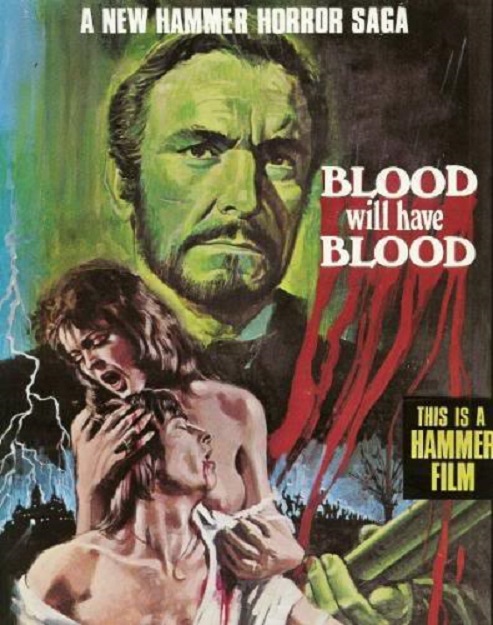
One of Britain's last costumed Gothics, DEMONS OF THE MIND was filmed as BLOOD WILL HAVE BLOOD, exploring "dreams of sexual fear supressed through guilt."

AMID the dying embers of the 1970's British film industry, attempts to move into more psychological thrillers resulted in a number of underappreciated efforts. Dumped onto the wrong end of a double bill with TOWER OF EVIL, DEMONS OF THE MIND - directed by Peter Sykes and written by Christopher Wicking - is a Hammer production which focuses on Baron Friedrich Zorn (Robert Hardy), who fears he has passed on the "family madness" to son Emil (Shane Briant) and daughter Elizabeth (Gillian Hills). Held captive to curb their incestuous desires, Emil is at least released at night to murder women, while Elizabeth is "bled" to make her weak (making use of a vintage Scarificator from the British Museum). When discredited psychologist Falkenberg (Patrick Magee) arrives with his associate scholar Carl (Manfred Man singer Paul Jones), an experiment to rid Emil of his lust involving Inge (Virginia Wetherell) ends in another strangulation. The villagers, influenced by a deranged, self-styled Holy Man (Michael Hordern), decide that Zorn is the true demon, and stake him with a burning cross.

A mix of Hammer's Mittel Europe and fledgling psychiatry was one way the company attempted to make its product fresh, another was by infusing proceedings with new young directors and screenwriters. But DEMONS OF THE MIND is more cynical than satisfying, conveying a relentless dourness (quoting Psalm 38 "For my loins are filled with a loathsome disease, and there is no soundness in my flesh") where conventions are either twists or throwbacks: Magnee's unhinged Mesmerist and Van Helsing substitute helps no one ("Better men than I have been booted out of Vienna!"), an alleged Priest is a dangerous zealot, and the villagers revel in their own sadism.

In a role originally intended for Marianne Faithfull, Gillian Hills plays somnambulant Elizabeth Zorn. Faithfull was pulled late on due to insurance issues on her drug use.

A Poe-like story of an incestuous, murderous dynasty crumbling to dust, Zorn is driven by subconscious compulsions of his peasant bride's "virgin blood" and bare flesh (Zorn is a character undermined by Hardy's pantomime performance; to think we might have had Eric Porter, Paul Scofield, Dirk Bogarde or James Mason). Hordern is also overtly loopy, barely able to carry his over-sized wooden cross, and despite the emotional slant, DEMONS OF THE MIND actually serves up a copious amount of exploitative, early 70's gore: although optically fogged, Zorn's wife is seen to slash her wrists and throat in front of her children, but further scenes of Emil killing maiden aunt Helda (Yvonne Mitchell) with a bunch of keys and Zorn's climactic impalement are in no way shrouded.

The original pitch to Hammer by Frank Godwin - the composer-cum-independent producer who penned Strange Love for LUST FOR A VAMPIRE - was actually a werewolf picture. The studio was intrigued by Godwin's knowledge of the legend of Blutlust, and together with Wicking, formulated a treatment based on the Bavarian story of a man-wolf which was actually a psychopathic condition not understood by the medicine of the time. However, the tale was a complete fabrication, and Hammer did not warm to the werewolf elements anyway, leaving only a vague lycanthropic reference in the finished film where Zorn imagines himself stalking as an animal (to further the pseudo-werewolf angle, the muted cinematography is lensed by Arthur Grant, making his last Hammer picture in an association which started with THE CURSE OF THE WEREWOLF).

Wednesday, June 1, 2016

Strangers on a Train

HOWL (2015)

Similar to DOG SOLDIERS, HOWL benefits from a
contemporary setting and practical creature FX.

PAUL Hyett - more famous his special makeups for THE DESCENT and EDEN LAKE - directs this low budget but polished horror which pits hybrid werewolves against occupants of a stranded late night train (much better than snakes on a plane). London guard Joe (Ed Speelers), unsuccessful for a promotion, and trolley hostess Ellen (Holly Western), are working on the last Alpha Trax out of the capital. The passengers are a motley selection, which includes high-flying alpha male Adrian (Elliot Cowan), professional single mother Kate (Shauna Macdonald), annoying adolescent Nina (Rosie Day), football yob Paul (Calvin Dean) and an elderly couple (Ged (Duncan Preston) and Jenny (Ania Marson)). When the carriages hit a deer and the driver (Sean Pertwee) goes to investigate but never returns, Joe must rise up and protect the commuters from a menace attacking out of the dense forest.

HOWL is widely regarded as the best werewolf picture since AN AMERICAN WEREWOLF IN LONDON. Whereas Universal stumbled with their retro-fitted 2010 reboot THE WOLFMAN, Hyett's film doesn't suffer from the American picture's insistence with their outdated monster design: here, the lean and refreshingly non-hairy werewolves are portrayed more like mutations, impressively vicious and sleek when moving in on their prey. On the human side, the characters are stereotypes but well written and played, and in the best horror film tradition not always interacting successfully as the tensions mount. Consequently, HOWL follows in the tradition of the John Wyndham short story Confidence Trick, where an underground train journey to hell explores the effects of belief on the part of the travellers.

Widespread in European folklore, the werewolf concept chiefly developed during the Middle Ages.

Britain has several outlandish "real" werewolf stories. One of the most famous emanates from Cannock Chase in Staffordshire, where there have been sightings since a notorious incident in 1975: a boy claimed to have promised his soul to the devil through a Ouija board, gaining power to transform into a wolf (then stabbed himself to death). Another colourful tale originates from 1920's Lincolnshire, when a local archaeologist discovered a human skeleton with a wolf's head; after he took his find home, his house was besieged by a werewolf. The Buxton, Derbyshire werewolf is more abstract, as it is unclear whether the creature is a physical entity or a supernatural beast (the nearby village of Wormhill claims to be the location where the last wolf in England was killed in the sixteenth century). And on a broader scale, the Isle of Lewis in the Outer Hebrides allegedly once hosted an entire colony of wolf men.

Tuesday, September 1, 2015

Twisted Tales

SUPERNATURAL (1977)
INSIDE NO. 9 (2014 - )

SUPERNATURAL based two of its episodes around creepy dummies. After the death of her mother, and her father's re-marriage, a young girl becomes obsessed by a doll in the Peter Sasdy-directed VIKTORIA.

SUPERNATURAL was a BBC anthology devised by Robert Muller, who wrote seven of the eight tales. Muller intended the show to rekindle the flavour of early horror cinema, subtle tales of fear based around The Club of the Damned. Each week, a prospective member will tell a true tale of terror; if successful, they will be given lifetime membership, if they fail, murder awaits. It is certainly a series of two halves, with the first four stories suffering from verbal diarrhoea and two excruciatingly loopy lead performances by Robert Hardy (as a haunted actor in GHOST OF VENICE) and Jeremy Brett (who falls under the spell of Lesley-Anne Down in MR NIGHTINGALE). Amazingly the series then opens up considerably: Denholm Elliott and John Osborne expertly play brothers living with their paranoid mother in LADY SYBILL, and NIGHT OF THE MARIONETTES has Gordon Jackson a biographer of Byron and Shelly. Unfortunately this momentum is lost with DORABELLA, a straightforward Gothic where two travellers are ensnared to provide a new vampire blood line. The exterior scenes breath some fresh air, even though it relies heavily on matte shots from Hammer's SCARS OF DRACULA.

Inexplicably broadcast on BBC1 in the summer - and scheduled to clash with BBC2's popular Horror Double Bills - SUPERNATURAL was shot on then industry-standard videotape, and suffers from visible ghosting (the muted colours of the gloomy castles and Victoriana add to its tired façade). Muller's intentions may well have been "to set the viewer's mind into action" with a set of archetypal examinations, but the series was not re-commissioned, despite strong supporting roles by Ian Hendry, Cathleen Nesbitt, Catherine Schell and Vladek Sheybal. The Club of the Damned is also disappointedly underdeveloped, with members displayed as stuffy armchair dwellers rather than bloodthirsty Turks all too eager to literally wield an axe.

Graham Humpreys' poster for THE HARROWING, the final episode of INSIDE NO. 9 series one. Here, a unsuspecting schoolgirl housesits a Gothic mansion, but is actually the centrepiece for a demonic transfer.

During the Radio 4 documentary HOUSES OF HORROR, the observation is made that the main difference between Hammer and Amicus is that Amicus's dour, modern settings were what is revealed after Hammer's large-bosomed damsels and mist-enveloped castles evaporate into your romantic mind's eye. One of its commentators, Reece Shearsmith, really takes this to heart for his INSIDE NO. 9 - co-written with Steve Pemberton - a series of stand-alone thirty minute dramas that feel like TALES OF THE UNEXPECTED melded to PLAY FOR TODAY. The twelve episodes so far have been noteworthy for their eloquently dark writing and almost cinematic staging, with stellar casts bringing to light every sickly twist and turn. The tone has also been refreshingly irrelevant; SARDINES, for example, sees Tim Key cast as a victim of paedophilia, exacting his revenge on his tormentor, family and associates while they are all locked in a wardrobe, while A QUIET NIGHT IN focusses on physical comedy. The highlight of the second series is THE 12 DAYS OF CHRISTINE, a tight-as-a-drum emotional journey of a young woman beautifully played by Sheridan Smith.

Saturday, March 1, 2014

Crash and Tyburn

LEGEND OF THE WEREWOLF (1975)
THE GHOUL (1975)

LEGEND OF THE WEREWOLF on the cover of the last issue of Monster Mag (Vol 2 #4, August 1976).

SON of cinematographer and director Freddie Francis, Kevin Francis founded Tyburn in an attempt to recreate the Hammer Horrors of his childhood. A slaughterhouse employee turned Hammer staffer - he had provided the outline for TASTE THE BLOOD OF DRACULA - the problem was that it was 1973, and horror cinema was becoming immersed in a new realism. Freddie would helm the two pictures here, yet his well documented disdain for the genre - and even greater contempt for its fans - would be mixed with a problematic working relationship with his son. LEGEND OF THE WEREWOLF sees wolves adopt a young boy named Etoile, who is discovered by a freak show fronted by Maestro Pamponi (Hugh Griffith). After growing up, Etoile (David Rintoul) makes his way to Paris where his ability to communicate with animals impresses a zookeeper (Ron Moody) who offers him a job. When Etoile becomes infatuated with prostitute Christine (Lynn Dalby), his resentment for her clients makes him transform into a werewolf. Piecing together the mystery, police pathologist Professor Paul (Peter Cushing) becomes convinced that a man-wolf is responsible.

As with CURSE OF THE WEREWOLF, the picture is based on Guy Endore's 1933 novel The Werewolf of Paris, and is also written by Anthony Hinds. It was announced under the misleading title of PLAGUE OF THE WEREWOLVES, and even though the film may return the story to its Parisian setting, this tepid production portrays its wolf attacks with mundane rapid cuts, red-tinted POV shots and close-ups of bloodied fangs. Thankfully the performances are earnest and entertaining: Cushing is unsurprisingly the star as he gradually unravels the crimes, Dalby gives a sympathetic performance as the archetypal tart with a heart, and Moody passes amicably as the abrasive zookeeper. Of the supporting players Roy Castle is typically irritating as a squeamish and bumbling photographer, while Michael Ripper makes the most of his cameo as "Sewerman."

Don Henderson as THE GHOUL. Prior to becoming an actor, Henderson was a detective sergeant with Essex police; ironically his most celebrated role was as fictional crime stopper George Bulman, who appeared in three TV series: THE XYZ MAN, STRANGERS and BULMAN.

Using sets built for THE GREAT GATSBY, THE GHOUL is a much more feverish affair. The film opens with four upper class twits - Geoffrey (Ian McCulloch), Angela (Alexandra Bastedo), Billy (Stewart Bevan) and Daphne (Veronica Carlson) - embarking on a car race to Land's End. But as fog closes in on Daphne and Billy, the blonde is whisked away by unhinged gardener Tom (John Hurt) to the remote mansion of defrocked clergyman Doctor Lawrence (Peter Cushing). Lawrence has returned from India with a family secret and a mystical servant (Gwen Watford), and unbeknown to Lawrence’s visitors, his son (Don Henderson in sandals) resides in the attic and suffers from uncontrollable bouts of stabbing and cannibalism.

Moving between misty marshlands and interior splendour, THE GHOUL exists in a hazy otherworld, with Cushing's commanding performance providing the actor with several art-imitating-life moments as he mentions his departed wife. As with CITY OF THE DEAD, THE GHOUL shares striking similarities with the structure of PSYCHO. We have a strong-willed blonde literally racing cross-country before stopping to rest at a location where she is murdered; even the killing is Hitchcockesque with a knife cutting through curtains (here, it is mosquito netting that surrounds her bed). Daphne's car is also disposed of with a push (a cliff rather than a bog) and Geoffrey is dispatched Martin Balsam-like falling backwards down stairs. The production also plays like a recycling of Hammer's THE REPTILE, with its English family corrupted by an evil Indian sect.

Thursday, March 1, 2012

House of the Uncanny

DR TERROR'S HOUSE OF HORRORS (1965)
THE UNCANNY (1977)

The Protagonist is revealed as Death himself in the climax of
Freddie Francis' DR TERROR'S HOUSE OF HORRORS.

GESTATING from a proposed television series to be hosted by Boris Karloff, DR TERROR'S HOUSE OF HORRORS - Amicus' first anthology - has dated badly. Despite a title that suggests a haunted house or wax museum setting, the framing device actually takes place in a train. Five men are thrown together - apparently by chance - into a railway carriage where they are joined by Dr Schreck (Peter Cushing), who offers to read their futures as prophesied by a tarot deck, his House of Horrors. Each of the five stories are based on horror archetypes: Werewolf deals with Jim Dawson (Neil McCallum), a young architect uncovering the tomb of Count Valdemar, who has cursed the descendants of the man who killed him; The Creeping Vine is the tale of Bill Rogers (Alan Freeman) and a sentient plant; Voodoo has jazz musician Biff Bailey (Roy Castle) visiting the West Indies and stealing the beat of black magic; Disembodied Hand sees painter Eric Landor (Michael Gough) persecuted by Brian Sewellesque art critic Franklyn Marsh (Christopher Lee); and Vampire tells of Dr Bob Carroll (Donald Sutherland), attempting to set up a surgery in a small town where there is a blood-sucker on the loose.

Opening with Schreck enquiring "room for one more in here?" - a direct reference to the Hearse Driver segment of Ealing's seminal portmanteau DEAD OF NIGHT - the stories are unintentionally funny and predictable, subscribing to Amicus co-founder and scriptwriter Milton Subotsky's child-like view of horror. Although there are virtually no exterior establishing shots, Francis' staging and Alan Hume's photography manage to convey some atmosphere and suspense, but DR TERROR'S HOUSE OF HORRORS is notorious for the Voodoo section. A direct steal from Cornell Woolrich's short story Papa Benjamin, everything about the foreign locale is presented as sinister, with White represented as normal while black – with the exception of cockney Kenny Lynch – portrayed as the dangerous other. In contrast, the Disembodied Hand's scenes between Lee and Gough - playing together for the first time since DRACULA - are immensely entertaining, and this story also benefits from Landor's genuinely unnerving severed digits (an Amicus favourite).

"Cats aren't always cute and cuddly!" Felines are pure evil and the true masters of the world, according to Denis Heroux's THE UNCANNY. This Italian A sheet poster is more striking than anything in the film.

By 1977, the anthology format was not so much faltering but on life support. THE UNCANNY is a batty British/Canadian production co-produced by Subotsky. The film begins with writer Wilbur Gray (Peter Cushing) convinced that cats are taking over, and presents a manuscript to his publisher Frank Richards (Ray Milland). This leads to three tales illustrating Gray's claims: the first ("London, 1912") involves Miss Malkin (Joan Greenwood), who bequeaths her fortune to her cats only for the felines to wreak vengeance when a maid and son conspire to steal her fortune; the second ("Quebec Province 1975") is a black magic story of an orphaned girl whose cat is bullied by her new family; and the final segment ("Hollywood, 1936") has horror star Valentine De'ath (Donald Pleasence) killing his wife with the help of his mistress Edina (Samantha Eggar), only to be menaced by the dead woman's cat. Bookmarked by two pretentious quotes, its all gloriously idiotic, and ends on a memorable shot of Gray's eerie breath, lying dead after being ravaged by his tormentors.

Monday, March 21, 2011

Hampden House of Horror

HAMMER HOUSE OF HORROR (1980)

The House That Bled To Death is a double-twist shocker featuring a priceless scene where a pipe spurts blood over children at a party. A family move into the dilapidated abode where a man had carved up his wife with an ornamental machete, though the new owners have an Amityville-like agenda of their own.

TELEVISION always served Hammer films well. After all, if it wasn't for the success of their adaptation THE QUATERMASS XPERIMENT, it is likely that their vivid re-imaginings of Frankenstein and Dracula would have never been made. By the 1970s, Hammer's usual output of costumed gothique was in its death throes, slices of entertainment that seemed frozen in time. However, the studio's big screen spin-off of ON THE BUSES was a box-office phenomenon, leading the studio on a comedic vein which included LOVE THY NEIGHBOUR and MAN ABOUT THE HOUSE. Hammer's attempts to make TV projects of their own resulted in four separate ventures; the series under consideration here was followed by HAMMER HOUSE OF MYSTERY AND SUSPENSE, but earlier projects were TALES OF FRANKENSTEIN - an abortive pilot starring Anton Diffring - and seventeen episodes of JOURNEY TO THE UNKNOWN.

British horror had largely become past tense from the mid-70s; Tigon's last official release was the sex film COME PLAY WITH ME, and Amicus ceased production after THE PEOPLE THAT TIME FORGOT in 1979, the same year in which Hammer called in the receivers. But two former board members, Brian Lawrence and Roy Skeggs, assumed control and immediately began looking at ways to revitalise the company. Lawrence and Skeggs needed a new base of operations and leased Hampden House in Buckinghamshire - close to Hammer's spiritual home of Bray - to develop a new series for television. A former private house and exclusive Girl's School, the majestic property and surrounding areas are used ad infinitum, and most of the production, including the editing, was overseen there. Assembling their crew, the two men unsurprisingly drafted in a number of former Hammer employees, including directors Peter Sasdy, Alan Gibson and Don Sharp, visual effects man Ian Scoones, and James Bernard scored two stories.

Diana Dors and her brood in Children of the Full Moon, a long way from Oliver Reed and THE CURSE OF THE WEREWOLF.

Funded by ITC and screened between 13th September and 6th December 1980, the 13 episodes of the HAMMER HOUSE OF HORROR were refreshingly bleak, mixing contemporary horror and titillation in the manner of Norman J. Warren (with Frankenstein and Dracula nowhere in sight). Hampered by meagre budgets, pedestrian scripts and flat direction, the fifty-minute stories are surprisingly watchable, thanks to their variety of topics - devil worship, time-travelling witches, cannibalism and Nazi pet shop owners - and stars such as Hammer favourites Peter Cushing, John Carson and Robert Urquhart, together with Brian Cox, Jon Finch and Warren Clarke et al (a young Pierce Brosnan appears as a randy jogger victim, a character so incidental that he's even denied an onscreen death).

HAMMER HOUSE OF HORROR falls into that notion lovingly referred to as guilty pleasures. Even the worst entry, Carpathian Eagle, stars Suzanne Danielle as a psychotic seductress/writer who rips out the heart of her victims with a dagger. The best two episodes hold up as memorable slabs of TV horror: The Two Faces of Evil is a dazzling doppelganger yarn with a genuinely jolting prologue, and the delirious The Mask of Satan sees a morgue worker believing he has a disease engineered to bring Satan to Earth. The rest of the output fall somewhere in between; at least Rude Awakening attempts something different in its total abandonment of logic, with adulterous estate agent Denholm Elliott persistently accused of murdering his wife; and VAMPIRE CIRCUS helmer Robert Young brings some stylish flourishes to the voodoo-themed Charlie Boy.

Tuesday, February 1, 2011

Love Will Tear Us Apart

THE CURSE OF THE WEREWOLF (1961)

Oliver Reed and Yvonne Romain in an impossibly-staged publicity still. Reed and Romain had a closely tied association with Hammer; the actress plays Reed's mother - who dies in childbirth - for THE CURSE OF THE WEREWOLF, then became his fiancee in CAPTAIN CLEGG before sharing their third appearance in THE BRIGAND OF KANDAHAR.

UNLIKE the literary origins of Dracula and Frankenstein, zombies and werewolves are rooted in folklore. Consequently, the living dead and shape-shifting sub-genres have treated film as their developing texts: George A. Romero basically re-invented the zombie with NIGHT OF THE LIVING DEAD, while THE WOLF MAN similarly set the precedence for romantic dread. Subsequent werewolf appearances were negligible until advances in make-up effects unleashed a slew of transformation pictures in the early 1980s, where THE HOWLING and WOLFEN developed lycanthropic societies coexisting with humans, and THE COMPANY OF WOLVES a link with menstruation. This exploration also seemed in tandem with developing body horror concerns, not only with cinema spectacles such as THE THING and VIDEODROME, but with the onset of AIDS.

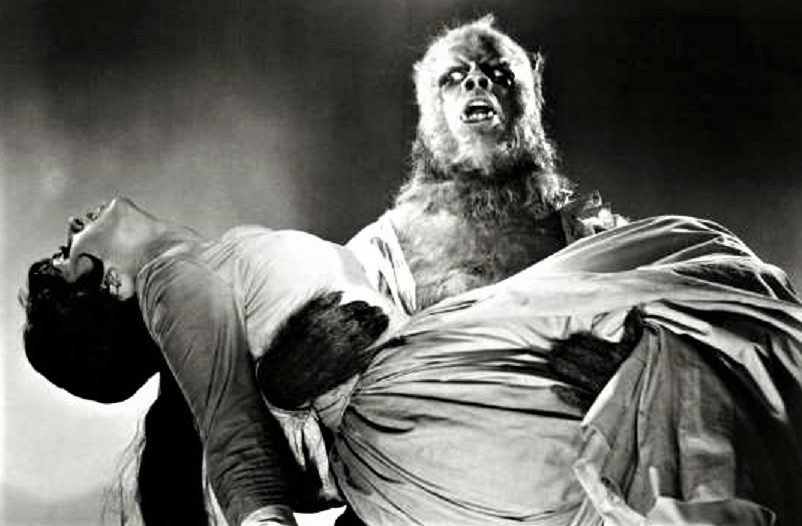
Werewolves were limited to a triptych of releases during the British horror period of the 1960s and 70s. Amicus’ lupine whodunit THE BEAST MUST DIE was joined by two features inspired by Guy Endore’s 1933 novel The Werewolf of Paris: Hammer's THE CURSE OF THE WEREWOLF and Tyburn's LEGEND OF THE WEREWOLF. Directed by Terence Fisher and written by producer Anthony Hinds under the pseudonym John Elder, THE CURSE OF THE WEREWOLF is by far the best remembered. It is a flawed, visceral melodrama of lycanthropy from birth to death, ponderous in its pacing, but the film effectively focuses on the inner turmoil of man into wolf, benefiting from make-up artist Roy Aston's most accomplished work and arguably propelling young Oliver Reed onto the road to stardom. Pulverised by the Monthly Film Bulletin which claimed the film was "a singularly repellent job of slaughter-house horror," the picture ranks as one of the most brutal of all Hammer productions.

Oliver Reed's werewolf was the cover star of Warren publishing's low-brow Famous Monsters of Filmland #12 (June 1961).

The film opens with a beggar (Richard Wordsworth) visiting Castillo Siniestro, where the Marquis (Anthony Dawson) is celebrating his wedding. The beggar irritates the nobleman, who has him thrown into the dungeons where he remains forgotten by all but the jailer and his mute daughter (Yvonne Romain). After many years - with the Marquis decrepit and his wife long dead from his brutish behaviour - the Marquis sexually assaults the servant girl. When she rejects his advances, he has her thrown into the dungeon where the beggar - now reduced to a slavering animal - rapes her then dies in the act of violation. When the girl is freed, she stabs the Marques to death and flees into the woods, where kindly scholar Don Alfredo (Clifford Evans) rescues her. The girl dies in labour after giving birth to a son from her ordeal, and as the young Leon (Justin Walters) grows, he is increasingly troubled by dreams of drinking blood. Diagnosed with lycantrophy, the only cure is for Leon to be within a loving environment. Reaching manhood, Leon (Oliver Reed) - denied access to his love Cristina (Catherine Feller) - goes on a murderous rampage.

Endore's source material emphasises a number of aspects that cinema - at the time - could not dare to adhere to. Endore's rapist was a priest, not a beggar, for example, and the afflicted Bertrand and his love Sophie in the book avoid the violent effects of his transformation by cutting into parts of her body and allowing him to suck her blood ("her body was a fountain of blood to him, and it was if her body responded to his needs, like a nursing mother with milk.") In contrast, the film superficially represents the bond between Leon and Cristina in typical Hollywood fashion - the closest to a love story Fisher achieved  - that never touches on such sado-masochistic tendencies. Furthermore, the movement of the novel's locales to Santa Vera, Spain, centre around the abandoned Spanish Inquisition drama THE INQUISITOR/THE RAPE OF SABENA. After distributors Columbia feared condemnation by the Catholic Church's Legion of Decency, the project was pulled from Hammer's schedule, leaving a number of sets taking shape on the Bray lot which were then integrated into Fisher's film.

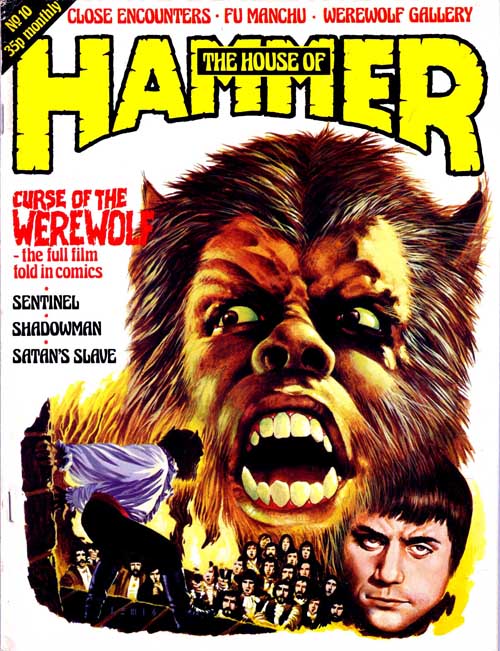
The House of Hammer #10 (January 1978) included a comic adaptation of THE CURSE OF THE WEREWOLF. Drawn by John Bolton, the strip acted as the flagship for this special werewolf issue.

With Reed not appearing until roughly the halfway mark, the extended prologue detailing Leon's lurid conception is suitably heady but prolonged. It is detrimental to the mechanics of the film that Reed and Evans' central performances could not be afforded more screen time, but the movie suffers from a number of time anomalies, surprising considering Fisher's trademark linear style: Leon’s feelings for his eternal love develop too quickly and off-screen, and Alfredo somehow narrates the preceding events which he could not have been akin to. Hammer also adheres to several cliches of the werewolf picture but also establishes new ones of its own. Lycanthropy is presented not as a disease but as an accursed birthright, and Leon's bestial instincts can be suppressed by the feelings of inner peace and comfort brought about by love, while the emotions of rage and frustration have precisely the opposite effect. Therefore Leon is subconsciously in control of his own fate, his werewolf dependent not just on the occurrence of a full moon but also upon Leon's state of mind. But like most cinematic werewolves, the character is not painted as a villain but as a personable young man ultimately condemned to a second existence of blood lust by circumstance.

Ashton's make-up effects for the wolfman, the Marquis and the beggar are uniformly excellent. Aston himself had suggested to Hinds that Reed's bone structure would be ideal for the role, and the success of the monster is that it is part-man and part-wolf, encapsulating Reed's ferocious snarls, especially starling when blood drips from his mouth. With this avenue for human expression, the tragedy of the werewolf is not lost, unlike later films which are reliant on mechanical effects and CGI, which overshadow any levels of performance. The Marquis' design explored how make-up could define a character's prolonged debauchery - especially memorable in the scene where Dawson picks his skin in an attempt to improve his appearance for the servant girl - and the beggar's own mutation into beast would not feel out of place on The Island of Doctor Moreau.

Universal - who owned the source material - contracted Hammer to make THE CURSE OF THE WEREWOLF. A film very much playing like THE WOLF MAN's bastardised relative, its horde of "Angry Mob" villagers who hound Leon at the climax - seen here underpinning this one-sheet - was Universalesque in its own right.

Dawson is suitably lecherous as the Marquis, and Wordsworth - having been similarly effective as the man/monster of THE QUATERMASS XPERIMENT - is both touching and frightening in a role ranging from abused beggar to feral man. Evans brings a subtle facade to the role of adoptive father, emotionally distraught yet resolved to end his sons misery. Without question, however, it is Reed's film. While the "Hammer Heavy" was evidently not quite the finished article at this point in his career, his portrayal conveys pathos and menace and amusingly, when he does appear, he's soon working in a winery, surrounded by bottles. Romain is enchanting as the exotic, raven-haired servant, but the rest of the cast are a mixed bag. Michael Ripper is wide-eyed as Old Soak and Desmond Llewellyn makes an appearance as a footman, but John Gabriel - as a priest - and Martin Matthews - as Leon's best friend - bring nothing to their roles. And in a refreshing quirk, Peter Sallis appears as mayor Don Enrique, 45 years away from similar circumstances voicing Wallace in the clay-mation favourite THE CURSE OF THE WERE-RABBIT.

Monday, November 1, 2010

The Beast Within

THE BEAST MUST DIE (1974)

Time is running out for Peter Cushing's Norwegian accent during
the infamous "Werewolf Break" of Amicus' cult curio.

AMICUS' THE BEAST MUST DIE mixes Blacksploitation, THE AVENGERS and Agatha Christie in an uproariously silly production made at the height of British horror desperation. Tom Newcliffe (Calvin Lockhart) is a black millionaire big game hunter whose elaborate mansion security system - run by Pavel (Anton Diffring) - has been constructed to keep tracks on a potential prized conquest, a werewolf. Newcliffe explains that his guests have been invited for one reason only – one of them is a lycanthrope. Everyone has a suspect past: outrageously accented Dr Lundgren (Peter Cushing), concert pianist Jan Jarmokowski (Michael Gambon) and socialite girlfriend Davinia (Ciaran Madden), artist Paul Foote (Tom Chadbon), and diplomat Arthur Bennington (Charles Gray) all have places at the table. Also, could the werewolf be Caroline (Marlene Clark), Tom's wife?

Adapted from James Blish's 1950 novelette There Shall Be No Darkness, THE BEAST MUST DIE was Amicus' last horror. Directed by Paul Annett - who devoted most of his career to television - the film plays more like a made-for-TV movie with obvious budgetary constraints: the werewolf is actually an Alsatian. A Valentine Dyall voice-over tells us to "watch for the werewolf break," so the viewer can contemplate their own decisions who is the shape-shifter. When it actually arrives it is a 30 second William Castle-style gimmick, but the whole premise is self-defeating, as the film does not portray any legitimate structure for sleuthing; everyone has been portrayed as being as guilty as everyone else, which rather debunks that the picture is "a detective story – in which YOU are the detective."

To illustrate the ramshackle nature of the production, even the werewolf in this one-sheet isn't actually from the project, rather an image from Universal's THE BOY WHO CRIED WEREWOLF.

THE BEAST MUST DIE's werewolf lore is also confusing, mixing wolfs bane, lymph glands and everyone's favourite party game Pass the Silver Candlestick. The performances range from the sublimely ridiculous to the ridiculous, and amazingly Lockhart was the first black actor to play leads with the Royal Shakespeare Company. Newcliffe's statement "Money buys…. things…." is as profound as the character gets, with the actor delivering his lines like Thornton Reed in GARTH MARENGHI'S DARKPLACE. Of the other cast members Gray is suitably slimy, Cushing uses the term "transmogrification" to prove he is a scientist, and Gambon's slightly troubled expression doesn't change throughout, even when playing out one of the most tedious car chase scenes in 1970s cinema.

Sunday, November 1, 2009

Hound from Hell

AN AMERICAN WEREWOLF IN LONDON (1981)
BEWARE THE MOON: REMEMBERING AN AMERICAN WEREWOLF IN LONDON (2008)

Curses and transformations abound in John Landis' horror-comedy. Like the original Lon Chaney Jr THE WOLF MAN, the director recognises that the real meat of a werewolf picture is that of personal tragedy. 

BLOODIER than slashers of the time, but recognisably a John Landis film, AN AMERICAN WEREWOLF IN LONDON follows David (David Naughton)'s gradual change from man to wolf. Victims hang in limbo to haunt him; this enables best friend and travelling companion Jack (Griffin Dunne) to keep him company - despite advancing stages of decomposition - and subsequent victims joyously suggesting ways to kill himself and severe the curse bestowed upon him. Back in 1981, the film kept audiences (and critics) off-balance with its mix of gore and humour (which does not make the film a comedy). Apart from the show-stopping transformation sequence - which Landis wanted to withstand the scrutiny of a harshly lit set - AN AMERICAN WEREWOLF IN LONDON contains many nightmare scenes which add to the quirkiness. It also mocks the need for silver bullets, but is not wholly successful in the director's insistence for a "four-legged hound from hell," rather than more of a Wolfman. The cumbersome movement of David's finished state is shown too much, and is only really effective in long shot (as in the tube station murder). 

Viewed today, the movie still packs a considerable punch. The performances are sympathetic (though Nurse Price (Jenny Agutter) inviting David to stay at her home seems as abrupt as the jump-cuts), and while it is true that Rob Bottin's biped werewolves caused a sensation for THE HOWLING, AN AMERICAN WEREWOLF IN LONDON was so completely different in tone that fans had no trouble embracing both. With the film's arrival on Blu-Ray, the major new draw is Paul Davis' accompanying documentary BEWARE THE MOON: REMEMBERING AN AMERICAN WEREWOLF IN LONDON. Besides Landis and make-up artist Rick Baker's extensive involvement, almost all the main cast and behind the scenes personnel are interviewed, in particular Dunne, who has much to say about the physical and psychological effects of looking and acting as a corpse. Davis presents the programme from the original locations as they appear today, therefore serving as a guide to making your own pilgrimage.

Sunday, July 13, 2008

Bad Moon Rising

THE COMPANY OF WOLVES (1984)
Swamp Thing #40 (1985)

With her pale skin, black hair, and air of innocence, 13-year-old Sarah Patterson was perfect for Rosaleen in THE COMPANY OF WOLVES.

UNLIKE Disney's sugar coated simulacrums of folktales, Neil Jordan’s THE COMPANY OF WOLVES resembles the original oral folklore of medieval times. These stories - the television and pornography of their day - were consistent with times full of violence, as well as beauty. Based on Angela Carter’s The Bloody Chamber, the film is essentially a coming-of-age tale, a dark retelling of Little Red Riding Hood making explicit its sexual and Freudian subtext. For the writer, the original version(s) of Little Red Riding Hood operated as a structured agenda to warn young girls of the dangers of sexual maturity, and implicates for them a passive family and societal role. By viewing this and other traditional tales from a feminist perspective, both subtle and blatant inversions took place within Carter’s stories. Jordan wrote the script in collaboration with the author, and as such, the film creates a symbolic world where the transition from child to adult - from girl to woman - is a change to be both celebrated and feared.

As in Freud, Rosaleen (Sarah Patterson)'s visage deals with her psyche as characters in her dream. Grandmother (Angela Lansbury) symbolizes the path of rules, caution, and fear. Rosaleen is warned by her Grandmother to never "stray from the path… once you stray from the path you're lost entirely! The wild beasts know no mercy. They wait for us in the wood, in the shadow, and once you put a foot wrong they pounce!" What the elder is really saying is to stay on the path of celibate adolescence leading to marriage, and to beware of the bestial sexuality of men.

Swamp Thing #40 contained The Curse, a segment of Alan Moore’s American Gothic story arc.

Like John Fawcett’s GINGER SNAPS, THE COMPANY OF WOLVES uses the changing body of the werewolf as a metaphor for puberty, menstruation and sexual maturity. The recurring motif of the full moon draws obvious parallels between the menstrual (often thought lunar) cycle and the 'call of the wild' of the full moon for werewolves, which was also the subject of Alan Moore’s story for DC Comics Swamp Thing #40 titled The Curse. This tale - illustrated by Steve Bissette and John Totleben - provoked more heated mail (pro and con) than any other entry in Moore’s celebrated run on the title, ranging from letters about feminism to suicide. But The Curse works as a female werewolf yarn on three levels: as a horror story standard, an allegory for menstruation, but also men’s attitude to the female sexual cycle and by extension their attitude to woman. This hints at Moore’s true intent for the work - that physical and psychological mistreatment of the gender goes back a long way.

Tuesday, January 1, 2008

Marshall Law

DOG SOLDIERS (2002)
THE DESCENT (2005)

DOG SOLDIERS returns to the kind of lycanthrope comedy-horror that hasn't been seen since AN AMERICAN WEREWOLF IN LONDON.

WITH their seven foot tall werewolves and cave-dwelling people eaters, Neil Marshall’s DOG SOLDIERS and THE DESCENT gleefully tore open the heart of the British horror movie. What Marshall lacks in budget and satiric savvy, he recoups through razor-sharp shooting in low-light and as much blood as he can spill; DOG SOLDIERS takes all of two minutes to dismember its first pair of victims, while THE DESCENT wait’s a full three to skewer a father and young daughter. Both pictures are barebone survivalist shockers, but the Newcastle-born auteur - in the great tradition of the B movie - gets a lot out of nothing, the dark in particular.

Portrayed well, the werewolf is the most sympathetic of monsters. David Kessler, the lead character in AN AMERICAN WEREWOLF IN LONDON, embodied the creature as a near-tragic figure, while GINGER SNAPS drew comparisons between lycanthropy and the onset of menstruation for the Buffy generation. This horror of transformation is at the heart of the werewolf condition, a fact disappointingly ignored by DOG SOLDIERS; rather than a werewolf movie, it is a soldiers-under-siege picture reminiscent of James Cameron. The first glimpses of the towering beasts are effective enough: silhouetted for a few frames between trees, and shards of cold illumination backlight the swirling fog akin to Ridley Scott, but there are far too many inconsistencies. Why, for example, would the werewolves conceive an elaborate trap which turns their home into a battlefield rather than simply devour their prey in the wild?

Exaggerating the usual horror movie gambit (pretty girls in danger), THE DESCENT invites you to reconsider your generic expectations. As the girls play all the variously gendered roles, they’re as aggressive, selfish, mean, and courageous as any male characters have been in similar situations.

Far more polished is Marshall’s second feature. Both a commercial and critical success, THE DESCENT is the story of female friends on an ill-fated caving trip in the Appalachian Mountains. As the group journeys deeper underground, repressed antagonisms return - particularly those between Sarah (Shauna Macdonald) and Juno (Natalie Mendoza) - and freakish, cannibalistic creatures shadow their every move. Taking forty-five minutes to introduce its albino monsters, Marshall keeps the suspense high enough beforehand with its exploration scenes of cave-ins and bone-crunching falls. Red flares, green glow sticks and yellow torches all penetrate the natural dark, and atmospheric use is made of the ghoulish grey-greens of a video camera’s infrared. The orcesque, chattering “crawlers” are satisfyingly repulsive, recalling the figurative hillbillies of American Gothic and the Morlocks from H.G. Wells’ The Time Machine. These humanoids, admittedly, are blind reductions of us, hunting, feeding and inbreeding in their own nuclear “family.”