
SON OF DRACULA (1974)
CRAZE (1974)
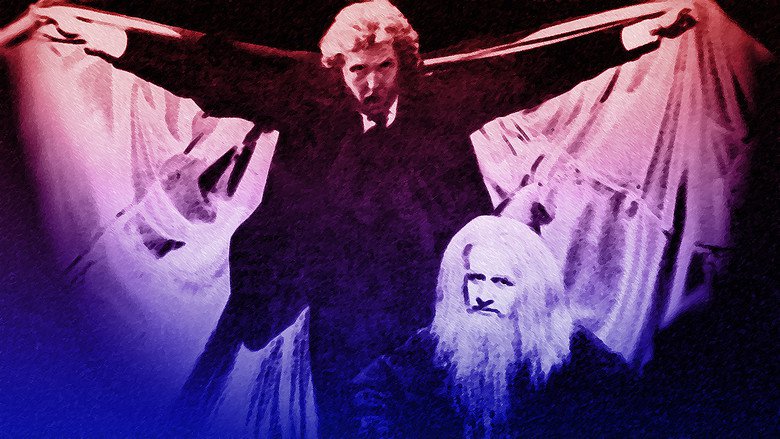
"I can't live, if living is without you"; chums Harry Nilsson and Ringo Starr in SON OF DRACULA, cinema's greatest musical travesty. Attempting to cash in on the success of Mel Brooks' YOUNG FRANKENSTEIN, the film is also known as YOUNG DRACULA.
WRITTEN by TALES THAT WITNESS MADNESS scribe Jennifer Jayne in the failed hope of casting David Bowie, Freddie Francis' rarely seen SON OF DRACULA - made by Apple Films and produced by Ringo Starr - begins in 1800's Transylvania, where Baron Frankenstein's dwarf assistant (Skip Martin) stakes The Prince of Darkness (Dan Meaden). Merlin the Magician (Starr) discovers that one of The Count's brides is pregnant and will give birth to a son in a hundred years. The offspring Count Downe (Harry Nilsson) is due to be crowned King of the Underworld in 70's London, but in the seventy-two hours beforehand he is vulnerable in deciding his future. Eventually he wants to become human in the name of love - especially that of Amber (Suzanna Leigh) - thanks to the help of the wheelchair-bound Van Helsing (Dennis Price), and despite the plotting of the immortal Baron (a barnstorming Freddie Jones).
Actually completed in 1972, Starr's excruciatingly dull vanity project failed to pick up any distribution. Realising that this comedy actually had no jokes - and hid behind Nilsson's musical numbers and message of love - the ex-Beatle turned to Graham Chapman to re-write and re-dub. However this version allegedly made even less sense, and has never been made public (SON OF DRACULA eventually was shown on a limited run in the States). The film is a pedestrian pantomime at best, with generous amounts of padding (Count Downe foils a completely random attack by a werewolf, for instance). Francis further laces the production with classic interpretations of monsters (Meaden's Dracula actually takes Nosferatu as a blueprint, and there are also appearances by Frankenstein's creature, the Mummy and even a Medusa and a Fu Manchu). In fact the only point of interest are the musicians on show, which includes John Bonham and Keith Moon exchanging drumming duties in Downe's band.
Actually completed in 1972, Starr's excruciatingly dull vanity project failed to pick up any distribution. Realising that this comedy actually had no jokes - and hid behind Nilsson's musical numbers and message of love - the ex-Beatle turned to Graham Chapman to re-write and re-dub. However this version allegedly made even less sense, and has never been made public (SON OF DRACULA eventually was shown on a limited run in the States). The film is a pedestrian pantomime at best, with generous amounts of padding (Count Downe foils a completely random attack by a werewolf, for instance). Francis further laces the production with classic interpretations of monsters (Meaden's Dracula actually takes Nosferatu as a blueprint, and there are also appearances by Frankenstein's creature, the Mummy and even a Medusa and a Fu Manchu). In fact the only point of interest are the musicians on show, which includes John Bonham and Keith Moon exchanging drumming duties in Downe's band.

Jack Palance offers Julie Ege to Chuku in the delirious CRAZE.
Coming off this catastrophe, Francis' increasing distain of horror films and its fans made the director/cinematographer admit that his reliance on the zoom lens for CRAZE was due to a "lack of interest." But this Herman Cohen production is far from uninteresting, an exploitation fever-dream ripe with idol-driven mayhem and possibly the greatest array of starlets and seasoned character actors ever to grace a single British horror. Neal Mottram (a potent Jack Palance) is a psychotic antiques dealer who owns Chuku, a googly-eyed African fetish object he keeps in his basement. Mottram believes that by sacrifice to Chuku, the "love God" will reward him with wealth, and his victims include Helena (Julie Ege) who ends up in a furnace, and sex toy-loving Sally (Suzy Kendall in a horrendous curly black wig). As part of his unhinged quest Mottram even hatches an alibi plot, using ex-girlfriend Dolly (Diana Dors) to enable him to murder rich Aunt Nash (Dame Edith Evans); but with the police honing in (and a nod to PEEPING TOM), Neal is impaled on Chuku's trident.
CRAZE has a pathological hatred of women, a stance it shares with source novel Infernal Idol, a brisk 1967 Helmut Henry Hartmann pulp written as Henry Seymour ("she was that slightly seedy suburban housewife type who carried too much weight around the hips and spent too much of the housekeeping money on unsuccessful attempts to look glamorous.") But Francis' movie really goes for the throat, illustrated by Detective Sergeant Wall (Michael Jayston)'s comment on ditzy Dolly ("one would have to be pretty desperate to sail into that port.") Despite Mottram's literal lady-killing, there is a distinct homosexual yearning between the dealer and his younger live-in colleague Ronnie (Martin Potter). Mottram has apparently saved him from "sleeping in Hyde Park hustling old queens," but their domestic arrangement seems characteristically bitchy.

