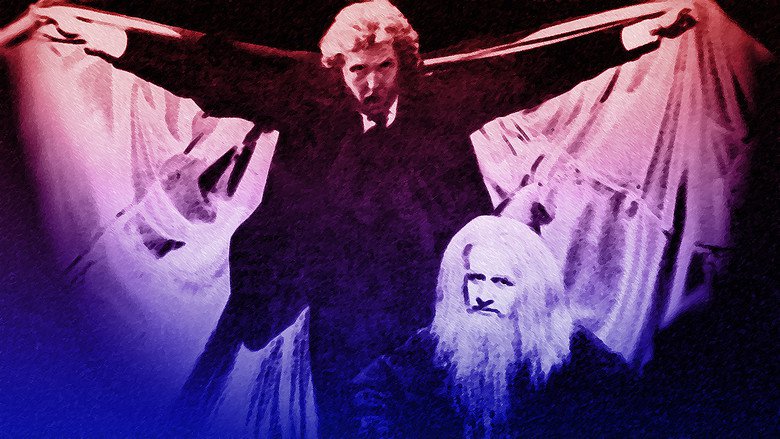
Showing posts with label Vampires. Show all posts

Friday, August 1, 2025

Andy Milligan in London (Part I of II)

NIGHTBIRDS (1970)
THE BODY BENEATH (1970)

Berwick Kaler and Julie Shaw play strained lovers in the avant-garde NIGHTBIRDS. Their entanglement illustrates Andy Milligan's perennial view of the sexes: how passive men are manipulated by women.

DESCRIBED by Tim Lucas in Video Watchdog as "horror's unwanted weirdo," Andy Milligan was more derogatorily pigeon-holed by Psychotronic's Michael Weldon, who said that if you were a Milligan fan, there was no hope for you (Stephen King also famously dismissed his 1968 opus THE GHASTLY ONES as "the work of morons with cameras.") Most of the Minnesota-native's movies were made for under $15,000, and he was virtually a one-man production company. Not only did Milligan write, direct, photograph, edit and design costumes, he was also a make-up effects supervisor using Grand Guignol techniques (this garish style put him on a similar plain to Tod Slaughter). Dying in 1991 from AIDS and buried in an unmarked grave, Milligan was not an open homosexual, rather an S&M addict relying on fantasy to exorcise his personal demons.

Milligan's filmography of open scars shows a venomous disdain for the church and dysfunctional families; in particular, the home is a cesspit, and relatives are endlessly judgmental. These onscreen complexities mirror his real-life upbringing, as his mother was an overweight alcoholic who allegedly was physically, mentally and sexually abusive to all her children and husband. Although close to his father, Andrew Milligan Sr was a US Army officer, which meant further pressures due to frequent relocation. On set Milligan had a reputation to be demanding and bad-tempered; colleagues also relate to emotional and sexual manipulation, raising speculation that he suffered similar (untreated) health problems to his mother. To typify his chaotic life, one of the filmmaker's few long-term partners was Vietnam veteran Dennis Malvasi, who was a convicted abortion clinic bomber.

THE BODY BENEATH
promised "sexually rampant ghouls, depraved souls and blood-red roses filmed in the graveyards of England." In fact, Andy Milligan shot in Highgate Cemetery without permission.

Milligan's residence in London produced NIGHTBIRDS, THE BODY BENEATH, BLOODTHIRSTY BUTCHERS, THE MAN WITH 2 HEADS and THE RATS ARE COMING - THE WEREWOLVES ARE HERE. Although known as a horror director, NIGHTBIRDS - similar to his 1965 debut short VAPOURS - exists in a contemporary setting and aspires to be an arthouse stage play. NIGHTBIRDS tells of Dink (Berwick Kaler) and Dee (Julie Shaw), who have run away from their mothers and are struggling to survive in a not so swinging London. A slow-burning character study, the fragile, virginal and possibly gay Dink is in direct contrast to the resourceful, strong-willed but unbalanced Dee. Kaler and Shaw - both impressive first-timers - force along the paper thin plot, until the true nature of Dee is revealed in the final reel (in which syphilis and the abandonment of her dying child doesn't stop a calculating demeanour).

Behind the nonsensical title THE BODY BENEATH, this is Milligan's most accessible film and illustrates his loathing of clerical figures. Reverend Ford (Gavin Reed) and his silent wife Alicia (Susan Heard) are 400-year-old vampires residing at Carfax Abbey, aiming to restore their incestuous bloodline after years of outsider marriages. Aided by three ghoul brides and hunchback with a heart Spool (a returning Kaler), Ford captures relatives Susan (Jackie Skarvellis) and Candace (Emma Jones) for his carnal needs. The production is best remembered for its delirious Undead Gala climax, where the Vaseline-smeared, red-tinted lens captures the cannibalistic conference (we learn that even Julius Caesar and Elizabeth I are members of the bloodsucking clan).

Chiefly, THE BODY BENEATH takes place in the Neo-Tudor mansion Sarum Chase near Hampstead Heath (Milligan would return for THE RATES ARE COMING - THE WEREWOLVES ARE HERE). The nudie short MISS FRANKENSTEIN RIP was also shot there, as well as being photographed for the sleeve of The Rolling Stones’ Beggars Banquet.

It could generously be said that Milligan modernised vampires before Hammer's DRACULA, A.D. 1972, and played with lore akin to CAPTAIN KRONOS VAMPIRE HUNTER. For example, the ghoul women politely say hello before biting their victims, although they don't have fangs. In further quirks the undead use chloroform, as well as having blood pressure reduced by leeches and being able to move around in daylight thanks to an injection that counteracts the sun. Painfully ponderous and talkative, the washed-out look adds to the Gothic austerity, with Reed revealing in the madness (and certainly getting the best lines).

Saturday, June 1, 2024

Highgate Horror (Part II of II)

TULPA (2013)

The sigil of Tulpas, a sentient mental companion. Reported to help with depression and social anxiety, Tulpas ease pressure through detached perspective.

THIS short documentary about David Farrant takes its name from a Tibetan Buddhism concept, that a thought-form can be created through spiritual practice and intense concentration. Modern practitioners, Tulpamancers, formulate imaginary friends through hallucinations that enable them to see, hear and touch their creation. Research has shown that respondents were higher in rates of neurodivergence (including autism and ADHD), leading to speculation that such individuals use the medium to combat loneliness and ease mental tensions, a self-hypnosis to escape reality and retreat into their specifically desired fantasy world.

As described in THE MINDSCAPE OF ALAN MOORE, earliest forms of magic were referred to as "the art." Purely, magic is the science of words and images, rather than conjuring a rabbit out of a hat. The world has now degenerated into such a state of artistic banality that today's shaman are advertisers and influencers, manipulating thought through slogans, jingles and technology. As Moore states, "artists and writers have allowed themselves to be sold down the river. They have accepted the prevailing belief that art, that writing, are merely forms of entertainment. They are not seen as trans-formative forces that can change a human being, that can change a society, they are seen as simple entertainment, things with which we can fill half an hour while we're waiting to die."

David Farrant became as closely linked to Highgate as that of its "vampire." TULPA is a shallow documentary that portrays a life in fast-forward, against a backdrop of Mastrodon's instrumental track 'Joseph Merrick'.

The paranormal experiences of Farrant - particularly his association with the Highgate Vampire - exist in a netherworld of rituals, investigations, confrontations and press hyperbole. He was a man yearning for an old order, reaching out to wider abilities. With the very use of the word TULPA to pigeon hole his time on Earth, Farrant can relate to a process of willing their needs onto some kind of canvas; 1970s Britain was certainly a grim place to be, but there was still an appreciation of the arts and all its possibilities.

Unfortunately, TULPA is sparse and disappointing. Made by identical twin brothers Max and Bart Sycamore, the twenty-three minute effort is a blur of spliced footage, pulled together to form some sort of time frame. Narratives are constructed from a variety of means, often to form singular points (anything from interview segments, bookshop appearances and dramatisations). We learn that the loss of a spiritual mother at a formative age leads to David's rebellious nature against formal education, yet this is sketched over to move on to the next sub topic. Popular culture is also thrown against the wall to see what sticks, with a glacial reference to The Enfield Poltergeist, and clips from NOSFERATU and DRACULA, A.D. 1972.

Monday, April 1, 2024

Highgate Horror (Part I of II)

IN SEARCH OF THE HIGHGATE VAMPIRE (1997)
The Pond Squire Ghost Chicken

Opened in 1839, Highgate Cemetery stands on redeveloped grounds from the manor and estate of Sir William Ashurst, Lord Mayor of London and director of the Bank of England. Renowned for its Romantic-Gothic architecture and Egyptian-style catacombs, the location was utilised by Hammer (TASTE THE BLOOD OF DRACULA, FRANKENSTEIN AND THE MONSTER FROM HELL) and Amicus (as opening credits for TALES FROM THE CRYPT and FROM BEYOND THE GRAVE).  

VAMPIRE myths are thick in Slavic lore, yet British bloodsuckers are more anaemic. The most notable homegrown example is the vampire of Highgate Cemetery in Swain's Lane, North London. Sightings of a tall, dark, leyline-loving figure in the Borough of Camden have been reported since the Victorian era, but came to prominence in the late 1960s and early 1970s, when the press proclaimed the culprit as undead, after reports of a floating, black-cloaked entity with hypnotic red eyes. And as we entered the Satanic Seventies, rumours circulated of witchcraft ceremonies within the cemetery grounds, and dead foxes drained of blood. 

Paranormal investigator and President of the British Psychic and Occult Society (BPOS), David Farrant, was a leading protagonist amongst the tombstones. IN SEARCH OF THE HIGHGATE VAMPIRE - its title clearly riffing on the pseudo-American documentaries and television series of the 1970s - was produced and directed by BPOS stalwart Dave Milner, under his Darkhouse Productions banner. This thirty-six minute video documentary is infused with a camp Goth aesthetic, and presented by Farrant himself. Seated throughout, he delivers his account laboriously and without any real insight, although there is a theory that the black magic rituals reinvigorated the legend into something much darker. Purely a BPOS puff piece, it does not mention Farrant's prison sentences for grave desecration and sending voodoo effigies to the police. A typically stilted conclusion is laughably nondescript: "as to the question of whether a vampire still exists at Highgate Cemetery, well, I can only say, yes."

David Farrant helped The Highgate Vampire to become one of London's most enigmatic urban legends, which has been exaggerated by collective hysteria, misidentification and hoax. Highgate Cemetery is also said to be haunted by a spectral cyclist, a faceless man and a floating nun.

Despite his reputation, Farrant comes across as shy, effeminate, and somewhat ethereal. Without naming names, he dismisses the involvement of another investigator, who is undoubtedly Sean Manchester. A Bishop of the Old Catholic Church, Exorcist and general defender of the faith, Manchester stated that the vampire was a Romanian nobleman, of whom he eventually banished in 1973 in another location altogether, in Crouch End. Most infamously, The Bishop declared he would hold an exorcism at Highgate on Friday 13th March 1970, which was covered on Thames television. Soon the grounds were overrun with makeshift vampire hunters, despite the best efforts of the police.

The feud between Farrant and Manchester lasted until David's death in 2019. This was not just a war of words, metaphysical confrontations were also planned (branded occult "duels to the death" or "psychic combats") though never realised. Essentially IN SEARCH OF THE HIGHGATE VAMPIRE is as shallow as the facts of the case, barely touching on the real meat of the matter: that of two individuals who were unable to accommodate the same consecrated ground.

Just when you thought Highgate has enough paranormal activity, consider the case of Sir Francis Bacon's otherworldly frozen chicken. This oddity sets up a variety of humourous tags, such as poultrygeist, chilling ghost and phantom foul. The chicken appears to run in wild circles before disappearing into the ether or, on one occasion, through a wall. The above is an illustration from The Evening News of December 10th, 1957.

The vampire flap seemed to have quashed the appearance of the area's other leading phantom, the frozen chicken of Pond Squire on Highgate Hill. In 1626, philosopher and statesman Sir Francis Bacon's notion of preserving food through freezing was indeed correct, but resulted in his premature demise and the creation of the apparition. Bacon acquired a plucked and gutted chicken then stuffed it with snow, but caught pneumonia and died soon after. Over the years there have been sightings of the distressed bird running around and maniacally flapping its wings, sometimes shrieking, sometimes silent. One of the last encounters was in 1970, when a courting couple's amorous actions were interrupted, the ghost chicken dropping from a tree branch onto their bench.

Thursday, February 1, 2024

The Hammer Vampire and Batman

Detective Comics - Heart of a Vampire (1976)

The undead and Gotham City's favourite son: The Dark Knight depicted by Gene Colan for the splash page of Batman #351 (September 1982).

IN 1970, artist and historian Jim Steranko wrote in The Steranko History of Comics: "Heavily steeped in Teutonic atmosphere, Batman conjured up visions of vampires with his black cloak, grim visage and white slit eyes. He moved through cubist backgrounds of warped perspectives and paranoiac tilt shots, of shadows and silhouettes that gave credence to the thought that he was more bat than man."

There is undoubtedly a subliminal connection between the vampire myth and the original specification of Batman. In an attempt to strike fear into the hearts of criminals and become a creature of the night, one of The Caped Crusader's inspirations was Bela Lugosi in Universal's 1931 DRACULA. Indeed, an initial foe was The Monk - a red suited vampire and hypnotist - that shows even during the early years the notion was firmly in play. Similarly Neal Adams - whose dynamic style restored Batman to his dark roots - cited Christopher Lee and the use of his cape as a major influence. In 1968, when the artist began his approach to the character, Lee was making his third appearance as The Count for Hammer with DRACULA HAS RISEN FROM THE GRAVE.

In the Detective Comics story Heart of a Vampire, after being dismissed from medical school, Gustav DeCobra continued his unorthodox experiments by robbing graves, which unfortunately included the resting place of a bloodsucker. 

The most literal merging of these two pop culture icons occurred in Detective Comics #455 (January 1976). Heart of a Vampire - written by Elliot S. Maggin and illustrated by Mike Grell (from uncredited thumbnails by Bernie Wrightson) - begins with Alfred and Bruce Wayne's car overheating miles outside of Gotham. When they enter a boarded-up house to find water for the radiator, they discover a coffin and vampire Gustav DeCobra. Batman puts a wooden stake through Gustav's chest, but hasn't penetrated the heart. A former doctor, DeCobra's research was in heart transplants, and Batman realises that he may have surgically moved his organ elsewhere. To find it, Bruce fights Gustav vigorously and listens for a rapid heartbeat; Batman notices that the grandfather clock gets louder as the confrontation progresses and grabs a wooden bow and arrow. Shooting the clock where the vampire had placed his heart, DeCobra dies as his corpse turns to a skeleton at the break of dawn.

Using photographic reference, Grell draws DeCobra as Christopher Lee, though the artist reluctantly changed the hair style and nose (and added a scar) at the insistence of editor Julie Schwartz. In addition, Heart of a Vampire references Hammer design and narrative: the house interior resembles the 1958 DRACULA (the tale also mimics the climactic battle), and a closeup of the coffin's padlock - dropping onto the floor without opening - is a direct lift from the non-Lee BRIDES OF DRACULA. 

Saturday, October 1, 2022

John Gilling Double Bill

MOTHER RILEY MEETS THE VAMPIRE (1952)
THE GAMMA PEOPLE (1956)

"Its enough to make a bat laugh!" Arthur Lucan and Bela Lugosi at the end of their careers in MOTHER RILEY MEETS THE VAMPIRE. A release in America was held over until 1964, by which time it had been retitled to MY SON THE VAMPIRE due to a novelty song by Allan Sherman.

AFTER serving in the Royal Navy during World War II, John Gilling became a prolific director and screenwriter in British cinema. The filmmaker is best known for his masterful take on Burke and Hare, THE FLESH AND THE FIENDS, and the two anti-colonial Hammer "Cornish Classics" PLAGUE OF THE ZOMBIES and THE REPTILE. As David Pirie states in A Heritage of Horror, Gilling expressed his stories using abstract imagery and, unlike Terence Fisher, his works could end with prevailing gloom. Gilling's earlier directing assignments under consideration here are more of historical note rather than artistic merit; the first Britain's initial vampire picture, the second one of the biggest oddities in 1950s science fiction.

MOTHER RILEY MEETS THE VAMPIRE was the final film in the Old Mother Riley comedies, featuring Arthur Lucan in drag as the eponymous off-kilter Irish washerwoman. Bela Lugosi stars as Van Housen/The Vampire, but his arrival in England is not because of blood, rather to obtain uranium to fuel an army of 50,000 super robots. The two characters meet thanks to a mix-up: Riley's inheritance goods of a banjo and a bedwarmer are mistakenly delivered to Van Housen, while the villain's Mark I prototype automaton ends up at Riley's shop. Designed by Bernard Robinson - soon to become Hammer's renowned art director - Lugosi gives his last great performance before suffering from morphine addiction and Ed Wood appearances. On the suggestion of Richard Gordon, Bela had traveled to the UK to appear in a stage tour of Dracula, which was such a disaster Lugosi and his wife were unable to pay their way home. Luckily, Gordon persuaded fellow producer George Minter to use the actor here to solve the issue. 

"Is this your future?" Filmed mostly in Austria, science meets anticommunist propaganda in THE GAMMA PEOPLE. 

Six years before Bruce Banner became The Hulk due to gamma rays, Albert Broccoli and Irving Allen masterminded the long-gestating THE GAMMA PEOPLE under their Warwick Films banner. American journalist Mike Wilson (Paul Douglas) and English photographer Howard Meade (Leslie Phillips) end up in Gudavia, an out-of-time European hamlet, when their train carriage mysteriously detaches. Greeted by bumbling General Koerner (Phillip Leaver), the two men are suspected of being spies, but released from jail on orders of Professor Boronski (Walter Rilla). It is discovered that Boronski - reluctantly aided by Paula (Eva Bartok) - is using gamma rays to transform the brains of the young to create a race of geniuses (including Hugo (Michael Caridia), who leads a Hitler Youth style gang, and piano prodigy Hedda (Pauline Drewett)). Unfortunately the radiation doesn’t always work, turning subjects into zombie "goons".

THE GAMMA PEOPLE is an uneasy mix of sci-fi, melodrama and comedy, further hindered by cardboard characters and irrelevant detail. Burly Douglas was a latecomer to acting, previously having a successful announcer and hosting radio career, and is a strange choice for a leading man (his sly advances to the stunning Bartok are quite queasy). In contrast Phillips is a joy, effortlessly perfecting his suave ladies man persona. At least the future for Broccoli is shadowed in the James Bond-like climax, with its castle lair, raygun, a laboratory with large signage, mechanised sliding doors and grand explosions.

Sunday, March 1, 2020

Dead and Loving It

DRACULA (2020)
IN SEARCH OF DRACULA (2020)

"I'm undead, I'm not unreasonable;" Danish actor and musician Claes Bang is The Count in the BBC's new DRACULA miniseries.

ADAPTED by Mark Gatiss and Steven Moffat, this loose and outrageous version of the perennial classic was screened as three ninety-minute segments over the New Year. We open in 1897 Transylvania, where Lawyer Jonathan Harker (John Heffernan) travels to Count Dracula (Claes Bang)'s labyrinthine abode, and soon becomes embroiled in mystery and contagion. The second episode is an expanded account of how Dracula sailed to England on the Demeter, assimilating his fellow travellers and its crew. And after being rescued from a watery grave 123 years later by The Jonathan Harker Institute - a scientific facility guarded by militia - the final part sees Dracula imprisoned like Hannibal Lecter, before the arrival of confidant Renfield (Gatiss himself) whom he had been skyping (luckily, the wifi password was set at 'Dracula').

As off-kilter as BRAM STOKER'S DRACULA and as hammy as CARRY ON SCREAMING, the production was shot at such notable locations as Orava Castle (NOSFERATU's homestead) and Bray. Bang is a Prince of Darkness somewhere between Roger Moore and David Walliams, and unsurprisingly for a Gatiss Dracula, The Count is not just insatiable for blood but also for homoerotica. Dolly Wells is the standout as dovetailing character Sister Agatha Van Helsing, before regressing into dull descendant Zoe for the third installment. In fact it is this last ninety minutes were everything is finally derailed, the modern setting used as if Quentin Tarantino was suddenly helming a primetime soap opera. The two opening salvos do hold interest, not least because of the old school makeup feel; bloody feedings and animated corpses are made creepier with jump cuts, and Dracula’s emergence from the innards of a wolf is pure 1980s body horror.

A miniscule character in the source novel, nurse Sister Agatha is now a nun and a Van Helsing, portrayed by Dolly Wells ("like many women my age I'm trapped in a loveless marriage, maintaining appearances in order to keep a roof over my head.")

More tactile is Gatiss' companion documentary IN SEARCH OF DRACULA, which charts The Count's literary origins, cinematic legacy and lasting iconography. Gatiss has always been more appealing as a fanboy, and we share his delight as he views original novel notes and interviews a host of Hammer starlets (Joanna Lumley attributes Christopher Lee's appeal to his eyebrows). As Moffat states, Bram Stoker's creation was the first time evil gained an attractive allure; and through his consequent journey, Dracula has become a myth in his own right, branching out from his own back-story of folklore and superstition. Appealing to our own more sinister psyche, the lord of the vampires is as insecure and shallow as all of us, seeking food, companionship and a sense of belonging.

It is this fascination with lore that is DRACULA's greatest strength and weakness. Written and unwritten rules are playfully addressed; Zoe tells The Count that his phobias are simply legends he had believed for so long that they have manifested as truth (sunlight death rays, for example, do not combust him, a trait introduced in NOSFERATU). Gatiss and Moffat juggle so many threads that basic questions remain puzzling: the treatment of reflections is particularly problematic, and why doesn't Dracula age before his rescue by the Harker Institute? The climax is also ambiguous; Dracula drinks Zoe's cancerous blood, leaving both characters seemingly dying but leaving enough room for a possible second series.

Monday, July 1, 2019

Devils of Death

DEVILS OF DARKNESS (1965)
THEATRE OF DEATH (1967)


Horror films have always used the colour red to inflame the senses, but even smart ceremonial robes can't ignite DEVILS OF DARKNESS.

THE only claim to fame for Lance Comfort's DEVILS OF DARKNESS is that it was the first British horror film to feature vampirism in a modern setting. Yet this Planet MARK OF THE VAMPIRE imitation is a painfully dull affair, as stone-cold Paul Baxter (William Sylvester) encounters a Brittany-based Satanic cult headed by suave, self-styled "Leader of the Living Dead" Count Sinistre (Hubert Noel). The vacation takes a turn for the worse when Keith and Dave (Geoffrey Kenion and Rod McLennan) succumb to a cavern housing a group of coffins, and Keith's sister Anne (Rona Anderson) is found dead in a lake. Returning to England with a talisman that Sinistre has conveniently dropped, Baxter enlists the aid of scientist friend Dr Kelsey (Eddie Byrne) in exploring black magic. But when Kelsey adds to the body count, it transpires that the only other survivor from the French trip - antique shop owner Madeleine (Diana Decker) - is helping Sinistre to get a foothold in this country, as The Count focuses his attentions on red-head model and shop assistant Karen (Tracy Reed).

The opening French section is littered with 'ALLO 'ALLO style accents, but starts promisingly in an eight-minute pre-titles sequence where Sinistre - in bat form - takes gypsy Tania (Carole Gray) as his bride (there is also a sumptuous Hammeresque shot of Tania's coffin, her head wreathed in roses). Unfortunately, when the picture shifts to Blighty, even Madeleine's impromptu beatnik parties are staged and stodgy; but fangless Sinistre seems at home under his artist guise living in Chelsea (unlike DRACULA A.D. 1972, at least Noel actually mingles with society). Not only is everything pedestrian, there are no star turns (even seasoned performer Sylvester would have to wait three years to achieve his particular screen immortality, as Dr Floyd in 2001: A SPACE ODYSSEY).

"Fanaticism bordering on insanity;" Christopher Lee controls the THEATRE OF DEATH from Pennea Productions, a film originally released in the United States as BLOOD FIEND.

Playwright Samuel Gallu's THEATRE OF DEATH is another contemporary vampire tale with French connections which aims at Hammer acolytes. Svengali-like Philippe Darvas (Christopher Lee) is the director of the Theatre de Mort in the Paris backstreets, carrying on the Grand Guignol theme of sensationalist entertainment. As police surgeon Charles Marquis (Julian Glover) protects his former patient and Theatre employee Dani Gireaux (Lelia Goldoni) from a spate of murders, Darvas' protegee Nicole Chapelle (a pasty Jenny Till) is revealed as the killer, a haemotagiac whose thirst was initiated when feeding on her brother's blood as her Romanian family fled the Nazis in the Alps. With Lee killed off-screen at the half-way mark, he takes most of the interest with him; what remains is a drawn-out mystery thriller with too many red herrings and a late, out of leftfield sting. This reveal is at least different, and grounds the picture more successfully than the usual supernatural trappings in Comfort's film.

Saturday, April 15, 2017

Downe and Out

SON OF DRACULA (1974)
CRAZE (1974)

"I can't live, if living is without you"; chums Harry Nilsson and Ringo Starr in SON OF DRACULA, cinema's greatest musical travesty. Attempting to cash in on the success of Mel Brooks' YOUNG FRANKENSTEIN, the film is also known as YOUNG DRACULA.

WRITTEN by TALES THAT WITNESS MADNESS scribe Jennifer Jayne in the failed hope of casting David Bowie, Freddie Francis' rarely seen SON OF DRACULA - made by Apple Films and produced by Ringo Starr - begins in 1800's Transylvania, where Baron Frankenstein's dwarf assistant (Skip Martin) stakes The Prince of Darkness (Dan Meaden). Merlin the Magician (Starr) discovers that one of The Count's brides is pregnant and will give birth to a son in a hundred years. The offspring Count Downe (Harry Nilsson) is due to be crowned King of the Underworld in 70's London, but in the seventy-two hours beforehand he is vulnerable in deciding his future. Eventually he wants to become human in the name of love - especially that of Amber (Suzanna Leigh) - thanks to the help of the wheelchair-bound Van Helsing (Dennis Price), and despite the plotting of the immortal Baron (a barnstorming Freddie Jones).

Actually completed in 1972, Starr's excruciatingly dull vanity project failed to pick up any distribution. Realising that this comedy actually had no jokes - and hid behind Nilsson's musical numbers and message of love - the ex-Beatle turned to Graham Chapman to re-write and re-dub. However this version allegedly made even less sense, and has never been made public (SON OF DRACULA eventually was shown on a limited run in the States). The film is a pedestrian pantomime at best, with generous amounts of padding (Count Downe foils a completely random attack by a werewolf, for instance). Francis further laces the production with classic interpretations of monsters (Meaden's Dracula actually takes Nosferatu as a blueprint, and there are also appearances by Frankenstein's creature, the Mummy and even a Medusa and a Fu Manchu). In fact the only point of interest are the musicians on show, which includes John Bonham and Keith Moon exchanging drumming duties in Downe's band.

Jack Palance offers Julie Ege to Chuku in the delirious CRAZE.

Coming off this catastrophe, Francis' increasing distain of horror films and its fans made the director/cinematographer admit that his reliance on the zoom lens for CRAZE was due to a "lack of interest." But this Herman Cohen production is far from uninteresting, an exploitation fever-dream ripe with idol-driven mayhem and possibly the greatest array of starlets and seasoned character actors ever to grace a single British horror. Neal Mottram (a potent Jack Palance) is a psychotic antiques dealer who owns Chuku, a googly-eyed African fetish object he keeps in his basement. Mottram believes that by sacrifice to Chuku, the "love God" will reward him with wealth, and his victims include Helena (Julie Ege) who ends up in a furnace, and sex toy-loving Sally (Suzy Kendall in a horrendous curly black wig). As part of his unhinged quest Mottram even hatches an alibi plot, using ex-girlfriend Dolly (Diana Dors) to enable him to murder rich Aunt Nash (Dame Edith Evans); but with the police honing in (and a nod to PEEPING TOM), Neal is impaled on Chuku's trident.

CRAZE has a pathological hatred of women, a stance it shares with source novel Infernal Idol, a brisk 1967 Helmut Henry Hartmann pulp written as Henry Seymour ("she was that slightly seedy suburban housewife type who carried too much weight around the hips and spent too much of the housekeeping money on unsuccessful attempts to look glamorous.") But Francis' movie really goes for the throat, illustrated by Detective Sergeant Wall (Michael Jayston)'s comment on ditzy Dolly ("one would have to be pretty desperate to sail into that port.") Despite Mottram's literal lady-killing, there is a distinct homosexual yearning between the dealer and his younger live-in colleague Ronnie (Martin Potter). Mottram has apparently saved him from "sleeping in Hyde Park hustling old queens," but their domestic arrangement seems characteristically bitchy.

Wednesday, March 15, 2017

Back in Black

VAMPIRA (1974)

The cover to the MGM Limited Edition R1 DVD of VAMPIRA from 2011. Upon its theatrical release in the States, the production was re-christened OLD DRACULA by AIP, to cash in on Mel Brooks' YOUNG FRANKENSTEIN.

THIS Jeremy Lloyd-scripted travesty from World Film Services is not so much unfunny but downright insulting. Starting at Castle Dracula - now open to public tours - an aging Count (David Niven, fighting to keep his dignity) and his manservant Maltravers (Peter Bayliss) welcome a spooky photoshoot ("Most Biteable Playmate") from Playboy's London entourage, headed by Pottinger (Bernard Bresslaw). The Bunnies unwittingly give blood so the vampire can restore life to his beloved consort Vampira, who has been in a coma for fifty years after losing her immortality to an anaemic peasant. Finding the triple-O blood group to resurrect the Countess, the transfusion backfires as one of the models is black, a façade which Vampira adopts (as Teresa Graves). Hoping to reverse this mishap, The Count and Maltravers track down the girls in London, using Playboy feature writer Marc Williams (Nicky Henson) as their hypnotised pawn.

VAMPIRA mixes the British sex comedy with Hammer horror and Blaxploitation, but there is no flesh or blood on display. Now awakened, the titular character develops a bi-sexual lust, enjoying her environment and skin colour; not only does this new-found vigour mean her using phrases like "out of sight" and "jive turkey," she also goes to watch BLACK GUNN, dances lasciviously, and is now too energetic for the Count to handle. Unfortunately, this is undermined by a number of dismal dialogue choices, particularly when Maltravers tries to explain Vampira's change of appearance ("you don't think, Sir, the deep freeze wasn't working properly and she's - well - gorn orf?")

In the prolonged party sequence, Count Dracula and Maltravers attempt to swing well past the height of the Swinging London era.

More positively, the cast includes female luminaries Veronica Carlson and Penny Irving as Playboy Bunnies, Luan Peters as Pottinger's secretary, and MONTY PYTHON regular Carol Cleveland as a damsel in distress who is inexplicably helped by The Count. The standout however is Linda Hayden as Castle Dracula's disgruntled German student Helga. Although her Teutonic accent is as questionable as her Gallic attempts in CONFESSIONS FROM A HOLIDAY CAMP, Hayden excels in an almost cameo role, bitten and transformed into a white gowned, frizzy-haired succubus. Initially aiding the dinner guests, Helga is then ceremonially dispatched in an upright coffin in a macabre parody of THE GOLDEN SHOT. 

Tuesday, September 1, 2015

Twisted Tales

SUPERNATURAL (1977)
INSIDE NO. 9 (2014 - )

SUPERNATURAL based two of its episodes around creepy dummies. After the death of her mother, and her father's re-marriage, a young girl becomes obsessed by a doll in the Peter Sasdy-directed VIKTORIA.

SUPERNATURAL was a BBC anthology devised by Robert Muller, who wrote seven of the eight tales. Muller intended the show to rekindle the flavour of early horror cinema, subtle tales of fear based around The Club of the Damned. Each week, a prospective member will tell a true tale of terror; if successful, they will be given lifetime membership, if they fail, murder awaits. It is certainly a series of two halves, with the first four stories suffering from verbal diarrhoea and two excruciatingly loopy lead performances by Robert Hardy (as a haunted actor in GHOST OF VENICE) and Jeremy Brett (who falls under the spell of Lesley-Anne Down in MR NIGHTINGALE). Amazingly the series then opens up considerably: Denholm Elliott and John Osborne expertly play brothers living with their paranoid mother in LADY SYBILL, and NIGHT OF THE MARIONETTES has Gordon Jackson a biographer of Byron and Shelly. Unfortunately this momentum is lost with DORABELLA, a straightforward Gothic where two travellers are ensnared to provide a new vampire blood line. The exterior scenes breath some fresh air, even though it relies heavily on matte shots from Hammer's SCARS OF DRACULA.

Inexplicably broadcast on BBC1 in the summer - and scheduled to clash with BBC2's popular Horror Double Bills - SUPERNATURAL was shot on then industry-standard videotape, and suffers from visible ghosting (the muted colours of the gloomy castles and Victoriana add to its tired façade). Muller's intentions may well have been "to set the viewer's mind into action" with a set of archetypal examinations, but the series was not re-commissioned, despite strong supporting roles by Ian Hendry, Cathleen Nesbitt, Catherine Schell and Vladek Sheybal. The Club of the Damned is also disappointedly underdeveloped, with members displayed as stuffy armchair dwellers rather than bloodthirsty Turks all too eager to literally wield an axe.

Graham Humpreys' poster for THE HARROWING, the final episode of INSIDE NO. 9 series one. Here, a unsuspecting schoolgirl housesits a Gothic mansion, but is actually the centrepiece for a demonic transfer.

During the Radio 4 documentary HOUSES OF HORROR, the observation is made that the main difference between Hammer and Amicus is that Amicus's dour, modern settings were what is revealed after Hammer's large-bosomed damsels and mist-enveloped castles evaporate into your romantic mind's eye. One of its commentators, Reece Shearsmith, really takes this to heart for his INSIDE NO. 9 - co-written with Steve Pemberton - a series of stand-alone thirty minute dramas that feel like TALES OF THE UNEXPECTED melded to PLAY FOR TODAY. The twelve episodes so far have been noteworthy for their eloquently dark writing and almost cinematic staging, with stellar casts bringing to light every sickly twist and turn. The tone has also been refreshingly irrelevant; SARDINES, for example, sees Tim Key cast as a victim of paedophilia, exacting his revenge on his tormentor, family and associates while they are all locked in a wardrobe, while A QUIET NIGHT IN focusses on physical comedy. The highlight of the second series is THE 12 DAYS OF CHRISTINE, a tight-as-a-drum emotional journey of a young woman beautifully played by Sheridan Smith.

Wednesday, July 1, 2015

"Watch Out for Your Asp!"

THE LAIR OF THE WHITE WORM (1988)

Once Adam Ant's partner, Amanda Donohoe is in her element as a worm-worshipping vamp. Gaining notoriety in Nic Roeg's CASTAWAY, the actress also appeared in Ken Russell's next film THE RAINBOW.

LOOSELY based on Bram Stoker's final book, Ken Russell's bombastic spoof horror opens with Scottish archaeology student Angus Flint (Peter Capaldi) excavating an old convent. On grounds now occupied by a Derbyshire B & B run by Trent sisters Mary (Sammi Davis) and Eve (Catherine Oxenberg), Flint unearths a large snake skull and serpent mosaic, which are tied to a local myth. The legend states that a monster was slain in Stonerich Cavern by John d'Ampton, the ancestor of current Lord of the Manor James d'Ampton (Hugh Grant). When the pocket watch of the Trent sisters' missing father is found in the Cavern, James surmises that the legendary creature may still be alive. Soon James, Angus, Mary and Eve are drawn into a deadly game with Lady Sylvia Marsh (Amanda Donohoe), an immortal priestess to the snake god Dionin.

Dialogue is laced with sexual innuendo ("playing with yourself can't be much fun"), and the fusion of loopy dream/hallucination sequences and garish 80's monster effects (the giant worm's jaws were made from Volkswagen Beetle parts) make THE LAIR OF THE WHITE WORM a curio even by Russell's standards. Joseph Lanza expertly sums up the tone in Phallic Frenzy: Ken Russell and His Films, by describing the film "as if a dotty, old, and salacious English auntie is telling it from an attic where her more prim relatives have exiled her." The scenery-chewing, mincing Donohoe casts a long shadow over the other leads, but bit parts from Paul Brooke - as lazy eyed P. C. Erny - and Stratford Johns - playing James' eccentric manservant Peters - crackle with life. 

Lady Marsh steals the excavated skull of Dionin. The prop was constructed by adding sculpted sections to a real cow head.

With Russell's forked tongue firmly in cheek, it is one delirious sequence after another. Marsh - in PVC boots and black underwear - seduces a half-witted boy scout, and later her strap-on defloration of Eve is interrupted by Dionin itself. One of the shot on video hallucinations has nuns being gang-banged by Roman centurions as a snake wraps itself around Christ on the cross, and kilted Angus plays bagpipes while battling a possessed Erny (which ends in a Fulciesque eye-gouging). Treading the fine line between kitsch and downright embarrassing, James' fever dream sees Eve and Lady Sylvia wrestling in air hostess outfits, the red-tipped pen in his hands standing to attention. Its a glorious mess that was debunked by critics at the time, but over the years the picture has gained a cult following worthy of Dionin, and stories even circulate of chic Los Angeles parties where revellers dress as their favourite characters.

Russell's initial flirtation with Stoker occurred after making TOMMY in 1975, when British cinema's enfant terrible wrote an adaptation of Dracula. The venture lost its impetus when a number of similar projects were released in the late 1970's, such as John Badham’s big-budget DRACULA starring Frank Langella, and Werner Herzog's remake of NOSFERATU. Whereas Herzog's vampire longed for death, Russell's Count rejoiced in possibilities of the forever, a master of the undead who loves the arts so much he seeks to bring great artists back to life; "how jealously God guards his immortality. Shakespeare, Michelangelo, Tchaikovsky: as soon as they challenged him with their visions of heaven, he cut them down - until we started to fight him." Russell claims that Mick Fleetwood was so eager to play his Dracula, that the musician offered to drain a pint of blood from his body each day throughout the shoot. But as Paul Sutton notes in his introduction to the full script published by Bear Claw in 2012, "Ken Russell's Dracula is a cloaked portrait of Ken Russell himself."

Sunday, February 15, 2015

Bloodsucking Freaks

INCENSE FOR THE DAMNED (1970)

In a non-speaking role, Imogen Hassall is bewitching 
as the leader of a perversion-driven vampire cult.

DIRECTLY after THE BLACK TORMENT in 1964, director Robert Hartford-Davis and cinematographer Peter Newbrook quit Compton and formed Titan. After making the musical GONKS GO BEAT, Michael Bentine's THE SANDWICH MAN and Norman Wisdom vehicle PRESS FOR TIME, the studio turned out their lasting legacy in 1968 with the seedy CORRUPTION. A brutal picture which sees Peter Cushing as a surgeon killing in order to restore his young fiancée's facial tissue, Cushing departed to make another low point in his filmography with Tigon's THE BLOOD BEAST TERROR. Titan, however, went on to nearly complete their greatest folly, a take on Simon Raven's novel Doctors Wear Scarlet - INCENSE FOR THE DAMNED.

If you ever wanted to see Patrick Macnee and Imogen Hassall ride donkeys in a British vampire picture, then INCENSE FOR THE DAMNED is the film for you. Richard Fountain (Patrick Mower) - an Oxford don and the Foreign Secretary's son - falls into the clutches of Chriseis (Hassall) while researching ancient Minoan rites in Greece. Chriseis heads a non-supernatural bloodsucking cult of socialites who murder innocents as a form of sexual perversion. In an attempt to avoid a scandal, a search party flies to Mikonos in a desperate search for Richard, which contains Major Derek Longbow (Macnee), British Foreign Office assistant Tony Seymore (Alexander Davion), friend Bob Kirby (Johnny Sekka), and Fountain's somnambulant fiancée Penelope (Madeleine Hinde). After apparently halting the cult's influence over Richard, the don returns to his sheltered life, but we discover that the marks left by Chriseis still resonate.

Also known as BLOODSUCKERS and FREEDOM SEEKER, INCENSE FOR THE DAMNED is based on Simon Raven's 1960 novel Doctors Wear Scarlet. Raven - a Luciferian provocateur who was also a journalist and television writer - rejected faith and possessed a deep contempt for the English unwillingness to offend.

According to David Pirie's The Vampire Cinema, INCENSE FOR THE DAMNED was a long-gestating project of Terence Fisher, who was never able to interest Hammer in its subversive content. With the rights acquired by Titan and Hartford-Davis at the helm, it was the beginning of a painful production and editing process. While shooting in Cyprus funds were exhausted, leaving the picture unfinished. With a compressed narrative and lame narration introduced to cover the cracks, the director disowned the picture and prints only exist under a directorial psydonym (Michael Burrowes) or with no director credit at all. The ending was also shot against Hartford-Davis' wishes, where Kirby and Seymore go to Fountain's coffin to administer a stake through his heart. This climax vilifies the rest of the film, which had explained vampirism as a psychological distortion, rather than reverting to cliché. Also jarring is an extraordinary six-minute sequence of a hallucinogenic orgy - including an uncredited Francoise Pascal - which was either cut or excised completely for overseas prints.

Mower’s character is revealed as impotent - and possibly bisexual - making vampirism his only means of satisfaction. Richard's liberating climactic outburst at a Oxford dinner not only frees him from the stifling academic system championed by provost Dr Walter Goodrich (Peter Cushing) - Penelope's father - but also plays as a rousing counter-culture statement of the times ("the thieves who come to take our souls ... smooth deceivers in scarlet gowns.") As Tim Lucas points out in his Video Watchdog review, INCENSE would play well with Fisher's THE DEVIL RIDES OUT, where Mower plays another privileged upper class individual who falls under the power of persuasion. As well as Cushing - who is used far too fleetingly - Edward Woodward appears as an anthropologist who tries to explain vampirism where the drinking of blood serves as surrogate orgasm.

Friday, June 15, 2012

Kiss of Dracula

THE KISS OF THE VAMPIRE (1963)
KISS OF EVIL (1966)
COUNTESS DRACULA (1971)

Isobel Black as Tania in THE KISS OF THE VAMPIRE. Her first feature, the Edinburgh-born actress shifts effortlessly between beguiling and malevolence; as Tim Lucas notes in his Video Watchdog review, "[Tania] is never shown biting anyone out of hunger, but rather to indulge a childlike, yet severe, streak of sadism."

DON Sharp's THE KISS OF THE VAMPIRE is a Hammer vampire film without Peter Cushing or Christopher Lee, but well worth investing your time. Shot with a colourful Gothic angle by Alan Hume, the setting is an isolated area of Bavaria, 1910. Honeymoon couple the Harcourts - Gerald (Edward de Souza) and Marianne (Jennifer Daniel) - experience car trouble and are forced to stay in the unfortunately named Grand Hotel, whose only other guest is reclusive alcoholic Professor Zimmer (Clifford Evans). Doctor Ravna (Noel Willman) - owner of the chateau that sits imposingly above the locale - invites them to dinner and their association with his seemingly charming family grow. When the pair attend a masked ball, however, they discover that Ravna is the head of a vampire cult. Zimmer performs a ceremony known as the Corpus Diabolo Levitum which forces "evil to destroy itself"; with the ritual taking the form of a swarm of vampire bats (apparently props purchased from Slough and Maidenhead branches of Woolworths), they smother Ravna and his gowned disciples.

THE KISS OF THE VAMPIRE develops themes from Terence Fisher's magisterial BRIDES OF DRACULA. Teenage cult member Tania (Isobel Black) imitates Greta from the earlier film by trying to coax a newly buried initiate from the grave; Zimmer extrudes a bite similar to Cushing's branding iron scene; and Anthony Hinds' script also explores vampirism as a social disease/order. Additionally, there are direct transfers from dropped BRIDE sequences: Zimmer interrupting his own daughter's funeral to throw a spade through the coffin lid, and the climactic bat attack (a scene vetoed by Cushing on the grounds that Van Helsing would never evoke evil himself). But Sharp's film has attractions of its own, notably Black's performance: in one scene, Tania tears open the shirt of our hero, scoring her fingernails down his chest, upon which our quick-thinking leading man smears the blood in the form of a crucifix. 

Ingrid Pitt and Sandor Eles star in COUNTESS DRACULA.

Released with the tagline "Shocking! - Horrifying! - Macabre!" THE KISS OF THE VAMPIRE was less so when NBC acquired the film from Universal in 1966. Considered too brazen for television viewing as it stood, most of the quirky erotica - and Zimmer's pre-credits shovel scene - was cut and replaced by specially shot footage in Los Angeles by Irving J. Moore, a director who would become synonymous with episodes of DALLAS and DYNASTY. Now titled KISS OF EVIL, these new, bland insertions - totalling around fifteen minutes to fill a two hour slot - tell of a local couple whose teenage daughter rebels when they attempt to prevent her attending the masked ball. The most interesting thing about the TV version is the casting: the mother is played by Virginia Gregg, who gained fame by voicing Mrs Bates in PSYCHO, while the daughter is portrayed by Sheilah Wells, once flatmate of Sharon Tate.

COUNTESS DRACULA is Hammer's pedestrian take on the legend of Elizabeth Báthory, a countess of Hungarian nobility who allegedly killed and bathed in the blood of young virgins to retain her beauty. Made by two Hungarian émigrés working in England - producer Alexander Paal and director Peter Sasdy - it tells of Countess Elisabeth Nádasdy (a robust but dubbed Ingrid Pitt), who discovers that her youth and libido can be temporarily restored if she bathes in the blood of young, virgin women. Her steward and lover Captain Dobi (Nigel Green) kidnaps and murders local girls, whilst she pursues Imre Toth (Sandor Eles), a young soldier. As a cover for her crimes while in her rejuvenated state she takes the identity of her own daughter, a plan that is complicated when her actual daughter Ilona (Lesley-Anne Down) returns home. Despite Báthory's blood-drenched legacy, the production is more historical drama/fairy tale, as Jeremy Paul's script focuses on the aging, widowed Countess. The handsome sets and costumes - inherited from ANNE OF A THOUSAND DAYS - give the film a splendid tableaux, but Sasdy's theme of the disintegrating family unit was much more successful in TASTE THE BLOOD OF DRACULA.

Thursday, March 15, 2012

The Greatest Monsters of All

THE MONSTER CLUB (1980)

John Carradine, Vincent Price and friend 
fail to liven up this banal portmanteau.

PRODUCED by former Amicus supremo Milton Subotsky and directed by Hammer veteran Roy Ward Baker, THE MONSTER CLUB opens with horror writer Ronald Chetwynd-Hayes (John Carradine) being attacked by Eramus (Vincent Price), a vampire faint from lack of blood. Assuring the victim that his bite was not deep enough to cause effect, the grateful Eramus takes the author to the title establishment, where Eramus explains the basic rules of Monsterdom, and illustrates with three tales. We see the story of Angela (Barbara Kellerman), her bullish boyfriend George (Simon Ward), and Raven (James Laurenson), the gentle but repulsive Shadmock whose lethal power is his whistle. Secondly we learn of Lintom (Warren Saire), whose father (Richard Johnson) is a vampire. Lintom is having trouble at school and is befriended by what seems to be the local vicar, but is actually Pickering of Special Branch (Donald Pleasence), concerned with eradicating the undead. Finally, an American horror filmmaker (Stuart Whitman) is on a location scout, and finds what he is looking for in a village of ghouls. In the coda, Erasmus proposes Ronald for membership. But the creatures protest that Ronald is a human being, whereupon Erasmus, citing man's ingenuity for destruction, proves that humans are the greatest monsters of all.

Linking these stories are rock bands - including B.A. Robertson swathed in blue for 'I’m Just A Sucker For Your Love' and Stevie Lange singing the sordid tale of 'The Stripper' - while extras wearing mail-order monster masks gyrate their dance moves. Even in the wake of DAWN OF THE DEAD and FRIDAY THE 13TH, Subotsky ploughed on undeterred with his quaint, juvenile brand of terror. Moviegoers no longer identified with ghosts and vampires, let alone a joint full of them, but at least THE MONSTER CLUB doesn't take itself too seriously. The second story - re imagining the childhood of Subotsky as "Lintom Busotsky, vampire film producer" - has been justly cited as one of the worst stories to grace any anthology, and is certainly on the same disastrous scale as the killer piano from TORTURE GARDEN. But Pleasence relishes his role; no-one could have possibly, even in 1980, uttered lines like "I'll see you home from school. It’s alright, I’m not a stranger, I’m a clergyman" with such aplomb.

"You could still love me": a page of John Bolton artwork for the fabled THE MONSTER CLUB comic magazine.

The most interesting thing about THE MONSTER CLUB is its unorthodox evolution. With Price, Carradine and Pleasence signed, but no time to shoot any footage to promote the project at Cannes, Subotsky turned to Dez Skinn, publisher of House of Hammer magazine. The producer had always been envious that his main rival had a promotional outlet, and asked for a comic strip adaptation to sell the film. Writing the strip himself, Skinn assigned artists John Bolton (stories 1 and 3, plus framing sequences) and David Lloyd (for story 2). With a print run of just a few hundred copies, Subotsky had his tool to target buyers, but also had a document that would act as a unique storyboard and source book for the production. The strip later surfaced in Quality's relaunched Halls of Horror, and was also part of Eclipse's John Bolton's Halls of Horror comic under the title 'The Monster Cabaret'. Amusingly, Eclipse took the notion further by dovetailing Bolton's adaptations of THE CURSE OF THE WEREWOLF and ONE MILLION YEARS B.C. from House of Hammer into this two issue 'Micro-Series,' with Eramus acting as an EC-style horror host. For Bolton, his conceptual art lead to work on the movie itself, producing the striking 'Tree of Monsters' plaque in the club, and the 'Ghoul history' in the final segment.

Thursday, March 1, 2012

House of the Uncanny

DR TERROR'S HOUSE OF HORRORS (1965)
THE UNCANNY (1977)

The Protagonist is revealed as Death himself in the climax of
Freddie Francis' DR TERROR'S HOUSE OF HORRORS.

GESTATING from a proposed television series to be hosted by Boris Karloff, DR TERROR'S HOUSE OF HORRORS - Amicus' first anthology - has dated badly. Despite a title that suggests a haunted house or wax museum setting, the framing device actually takes place in a train. Five men are thrown together - apparently by chance - into a railway carriage where they are joined by Dr Schreck (Peter Cushing), who offers to read their futures as prophesied by a tarot deck, his House of Horrors. Each of the five stories are based on horror archetypes: Werewolf deals with Jim Dawson (Neil McCallum), a young architect uncovering the tomb of Count Valdemar, who has cursed the descendants of the man who killed him; The Creeping Vine is the tale of Bill Rogers (Alan Freeman) and a sentient plant; Voodoo has jazz musician Biff Bailey (Roy Castle) visiting the West Indies and stealing the beat of black magic; Disembodied Hand sees painter Eric Landor (Michael Gough) persecuted by Brian Sewellesque art critic Franklyn Marsh (Christopher Lee); and Vampire tells of Dr Bob Carroll (Donald Sutherland), attempting to set up a surgery in a small town where there is a blood-sucker on the loose.

Opening with Schreck enquiring "room for one more in here?" - a direct reference to the Hearse Driver segment of Ealing's seminal portmanteau DEAD OF NIGHT - the stories are unintentionally funny and predictable, subscribing to Amicus co-founder and scriptwriter Milton Subotsky's child-like view of horror. Although there are virtually no exterior establishing shots, Francis' staging and Alan Hume's photography manage to convey some atmosphere and suspense, but DR TERROR'S HOUSE OF HORRORS is notorious for the Voodoo section. A direct steal from Cornell Woolrich's short story Papa Benjamin, everything about the foreign locale is presented as sinister, with White represented as normal while black – with the exception of cockney Kenny Lynch – portrayed as the dangerous other. In contrast, the Disembodied Hand's scenes between Lee and Gough - playing together for the first time since DRACULA - are immensely entertaining, and this story also benefits from Landor's genuinely unnerving severed digits (an Amicus favourite).

"Cats aren't always cute and cuddly!" Felines are pure evil and the true masters of the world, according to Denis Heroux's THE UNCANNY. This Italian A sheet poster is more striking than anything in the film.

By 1977, the anthology format was not so much faltering but on life support. THE UNCANNY is a batty British/Canadian production co-produced by Subotsky. The film begins with writer Wilbur Gray (Peter Cushing) convinced that cats are taking over, and presents a manuscript to his publisher Frank Richards (Ray Milland). This leads to three tales illustrating Gray's claims: the first ("London, 1912") involves Miss Malkin (Joan Greenwood), who bequeaths her fortune to her cats only for the felines to wreak vengeance when a maid and son conspire to steal her fortune; the second ("Quebec Province 1975") is a black magic story of an orphaned girl whose cat is bullied by her new family; and the final segment ("Hollywood, 1936") has horror star Valentine De'ath (Donald Pleasence) killing his wife with the help of his mistress Edina (Samantha Eggar), only to be menaced by the dead woman's cat. Bookmarked by two pretentious quotes, its all gloriously idiotic, and ends on a memorable shot of Gray's eerie breath, lying dead after being ravaged by his tormentors.