Showing posts with label Serial Killer. Show all posts

Thursday, July 1, 2021

The Cat Creeps

THE CAT AND THE CANARY (1978)

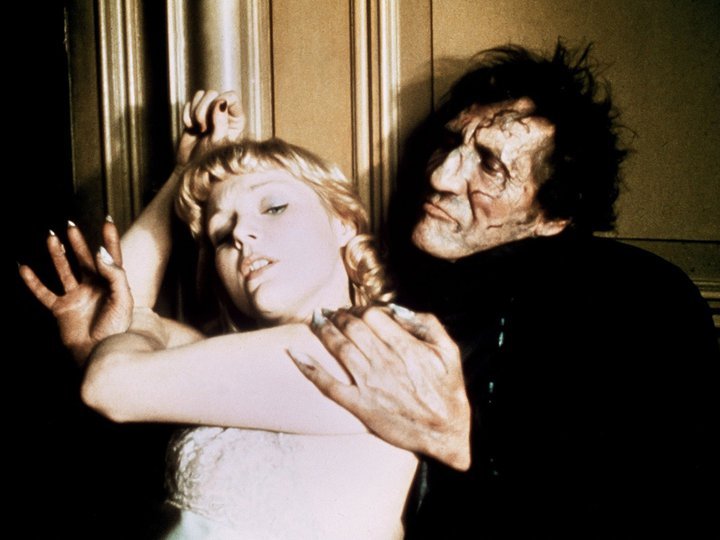
Carol Lynley and The Cat in the only colour film of the celebrated but dated play. The production was not released theatrically until 1982 due to litigation with the original distributor, and consequently sat uncomfortably with the glut of slashers of the period. 

JOHN Willard's black comedy stage play The Cat and the Canary originally opened on Broadway in early 1922, and has become a cornerstone of the "old dark house" subgenre and "creepy clutching hand" motif. The story concerns the death and inheritance of a rich eccentric who felt that his relatives "have watched my wealth as if they were cats, and I - a canary." To date the tale has been adapted into four motion pictures: the 1927 Universal silent directed by German expressionist Paul Leni, the 1930 pre-code sound remake released as THE CAT CREEPS, the 1939 Bob Hope and Paulette Goddard take, and this British-made offering helmed by American cult filmmaker Radley Metzger.

In 1934, on the twentieth anniversary of his death, the remaining relatives of Cyrus Canby West (Wilfred Hyde-White) are called to his Surrey mansion to view the filmed reading of his will. Cyrus lets it be known how much he despised and loathed his kin - calling them "bastards" and "leeches" - by setting up a psychological struggle for his fortune. With a history of insanity in the family, West reveals that Annabelle (Carol Lynley) is to be the sole beneficiary, but to claim the inheritance she must spend the night in the house and be deemed sane the next morning. The situation is further complicated when a "chief psychologist at the Fairview Sanitarium, an asylum for the criminally insane; we're just up the road..." - Hendricks (Edward Fox) - informs the guests that a homicidal maniac known as The Cat has escaped and is hiding in the area. But this is revealed as a ploy by the unhinged second heir to drive Annabelle insane.

Wendy Hiller robustly plays family lawyer Mrs Crosby, and is removed half way through the film by becoming the first victim.

Metzger was a pioneer famous for his lavishly designed, adult-orientated films such as THE LICKERISH QUARTETSCORE and THE OPENING OF MISTY BEETHOVEN (he also edited THE FLESH EATERS, regarded as the first ever splatter movie). His career-long fascination with self-destructive beautiful people morphs here into a group of desperate misfits, a de-sexualised mansion mystery of secret rooms and building resentment. Even the cinematography is against type, casting a well-lit glow as opposed to the usual cobwebs and shadows, and Alex Thomson's wide-lenses providing a sense of anti-claustrophobia. The stand-out touch, however, illustrates Metzger's pendant for the juxtaposition of actors and the projected image, when the family's faithful retainer Mrs Pleasant (Beatrix Lehmann) moves behind West's home movie only to reappear on screen - monochrome and twenty years younger - with Cyrus during the reading.

The all-star cast give performances that could generously be described as unconventional, portrayals of people who are all killers one way or another: disgraced doctor Henry (Daniel Massey, whose father Raymond had spent a night at James Whale's THE OLD DARK HOUSE), big game hunter Susan (Honor Blackman) and her lesbian lover Cicily (Olivia Hussey), who shot an employer attempting to rape her, war hero Charlie (Peter McEnery) and songwriter Paul (Michael Callan), obliquely "the biggest killer of all" according to West. It's a hodgepodge of goofiness undermined by strange lapses: why is Cyrus' formalities in sound, for example, and the two climatic shootings are completely bloodless. 

Monday, February 1, 2021

School of Shadows

SCHOOL FOR SEX (1969)
HOUSE OF THE LONG SHADOWS (1983)

SCHOOL FOR SEX unfairly lures the viewer into a cliched catastrophe; even its director/producer/writer Pete Walker calls it "terrible."

MOST British sex comedies are unsexy and unfunny, but Pete Walker's SCHOOL FOR SEX - sold on its title alone - is also terminally boring. After the sudden death of his parents, bounder Giles Wingate (Derek Aylward) - on a suspended sentence for embezzlement - inherits a country estate. Yet his wealth is soon diminished by a series of gold-digging wives, leading him to take revenge: setting up a "school for sex" which trains young female offenders to fleece money from millionaires for a third of the profit. Wingate converts his house for the venture and employs ex-boxer Hector (Nosher Powell) and dipsomaniac Duchess of Burwash (Rose Alba) as staff; with a steady flow of girls from a corrupt probation service, anti vice campaigners finally lead Wingate back to court.

Similar to COME PLAY WITH ME, SCHOOL FOR SEX was a triumph of marketing, hiding the embarrassment underneath. One of Walker's biggest box office successes, the film was particularly popular in the United States and France, where punters - high on the sexual revolution - were duped with fake promises of underage sex even in the more risqué export version (in fact, American success is enshrined: during the opening of SHAFT, when Richard Roundtree strides down 42nd Street, he passes the Rialto Cinema advertising "first New York show, SCHOOL FOR SEX.") Yet, while Walker draws on the permissive age, the result is a regressive opposite; we are still in the realm of the stereotypical British farce, pigeon-holing carnal urges like a pre-war sex tussle.

In Pete Walker's only film as a "director for hire," Christopher Lee, John Carradine, Peter Cushing and Vincent Price occupy the HOUSE OF THE LONG SHADOWS

Fourteen years later, Walker's final release HOUSE OF THE LONG SHADOWS is also renowned for cranking up the boredom and living in the past. Publisher Sam Allyson (Richard Todd) makes a $20,000 bet with author Kenneth Magee (Desi Arnaz Jr) that he cannot write a novel in the classic tradition within 24 hours. Allyson arranges for Magee to write at the secluded and empty Baldpate mansion in Wales as not to be distracted. The writer is soon interrupted by Allyson's secretary Mary Norton (Julie Peasgood), holidaying couple Andrew and Diana Caulder (Richard Hunter and Louise English), and buyer Corrigan (Christopher Lee). The main source of disruption however are the Grisbanes, with father Elijah (John Carradine) and daughter Victoria (Sheila Keith, in a role originally intended for Elsa Lanchester) initially posing as caretakers. It transpires that the Grisbanes are the house owners - welcoming back sons Lionel (Vincent Price) and Sebastian (Peter Cushing) - for a final night of retribution on their murderous sibling Roderick.

Based on the 1913 novel Seven Keys to Baldpate by Earl Derr Biggers, which became the hit stage play by George M. Cohan, this often adapted story is given a Gothic makeover but wastes a stellar cast. Scripted by Michael Armstrong for Cannon, HOUSE OF THE LONG SHADOWS is too much of a throwback for 1980s blockbuster cinema, and consequently was a box office failure. The Seven Keys to Baldpate foundation itself was old school, with its gangsters, stolen jewels and femme fatales, and morphing into a comedic chiller only changes the nature of the cliched failure. The production escalates into a number of absurd twist endings, but Price, Lee and Cushing play off each other delightfully, and are obviously relishing this opportunity of screen time together. In fact Lionel's dialogue "All of us, locked in the past forever ... now we too must crumble into dust" acts an obituary for the films that made them famous. Unfortunately there is little chemistry between Arnaz and Peasgood, though the actresses' theatrical delivery could be seen to make sense in hindsight.

Louise English as bickering Diana Caulder in HOUSE OF THE LONG SHADOWS. The actress, singer and dancer is best remembered as a regular on THE BENNY HILL SHOW.

The photography of Norman Langley attempts to capture a Roger Corman/Poe vibe, but cannot shake the crusty ambience that sank that other "out of time" failure THE MONSTER CLUB. It is ironic that Walker should bow out with such blandness, after making his name with gratuitous sex and violence (English's acid demise is the only nastiness here). Another factor against the Walker grain is the moral of the climactic cop-outs; Magee - known for pulp novels - learns that he should be more empathetic to his craft and value characterisation over cash. However post-production tinkering over the more comedic elements, in order to promote the work as a horror film, did not create any winners.

Sunday, November 1, 2020

"It's a nasty night innit?"

JACK THE RIPPER (1959)
THE FIEND (1972)

Unlike the documented slayings, the controversial Tempean production JACK THE RIPPER features strangulation followed with knifings that are almost an afterthought.

DIRECTED by renowned producers Robert S. Baker and Monty Berman (who also helmed THE HELLFIRE CLUB), JACK THE RIPPER belongs to a quartet of British chillers - HORRORS OF THE BLACK MUSEUM, PEEPING TOM, CIRCUS OF HORRORS - that pushed the bar on sadism. Both the Mercy Hospital for Women, and the Whitechapel police, are laden with the archetypal angry mob as a black-clad figure with a surgical bag is haunting the East End, asking his victims "Are you Mary Clark?" Inspector O'Neill (Eddie Byrne) welcomes a visit from his friend, NYPD detective Sam Lowry (Lee Patterson), who becomes attracted to Anne Ford (Betty McDowall). While the leading red herrings are Ford's guardian Dr Tranter (John Le Mesurier) and hunchbacked orderly Louis (Endre Muller), this Saucy Jack turns out to be Sir David Rogers (Ewan Solon), who finally corners and kills Clark (Barbara Burke) as revenge for the suicide of his son, who found out his lover was a prostitute.

Loosely based on Leonard Matters' book The Mystery of Jack the Ripper and scripted by Jimmy Sangster, JACK THE RIPPER was given an aggressive promotional campaign in the States - which even included a Steve Allen novelty single - and the American version disposes of Stanley Black's score and also has a colour insert of oozing blood for Rogers' lift squashing. A spiced-up continental version adds four minutes to the running time, and was particularly popular in France. Here the murders had extended knife thrusts and exposed breasts, with the nudity quota increased by a showgirl changing room. But the most salacious difference was a private sequence where champagne is poured over Maggie (Dorinda Stevens)'s chest.

Hungarian actor Endre Muller adds monster value to this particular JACK THE RIPPER backstory.

The timing of the "Sadistic quartet" is significant. Between 1957 and 1960, Hammer had injected a large amount of hubris into the British film industry despite the best efforts of the censors. Consequently, the office of John Trevelyan could not be seen to allow one company to flourish within the new boom, even when producers were prepared to go the extra mile on gore and nudity. Yet JACK THE RIPPER was still involved in a prolonged set of altercations, the first version of the script described by a BBFC examiner as "even the title [is] too full of sordid and sadistic association to be acceptable as a film." After a meeting with Trevelyan himself the BBFC softened their stance, Berman cleverly turning up to the appointment with Sangster himself as a bargaining clip after the board's reservations on THE CURSE OF FRANKENSTEIN. This lead to a battle over cuts which give the picture a feverish edge, though Trevelyan's preference for shadow and fog is also entertained.

Matters and his source publication are an interesting topic in itself. An Adelaide-born journalist who fought in the Second Boer War and became a Labour politician, Matters proposed in a 1926 article that Jack was a doctor whose son had died from syphilis caught from Marie Kelly; dubbed "Dr Stanley," he committed the murders in revenge and then fled to Argentina (where the author had been editor of the Buenos Aires Herald). The Mystery of Jack the Ripper was an expansion of this, an alleged deathbed confession which stumbles at the first step because Kelly's autopsy found no evidence of sexual disease. Nevertheless this 1929 book was marketed as the first serious study of the Whitechapel murders, and at least has an authentic sense of the locale as all murder sites were then unchanged since 1888.

"Sinner ... Your Evil Shall Destroy You." Tony Beckley and Ann Todd prey for THE FIEND to be removed from their résumé.

A religious fanatic is the serial killer of choice for Robert Hartford-Davis' THE FIEND. The Minister (Patrick Magee) leads a sect called The Brethren, where widow Birdy Wemys (Ann Todd) has become a devoted member, together with her troubled son Kenny (Tony Beckley). The socially inept Kenny - who works as both a security guard and a swimming pool attendant - has been dominated by his mother and the church, and descents to a murder spree of what he deems to be sinful young women (one is picked up in a foyer of a cinema showing the Hammer SCARS OF DRACULA / HORROR OF FRANKENSTEIN double bill). Birdy is dependent on insulin banned by The Brethren, and flat-sharing sisters Nurse Brigitte (Madeleine Hinde) and chain-smoking tabloid reporter Paddy Lynch (Suzanna Leigh) are ensnared into this sordid world in an attempt to save the mother and expose the gospel-loving, nonconformist gatherings. 

Hartford-Davis was hardly a neglected auteur, but THE BLACK TORMENT and CORRUPTION were notable entries for British horror. However THE FIEND - released in a cut version as BEWARE MY BRETHREN for United States markets - makes tedious use of puritanical ideology and plays like a tepid Pete Walker production (Kenny's use of a tape recorder to play back the death throes of his victims references another filmic mainstay, PEEPING TOM). But religious extremism was hardly a subject matter on many people's lips in early 1970s Britain, yet the overwrought Magee tries his best to raise the bar before dying on his 'Jesus Saves' cross.

Saturday, June 1, 2019

The Doctor and The Devils

BURKE & HARE (1972)

In a scene to rival her orgasmic eye-crossing in LUST FOR A VAMPIRE, Yutte Stensgaard appears as brothel starlet Janet, worse for wear after a drunken threesome with Derren Nesbitt and Francoise Pascal.

KNOWN as THE BODYSNATCHERS and HORRORS OF BURKE AND HARE in the United States, this was the last film made by Vernon Sewell, and a particularly dull take on the West Port serial killers (despite its sexploitative (and CARRY ON musical cue) angle). In 19th century Scotland, slum landlord Thomas Hare (Glynn Edwards) and cobbler William Burke (Derren Nesbitt) learn of a very profitable side-line: to provide dead bodies to anatomical lecturer Dr Knox (Harry Andrews). Initially relying on Hare's lodgers, the pair soon start killing the destitute and vulnerable by smothering them. At the local brothel one of Knox’s students Arbuthnot (Alan Tucker) becomes involved with Marie (Francoise Pascal); when Marie becomes a victim, this links the two disparate threads of the picture together, before ending abruptly to its loutish theme by The Scaffold.

Any cinematic attempt at the Burke and Hare murders will be in the shadow of John Gilling's 1960 masterpiece THE FLESH AND THE FIENDS, and Sewell instead seeks to tap into the same bawdy milieu of early 1970s breast-fixated Hammer. Within the erstwhile taverns all the players repeatedly have time for a "wee dram," and overall make solid efforts at their Irish and Scottish accents. But the historical facts behind the case are more interesting than anything offered here; in 1828 Edinburgh, Irish immigrant Williams Burke and Hare met as labourers on the Union Canal, before embarking on sixteen murders. Existing at a time of great medical science advancement but with corpses on state quotas, even esteemed surgeons would overlook their suspect sources. Eventually Hare turned King’s Evidence to convict Burke, was was publicly hanged and dissected. To this day, his preserved skeleton is on display in the Anatomical Museum at Edinburgh University, and his death mask - together with a book bound in Burke's tanned skin - is on show at Surgeon's Hall.

Francoise Pascal is the pick of the prostitutes in BURKE & HARE's brothel house. The Mauritius-born sexpot flirted numerously with British pop culture, from Norman J. Warren and Pete Walker to CORONATION STREET and MIND YOUR LANGUAGE.

Sewell was a veteran of British cinema, starting as a camera assistant in 1929 (his early Hammer outing THE DARK LIGHT starred Joan Carol, whom he married and who appears as the brothel madame here). A nautical cove, this lifelong fascination often bled into his filmography - collaborating with Michael Powell for THE SILVER FLEET for instance - but his output also often had supernatural themes with multiple flashbacks and complex timelines. Together with the macabre crime thriller THE MAN IN THE BACK SEAT, he is best known for adapting the French grand guignol play L'Angoisse into four releases across the decades: THE MEDIUM in 1934, LATIN QUARTER in 1945, GHOST SHIP in 1952 and 1961's HOUSE OF MYSTERY. In fact this last attempt is Sewell's most beguiling, and may well include the earliest example of the 'ghost in the television' motif.

Wednesday, May 1, 2019

Have a Butcher's

COVER GIRL KILLER (1959)
THE NIGHT CALLER (1965)

Steptoe and gun: Harry H. Corbett's speech as "The Man" - "surely sex and horror are the new gods in this polluted world of so-called entertainment" - is paraphrased in Frankie Goes to Hollywood's 1984 hit 'Two Tribes.'

WRITTEN and directed by Terry Bishop, and distributed by Britain's low-budget specialists Butcher's, the hour-long COVER GIRL KILLER is a bygone gem. It was made at the same time as PEEPING TOM, Michael Powell's serial killer movie which was a permanent detriment to his career. Cinemagoers could not accept a film so far away from Powell's partnership with Emeric Pressburger, topically covering the growth in seedy under-the-counter merchandise. Somehow such business seems more acceptable in the world of the B picture, and this beguiling Walton Studios piece was a clear inspiration for the 1970s Mary Millington vehicle THE PLAYBIRDS

Using a disguise of pebble glasses and ill-fitting toupee, The Man (Harry H. Corbett) is killing models featured on the cover of pin-up paper Wow! ("not for people who can read") in an attempt "to give man back his dignity." In between drinking endless cups of coffee, Inspector Brunner (Victor Brooks), Archaeologist-cum-publisher John Mason (Spencer Teakle) and showgirl girlfriend June Rawson (Felicity Young) plan to spring a trap. It's all flesh and violence free, but depicts the consequences beyond the girls themselves: a husband and father of separate victims both left grieving for females they could not control. Before his comedic persona took over, Corbett's creepy Soho bogeyman is eloquent and calculating ("I assure you miss, your nudity means nothing to me") as he variously poses as advertising executives and TV producers to snare his prey.

Aka THE NIGHT CALLER FROM OUTER SPACE and BLOOD BEAST FROM OUTER SPACE, THE NIGHT CALLER is a bizarre addition to Britain's monochrome SF/horror epics.

Also distributed by Butcher's was one of the weirdest pictures in the annals of British horror: THE NIGHT CALLER. Directed by John Gilling just before his Hammer "Cornish Classics" PLAGUE OF THE ZOMBIES and THE REPTILE, this is actually two genres in one. We start with scientists Dr Morley (Maurice Denham), Dr Jack Costain (John Saxon) and Ann Barlow (Patricia Haines) examining a small orb which has descended from the sky ("guided down with fantastic accuracy ... inhuman accuracy!"), complete with a geiger-counter equipped military (headed by John Carson). After forty minutes of science babble the film shifts to a much darker tone, as the sphere transports a shadowy alien with a rubbery claw from Jupiter's third moon, who kidnaps nubile Earth women for repopulation.

These abductions are carried out with a plot device similar to that of COVER GIRL KILLER; this agenda driven alien - named Medra - opens a small business (Orion Enterprises) and lures breeding stock by placing a classified ad in Bikini Girl magazine. The creaking narrative is further undermined by Medra's final speech, promising that all victims will not be harmed (tell this to Ann, who has been slashed and strangled in a sleazy second-hand bookstore). Based on a novel by Frank Crisp and scripted by TOWER OF EVIL helmsman Jim O'Connolly, it is all barking mad, the notion of an alien invader needing to advertise in a jazz mag rather than using scientific superiority is fittingly delirious. Yet the excellent cast keep things watchable, including a priceless scene with Warren Mitchell and Marianne Stowe as worried parents.

Sunday, July 1, 2018

Daleks, Daloids and Phaleks (Part II of II)

ABDUCTED BY THE DALEKS (2005)
DOCTOR LOO AND THE PHALEKS (2005)


28 years after Katy Manning's notorious spread in Girl Illustratedthe mutants from Skaro return to menace nude Earth women in ABDUCTED BY THE DALEKS. Needless to say, the BBC and the estate of Terry Nation swiftly moved to pull the plug on any legal distribution.

AS the DOCTOR WHO reboot hit television screens in 2005, these two zero-budgeted "Daleks Do Porn" abominations attempted to cash in on the return of the Time Lord. The softcore ABDUCTED BY THE DALEKS, with a story by "Billy Hartnell" and directed by "Don Scaro" - in reality London based magazine distributor Trevor Barley/Roman Nowicki - mixes Eastern European models and The Doctor's most famous foes for 55 long, erotica-free minutes. Not even a title change to ABDUCTED BY THE DALOIDS - while retaining the Dalek name on all prints - could fool the BBC from threatening legal action (there is also an unlicensed use of Pink Floyd). As for the actual plot, four women (including a Dalek agent) accidentally hit an Alien "Grey" in their car. In full party dress and high heels, they investigate in woodland famous for being a hunting ground for The Serial Skinner killer. But before long they are being taken captive by Daleks, who show a preference in interrogating their prisoners nude.

After surviving an encounter with a scared hunter and his machine gun, plus the Serial Skinner, the Dalek agent explains to the police that the metal menace wanted to impregnate their slaves. The film even makes the long passages of naked girls wandering through the forest monotonous, obliquely mirroring the Time Lord's reputation of endlessly running around corridors. Shot in different aspect ratios, there is also plenty of on-screen goofs (visible Dalek operators, the boom mike handle) and a surreal title card warning of strobe effects. Even the writhing of the starlets when strapped to a stark metallic wall is unsynchronised, though best of all is the impromptu actress switch between Lina Black and Maria Vaslova, presumably due to a no nudity clause.

In DOCTOR LOO AND THE PHALEKSWhovians recoiling from Tom Baker talking to the phallic appendage of THE CREATURE FROM THE PIT are likely to suffer chest cramps at the sight of the Phaleks.

The hardcore DOCTOR LOO AND THE PHALEKS - also known as DOCTOR LOO AND THE FILTHY PHALEKS - was made by the short lived UK porn studio Doll Theatre. And for anyone still distraught on the casting of Jodie Whittaker as the latest Doctor, remember that Britain's leading sex actress Alicia Rhodes got their first. Dr Louise Flangebatter (Billie Piper lookalike Rhodes) travels through space in her luxury toilet Turdis ("wherever there's scum she'll flush it away"); picking up damsel in distress Quimberly Dickmore (McKenzie Lee), the pair travel with house shag-bot Kay Nine to Skrotum 4, where they encounter Emperor Minge (in a gimp mask) and Lady Sodomi with her army of oversexed Phaleks. Pretty inconsequential to the greater scheme of things, the Phaleks are painted water butts, with rubber dildo's attached to the base of their garish red casing.  

Monday, January 15, 2018

Unnatural Born Killers

CORRUPTION (1968)
PREVENGE (2016)


For CORRUPTION, Peter Cushing's trademark commitment and professionalism is tested in this notoriously nasty offering.

SHORTLY before making the lowest point of his filmography - THE BLOOD BEAST TERROR - Peter Cushing made his most controversial. This Titan production, directed by Robert Hartford-Davis, sees "The Gentleman of Horror" cast as respected surgeon Sir John Rowan. When his aging model fiancée Lynn (Sue Lloyd) starts an impromptu photo session with Mike (Tony Booth) at a swinging Sixties party, the photographer and impeccably suited surgeon's clash of personality boils over into a fight, where an arc light falls onto Lynn's face in front of horrified onlookers. Developing "an entirely new way of controlling the endocrine system to promote tissue growth," the doctor's yearning for pituitary glands to restore Lynn's looks leads him to murder, under the increasing demands of his wife-to-be. While at a Seaford holiday retreat a group of beatniks invade, and Rowan's colleague Steve (Noel Trevarthan) and Lynn's sister Val (Kate O'Mara) piece together the string of outrages. 

Dubbed "gratuitously violent, fearfully sick, but it was a good script" by Cushing, the posters to CORRUPTION stated that "no woman will be admitted alone to see this super-shock film." Rowan's murder sequences are still jaw-dropping today, amplified by the use of hand-held close-ups. With hair flapping around his sweaty crazed glare, the actor's slaying of a topless prostitute - stabbing her repeatedly on the floor before smearing his bloodied hands on her breasts then removing her head - is not only British horror's most shocking sequence, it also points towards the Seventies sleaze to come. The delirium is added another two layers with the arrival of Georgie and his gang in Seaford - an out of left field final act which sees a massacre by an out-of-control surgical laser - and amid production bickering, the "is it a dream?" ending.

After GARTH MARENGHI'S DARKPLACE and SIGHTSEERS,
Alice Lowe continues her outlandish comedic career with PREVENGE.

Written, directed and starring Alice Lowe, PREVENGE defies description - in a good way. Too easily labelled a sardonic, jet black comedy, it is also a meditation on loss and the mental process of pregnancy. Shot in two weeks to accommodate Lowe's real-life condition, and enveloped by an outstanding Goblinesque score by Toydrum, textures increase with subsequent viewings to reveal - almost - an art film. Ruth (Lowe) is a pregnant woman who goes on a killing spree, seeking revenge on the people she claims accountable for her partner's death on a climbing trip; struggling with her conscience and prepartum psychosis, the unborn child speaks to Ruth from the womb, coaching her to kill ("If you don't do as I say blood will be shed, one way or another.")

Lowe's performance flicks between deadpan, psychotic, angst and turmoil (possibly in equal measures). The casting is strong with numerous fan-favourites: DAVID BRENT LIFE ON THE ROAD's Jo Hartley as the Midwife, GAME OF THRONES' Gemma Whelan as Len, and THE WITCH's Kate Dickie as a businesswoman who succumbs to a throat-slitting straight out of Argento. One sequence is spontaneously filmed in Cardiff on Halloween night, and it is this ethic which makes PREVENGE seem consistently fresh in style if not always in content. The murders are effective, but the visuals seem to unfold in some other brooding universe, and Lowe has mischievously likened the feel to BLADE RUNNER. Yet you can see her thinking; in Ridley Scott's milestone, Vangelis' jazz-influenced score underpinned the yearning of remembrance, driving the narrative similarly to Toydrum's often thunderous electronica.

Wednesday, November 1, 2017

National Parklife

XMOOR (2014)

"The Beast is waiting on the dark side of the moor." 
Melia Kreiling makes for an appealing final girl in XMOOR.

WRITTEN and directed by Luke Hyams, XMOOR was described as "the best British horror in years" by the Sunday Sport. American students Georgia (Melia Kreiling) and boyfriend Matt (Nick Blood) travel to North Devon and West Somerset to capture footage of legendary Panther The Exmoor Beast - and a £25,000 prize. Joined by animal tracker and sub-machine gun owning Fox (Mark Bonnar), it transpires that Fox is actually searching for a serial killer, who has methodically dumped dead prostitutes in a section of the terrain. With surveillance set, the trio are hunted by The Beast (James Lecky), who leaves his daughter (Jemma O'Brien) in his land rover while going about his fiendish business. Although the viewer is spared from handheld footage, the final act is unnecessarily convoluted, cheapening the character arc of Georgia who is the film's only asset. Actually filmed in Northern Ireland, XMOOR is a generic movie with a final reveal that copies THE BIGFOOT TAPES, a film that also leads the audience to human depravity rather than what they tuned in for.

The Beast of Exmoor National Park has been sighted since the 1970's, although it became notorious in 1983 when a South Molton farmer claimed to have lost over 100 sheep in the space of three months. In response to increased reports of livestock death and sightings, the Ministry of Agriculture ordered the Royal Marines to send snipers into the hills; when the Marines were recalled, attacks allegedly increased. The Ministry continued to study the reports into the mid 1990's, before concluding that The Beast was either a hoax or that the reports had been mistaken identifications of creatures native to the Exmoor area. In January 2009 a carcass of an animal that has washed up on a beach in North Devon left many locals speculating that it was the body of the infamous Beast, but was later revealed to be a decomposed grey seal.

Graham J. McEwan's Mystery Animals of Britain and Ireland (1986) is a good starting point for big cats, black dogs and freaks of nature.

Sightings of Alien Big Cats (ABC's) in the British landscape often occur in clusters - affectionately referred to as cat flaps - and are certainly nothing new. The 1976 Dangerous Wild Animals Act - legislation which possibly lead to the release of privately owned wild cats - is a theory which was developed by the West Country's other favourite ABC, The Beast of Bodmin Moor in Cornwall. This is a feline than can be traced to animal trainer Mary Chipperfield allegedly releasing three Pumas into the wild following the closure of her Plymouth Zoo in 1978; and in 1994, an official Government conference was organised by then MP for North Cornwall Paul Tyler, who claims to have seen a Puma within 100 yards of his home at Rilla Mill.

Tuesday, August 1, 2017

Demons of the 1970's (Part II of II)

SYMPTOMS (1974)
FULL CIRCLE (1977)

"Changes in the weather always upset me ... I don't know why;" Angela Pleasence battles with her twisted psyche in SYMPTOMS.

UNLIKE his exploitative VAMPYRES, José Larraz’s SYMPTOMS is a slow-burning triumph, a film that was unexpectedly chosen as an official British entry at Cannes. Neurotic waif Helen Ramsey (a mesmerising Angela Pleasence) has invited girlfriend Anne (Lorna Heilbron) to stay at her English woodland estate. Anne is welcoming the retreat to write and evaluate the end of a romance, but Helen's behaviour becomes increasingly erratic as questions are asked of the portrait of Cora - Ramsey's disappeared friend and possible lover - and the brooding presence of handyman Brady (Peter Vaughan). Helen's manifestations of Cora mirror Anne's unease in the house, under the shadow of Cora's body festering in the lake after a passionate embrace with the burly handyman.

Larraz has long favoured mansions in his pictures, and the warring of the sexes; here they are quite literally foundations for exploring the horror motif of characters yearning for lost loves. Taking several inspirations from REPULSION, the director uses a mirror and the ticking of a clock to replicate Roman Polanski's idea of lulling the viewer into a false sense of security, before delivering bludgeoning shock tactics. Vanity Celis points out in her essay which accompanies the BFI Blu-ray that Larraz' contribution to the sexual anxieties of the Gothic tradition is "a safety net found in the auxiliary subtext of lesbian love," and the production - similar to Jorge Grau's THE LIVING DEAD AT MANCHESTER MORGUE, Juan Carlos Fresnadillo’s 28 WEEKS LATER and Alfronso Cuaron’s CHILDREN OF MEN - captures the English landscape more effectively than native filmmakers, creating an agitation that resonates more deeply in the outsider's eye.

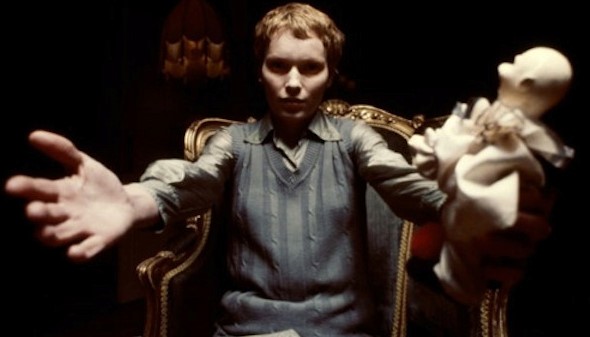
Mia Farrow brings a tragic vulnerability to her role in FULL CIRCLE, part of a Seventies Anglo-Canadian co-production deal which yielded lesser pictures THE UNCANNY and DEATH SHIP.

An eerie atmosphere of love and loss is also central to Richard Loncraine's FULL CIRCLE, based on Peter Straub's 1975 novel Julia. A decade on from her subjection to Polanski's ROSEMARY'S BABY, Mia Farrow is again entangled with an unearthly child, playing a mother grieving the loss of daughter Katie (Sophie Ward) who chokes to death at breakfast. During her self-imposed isolation at an old house in Kensington, Julia is stalked by another girl ghost, who led a gang in the brutal murder of a German boy in 1938. As a "feeling of hate" infiltrates the dwelling, the murderous infant is identified as Olivia Rudge, and Julia traces Olivia's mother (Cathleen Nesbitt) to a Swansea mental institution, who admits to killing her offspring and accuses her visitor of doing the same.

In a moving final scene Julia welcomes the ghostly Olivia into her arms, the camera then pans around an armchair to reveal that Julia has a fatal neck wound. This not only brings us full circle from Katie's demise, but leaves the viewer wondering if Olivia has claimed another victim from her otherworldly plane, or the tortured mother has committed suicide. The willowy Farrow carries the whole burden of grief superbly, and quite rightly male players are kept to the margins (husband Magnus (Keir Dullea) is purely abandoned, and friend Mark (Tom Conti) suffers an unnecessarily sensationalised death)). The film also benefits from beautiful cinematography and a piano/synthesiser score which manages to underpin and elaborate on the unease.

Saturday, April 15, 2017

Downe and Out

SON OF DRACULA (1974)
CRAZE (1974)

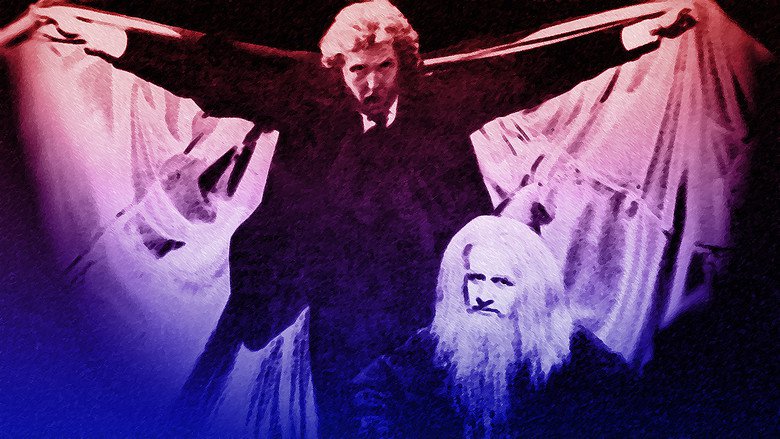
"I can't live, if living is without you"; chums Harry Nilsson and Ringo Starr in SON OF DRACULA, cinema's greatest musical travesty. Attempting to cash in on the success of Mel Brooks' YOUNG FRANKENSTEIN, the film is also known as YOUNG DRACULA.

WRITTEN by TALES THAT WITNESS MADNESS scribe Jennifer Jayne in the failed hope of casting David Bowie, Freddie Francis' rarely seen SON OF DRACULA - made by Apple Films and produced by Ringo Starr - begins in 1800's Transylvania, where Baron Frankenstein's dwarf assistant (Skip Martin) stakes The Prince of Darkness (Dan Meaden). Merlin the Magician (Starr) discovers that one of The Count's brides is pregnant and will give birth to a son in a hundred years. The offspring Count Downe (Harry Nilsson) is due to be crowned King of the Underworld in 70's London, but in the seventy-two hours beforehand he is vulnerable in deciding his future. Eventually he wants to become human in the name of love - especially that of Amber (Suzanna Leigh) - thanks to the help of the wheelchair-bound Van Helsing (Dennis Price), and despite the plotting of the immortal Baron (a barnstorming Freddie Jones).

Actually completed in 1972, Starr's excruciatingly dull vanity project failed to pick up any distribution. Realising that this comedy actually had no jokes - and hid behind Nilsson's musical numbers and message of love - the ex-Beatle turned to Graham Chapman to re-write and re-dub. However this version allegedly made even less sense, and has never been made public (SON OF DRACULA eventually was shown on a limited run in the States). The film is a pedestrian pantomime at best, with generous amounts of padding (Count Downe foils a completely random attack by a werewolf, for instance). Francis further laces the production with classic interpretations of monsters (Meaden's Dracula actually takes Nosferatu as a blueprint, and there are also appearances by Frankenstein's creature, the Mummy and even a Medusa and a Fu Manchu). In fact the only point of interest are the musicians on show, which includes John Bonham and Keith Moon exchanging drumming duties in Downe's band.

Jack Palance offers Julie Ege to Chuku in the delirious CRAZE.

Coming off this catastrophe, Francis' increasing distain of horror films and its fans made the director/cinematographer admit that his reliance on the zoom lens for CRAZE was due to a "lack of interest." But this Herman Cohen production is far from uninteresting, an exploitation fever-dream ripe with idol-driven mayhem and possibly the greatest array of starlets and seasoned character actors ever to grace a single British horror. Neal Mottram (a potent Jack Palance) is a psychotic antiques dealer who owns Chuku, a googly-eyed African fetish object he keeps in his basement. Mottram believes that by sacrifice to Chuku, the "love God" will reward him with wealth, and his victims include Helena (Julie Ege) who ends up in a furnace, and sex toy-loving Sally (Suzy Kendall in a horrendous curly black wig). As part of his unhinged quest Mottram even hatches an alibi plot, using ex-girlfriend Dolly (Diana Dors) to enable him to murder rich Aunt Nash (Dame Edith Evans); but with the police honing in (and a nod to PEEPING TOM), Neal is impaled on Chuku's trident.

CRAZE has a pathological hatred of women, a stance it shares with source novel Infernal Idol, a brisk 1967 Helmut Henry Hartmann pulp written as Henry Seymour ("she was that slightly seedy suburban housewife type who carried too much weight around the hips and spent too much of the housekeeping money on unsuccessful attempts to look glamorous.") But Francis' movie really goes for the throat, illustrated by Detective Sergeant Wall (Michael Jayston)'s comment on ditzy Dolly ("one would have to be pretty desperate to sail into that port.") Despite Mottram's literal lady-killing, there is a distinct homosexual yearning between the dealer and his younger live-in colleague Ronnie (Martin Potter). Mottram has apparently saved him from "sleeping in Hyde Park hustling old queens," but their domestic arrangement seems characteristically bitchy.

Saturday, April 1, 2017

"They're Only Worthless Whores!"

JACK THE RIPPER (1973)
JACK THE RIPPER (1988)

The Ripper File, published in 1975, was a companion to the 1973 BBC JACK THE RIPPER docu-series.

DR Thomas Stowell's article in the November 1970 Criminologist instigated a resurgence of interest in the Whitechapel Murders. Implicating the grandson of Queen Victoria, it set in motion a snowballing of misconceptions welcomed by Stephen Knight's 1976 bestseller Jack The Ripper: The Final Solution. Stowell drew comparisons between the evisceration of the women and the disembowelment of deer shot by the aristocracy on their estates, and surmises that - although not named directly - Prince Albert Victor went mad after contracting syphilis in the West Indies. Three years later, JACK THE RIPPER was a six-part BBC "documentary investigation" into the killings, which mixed period re-enactments with contemporary sleuthing from fictional Detective Chief Superintendents Barlow (Stratford Johns) and Watt (Frank Windsor), characters popular on Z-CARS and its sequels SOFTLY, SOFTLEY and BARLOW AT LARGE.

This cross-pollination discusses suspects, forensic examinations and conspiracies in stuffy ad infinitum, and after five hours concludes there is insufficient evidence to determine who Jack was. Written by Elwyn Jones and John Lloyd, the programme builds a foundation for masonic influence - after all, Watt has read prominent mason Commissioner Warren's autobiography - with analysis of the wall message "The Juwes are The men That Will not be Blamed for nothing." With no substantiation to the Ripper crimes, let alone Freemasonry, this fixation with the scrawl on Goulston Street is one of many blind alleys the broadcast creates for itself. And just when you think no more information could be squeezed in, the show's surprise witness is held back to the final moments: Joseph 'Hobo' Sickert, illegitimate son of suspect/painter Walter Sickert. Self-scripted and shot on Super-8, Joseph recalls his strange genealogy and conveys Royal Physician Sir William Gull (as did Stowell) and driver John Netley, and also surmises threat of revolution.

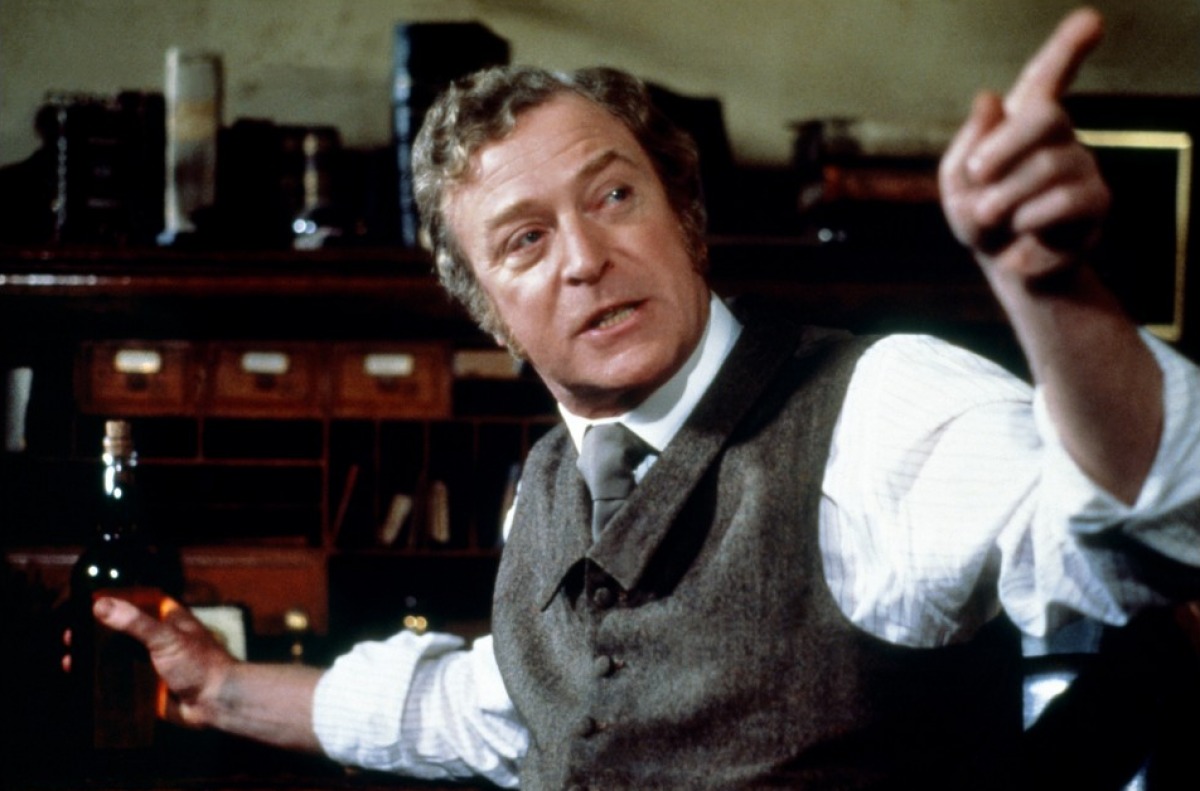
"You told me to bring you Jack the Ripper. You sign that piece of paper and I will ... tonight!" Michael Caine - as Inspector Frederick Abberline - is the casting coup of ITV's out-of-control JACK THE RIPPER.

After this bombshell, the East London Advertiser sent Knight to interview Joseph. Fleshed out into his "Final Solution," Knight details an elaborate conspiracy theory involving the British royal family, freemasonry and Walter Sickert. He concluded that the victims were murdered to cover up a secret marriage between the second-in-line to the throne, Prince Albert Victor, Duke of Clarence and Avondale, and working class Catholic Annie Elizabeth Crook. Crook and the couple's daughter are consequently spirited away, and a quintet of Whitechapel tarts - privy to the circumstances through the employment of one of their number (Mary Kelly) as the child's Nanny - were disposed of by a team of high profile assassins. However, when Knight's frenzy of misinformation builds to implicating his father more than to Joseph's liking, 'Hobo' withdrew his co-operation and put on record that he had made everything up.

Made to coincide with the Ripper centennial, ITV's bombastic drama JACK THE RIPPER was a ratings winner, casting Michael Caine as Inspector Abberline and Lewis Collins as Sergeant George Godley. Director and co-writer David Wickes - who had helmed two episodes of the BBC series - stated that he had been allowed unprecedented access to Scotland Yard files, and that his production would be revealing the true identity of Jack for the first time. However, after pressure from numerous Ripperologists Wickes withdraw this claim, but the series still begins with a disclaimer on behalf of the production staff: "our story is based on extensive research, including a review of the official files by special permission of the Home Office and interviews with leading criminologists and Scotland Yard officials." Wickes' announcement that he had filmed several alternative endings lends no credence to the unfolding structure, and was more likely another publicity stunt.

Abberline adopts his usual measured methods with coachman John Netley (George Sweeney) in ITV's JACK THE RIPPER.

Comprising of two ninety-minute episodes broadcast on consecutive evenings in October 1988, the series' revelation that Sir William Gull (Ray McAnally) was the killer is laughably old hat, after threads lead the viewer to the likes of American stage actor Richard Mansfield (Armand Assante), socialist George Lusk (Michael Gothard) and Queen Victoria's clairvoyant Robert Lees (Ken Bones). The melodramatic story also takes great liberties in characterisation: Abberline's alcoholism is present solely for dramatic licence, and George Lusk's depiction as an anarchic troublemaker hides the fact that Lusk was actually a nondescript businessman and church warden. Although the crime scenes are the most authentic part - particularly Mary Kelly's Miller's Court slaying - the rest exists in its own self-important, distorted world, which advances nothing on Knight's book or the BBC serial. When Gull eventually breaks ("they're only worthless whores!,") the surgeon's jolting transformation from kind family man to barking mad is as abrupt as Abberline's bawling.

Friday, May 15, 2015

Circus of Strange

THE SLAYERS: PORTRAIT OF A DISMEMBERED FAMILY (2014)

"Dirty, smelly girl." Not just Final Girl but Only Girl, Ghost threatens Anna during the trek to her final destination. Director Alex Poray notes of his actress Donna Beeching: "she was a great sport and took it in her stride ... she didn't have a heads up on what she was going to be put through until we shot the scene!"

ALEX Poray's infectious indie horror is part shock-mockumentary, part snuff movie. Made for £3,000, it tells the story of Patrick (Poray, using the pseudonym Lex Ray) - the son of Rt. Hon. Stanley (David Poulter) - claiming his father murdered a woman during a satanic ritual and forced him to film it; victim Anna Thompson (Donna Beeching) is consequently presented as a meal to wife Olga (a gurning Georgina Richmond) and other sons Leech (Julian Poulter),Tommy (Matt Lemon) and Ghost (Marek Gruszczynski). The question remains: is Patrick - a mentally unstable individual obsessed with death - telling the truth, or is Stanley, who claims that the scenes of abuse, witchcraft and cannibalism where a Halloween-night exercise aimed at liberating his troubled son. The project itself acquired controversy during its staged abduction of Beeching into Lemon's decommissioned Ambulance. Several calls to the authorities by concerned onlookers later, the filmmakers were flagged down by a Police dog unit, who explained that four other deployments - including armed response - had been utilised, and stingers had been placed on the highway.

Filmed in North Devon and Cardiff - taking in talking heads from the 2013 Cardiff Comic Con and the Braunton community (including estate agent James Benning as the family accountant) - THE SLAYERS is a relentlessly bleak canvas, best viewed at midnight and played loud. Publicity-seeking Patrick spends most of the picture wearing a pig mask, a familiar horror motif that also reminds of Grant Morrison's Professor Pyg, the "low-rent" extreme circus boss enemy of Batman. This façade provides a startlingly effective moment, where a squealing Patrick provides the ident card for the snuff portion, DEAD GIRLS. THE SLAYERS has the same raw feel as Roger Watkins' 1973 American cult curio THE CUCKOO CLOCKS OF HELL, and also is thematically similar in its portrayal of a disillusioned youth who - together with the liberal use of masks for his sociopathic helpers - makes a snuff movie that culminates in gleeful intestine-based slaughter. Thankfully, Poray's film doesn't have the toxic vibe of Watkins' amphetamine-fuelled movie, but rather gives the viewer an admiration for a group of friends who have assembled to make a horror picture and got the job done.

"He beat evil into me." The head of the North Devon Slayer family, is Stanley a respected citizen fighting for what is right for his disturbed son, or actually a master of the black arts?

The film's real-life father and son combination David and Julian Poulter both excel; David in particular is heartfelt when talking about Patrick, while suitably wide-eyed when donning his ceremonial robes. In her thankless role as Thompson, Donna is stalked, drugged, bound, gagged, punched in the stomach and urinated on in her own makeshift grave, before being cut to pieces and eaten (Beeching is particularly effective when being dragged face-down through house corridors and muddied pools). Donna remembers that filming the Ilfracombe churchyard scene was particularly harrowing. "It was really cold being buried alive with a few worms and that water was even colder, and with no spare cloths it was a wet journey home. But the worst for me was the chainsaw. It was real and so close I could feel the breeze on my face, so I did not want to do that take twice, especially as David had drilled through his arm a week before and I was worried his arm might give out." When asked about Poulter Snr's off-set injury, Julian reassures that it was "ok for chainsaws over a girls neck."

Next up for Alex is an animated realisation of his comic book Level Above Human, scheduled for 2016. As he explains, "the story is about a hoaxed alien invasion in a fictional American city which has fallen into chaos." Quizzed on the eternal SLAYERS father and son debate, the filmmaker was unsurprisingly guarded; "that's not for me to say. Some people write Patrick off as a useless lying junkie, others feel Stanley is guilty as hell! Maybe they are both lying?"

Thanks to Alex, Donna and Julian for their feedback via Facebook.

Friday, August 15, 2014

Ghoulish Murders at the Dark House

THE GHOUL (1933)
MURDER IN THE RED BARN (1935)
SWEENEY TODD: THE DEMON BARBER OF FLEET STREET (1936)
CRIMES AT THE DARK HOUSE (1940)


Boris Karloff carves a hieroglyph onto his chest in THE GHOUL. Assumed to be lost since screenings in 1938 - at least in a viewable print - a perfect negative of this Gaumont-British film surfaced in a forgotten vault at Shepperton in the early 1980s.

THE pictures here exist in two twilight zones of cinema, development arcs that bridge silents to talkies, then defuse staged melodrama to open up more erudite levels of performance. THE GHOUL sees Boris Karloff return home after achieving stardom with Universal - in a film influenced by those golden horrors - while the three Tod Slaughter releases play as last gasps to Victorian Gothic, a tradition of spectacle illustrated by the lurid Penny Dreadfuls and Madame Tussaud's Chamber of Horrors. In THE GHOUL - very loosely adapted from Frank King's 1928 bestseller - Egyptologist Professor Morlant (Karloff) believes that his devotion to Anubis and possession of 'The Eternal Light' jewel will resurrect him and give him immortality. He forces his manservant Laing (Ernest Thesiger) to bind the jewel into his palm on his deathbed, but after being entombed in the family mausoleum with the stone stolen from his grasp, Morlant returns from the grave to stalk those he suspects betrayed him.

In front and behind the camera, THE GHOUL was given star treatment. Together with Karloff and Thesiger, the sterling thespian cast also includes Cedric Hardwicke as Morlant's attorney Broughton, and a young Ralph Richardson as snooping parson Hartley. Cinematographer Gunther Krampf creates a musty ambience, and Louis Levy provides a stirring score. But it is hardly the classic heralded by critics upon its R1 DVD restoration in 2003, as viewers will find their patience tried by T. Hayes Hunter's languid pacing, pregnant pauses and over-stated dialogue and dramatics, as the picture crawls to its non-supernatural, SCOOBY DOO climax. Karloff, who, to the film's detriment, disappears for a large portion of the prolonged 80m running time, obviously uses his role as Im-Ho-Tep from Karl Freund's THE MUMMY as the prototype here, with the distinctive make-up - devised by the specifically imported Henrich Heitfeld - swathed in thick wrinkles and scar tissue so prominent as to occlude one eye almost completely.

Tod Slaughter in his breakthrough picture, MURDER AT THE RED BARNAlthough Karloff, Lionel Atwill, Charles Laughton and Claude Rains were successfully exported to Hollywood, Slaughter was Britain's first home-grown horror star.

Born Norman Carter Slaughter in March 1886 and adapting the name Tod in 1925, this English actor and stage proprietor became infamous for his melodramatic performances in macabre theatre and film adaptations. It is said he briefly retired from acting to become a chicken farmer at the start of the 1930s, but he was soon back touring with his trademark repertoires. Exploiting his toothy grin, throaty voice and amphibious façade, Slaughter was publicised as 'Mr Murder' in the 1931 New Theatre run of 'The Crimes of Burke and Hare,' and shortly after played urban legend Sweeney Todd for the first of over 2,000 performances. Consequently, the persona of an over-the-top lunatic gripped his character similar to the career not necessarily enjoyed by Bela Lugosi with Dracula. By the early 1950s the public's appetite for sensationalism had abated, and Slaughter went bankrupt. He continued to act in stage productions such as 'The Gay Invalid' opposite Peter Cushing and was still performing to the very end, dying of coronary thrombosis in 1956. This timescale conveniently connects the coming of Hammer and the more sophisticated performances of Cushing and Christopher Lee.

In 1935, at the age of 49, he started in a run of poverty row pictures with MURDER AT THE RED BARN. Based on the true story of 1827, Slaughter plays Squire William Corder, who seduces farmer's daughter Maria Marten (Sophie Stewart) then murders and buries her beneath a barn floor - "you shall be a bride, a bride of death!" - after discovering she is pregnant. This does not fall into Corder's plan at all, as he aims to marry a wealthy spinster to pay off a dicing debt. In the darkly humorous finale, Corder's own dog marks the spot where Marten is buried, the Squire forced to dig to incriminate himself knowing one of his pistols lies by the body; there is further irony when Corder is hanged by a volunteer executioner, Gypsy Carlos (Eric Portman), Maria's lover. Flaunting its stage origins by starting with a Master of Ceremonies in front of a painted backdrop, Slaughter's portrayal of the seemingly cordial Squire morphing into a gambling murderer provided a template for a career of maniacal dual personalities.

Californian Sleazemeister and rockabilly musician Johnny Legend presented this DVD double-bill of SWEENEY TODD and CRIMES AT THE DARK HOUSE.

A year later Slaughter reprised his most famous stage role for the screen. In SWEENEY TODD: THE DEMON BARBER OF FLEET STREET, the eponymous character "polishes off" wealthy customers who sit in a mechanical barber's chair which dumps them head-first down into the basement; there, the victims are ready to have their throats cut ("a lovely lot of throats, the lot of 'em ... rich and mellow to the razor.") Neighbour Mrs Lovatt (Stella Rho) disposes of the bodies by processing them in pies for a share of the stolen money (but similar to Marten's pregnancy in MURDER AT THE RED BARN, this is only implied). Todd has an eye for Johanna Oakley (Eve Lister), who is in love with seaman Mark (Bruce Seton), and in a Slaughteresque twist both these characters adapt a more literal disguise to fool the demon barber, eventually plunging him down his own trap door to an infernal damnation. This is Slaughter's consistently most entertaining picture, with the actor at his cackling, vindictive and money-grabbing best, and rife with double entendre (at one point he leers at Mark "when I'm finished with you, you won't know yourself.")

Loosely based on Wilkie Collins' 1859 ground-breaking detective/mystery novel The Woman in White, CRIMES AT THE DARK HOUSE
opens in the gold fields of Australia, where Slaughter creeps into a tent to kill Sir Percival Glyde by hammering a tent peg into his ear. Assuming Percival's identity in order to inherit his English estate, on arrival back in Blighty the scheming prospector discovers that the Glyde's are in fact bankrupt. Benefiting from higher production values - which included future Hammer designer Bernard Robinson's first gothic sets - there is also a more convoluted but dramatically satisfying storyline, encompassing an insane illegitimate daughter, a blackmailing doctor, mistaken identities and the obligatory impregnation and murder of a maid. Slaughter may be at his most archetypal for SWEENEY TODD, but CRIMES sees his most polished, sly and sexually sardonic performance. Almost every line is delivered in a suggestive manner, and his lascivious excitement at bedding his new reluctant bride is particularly depraved.